
Sauces & Condiments
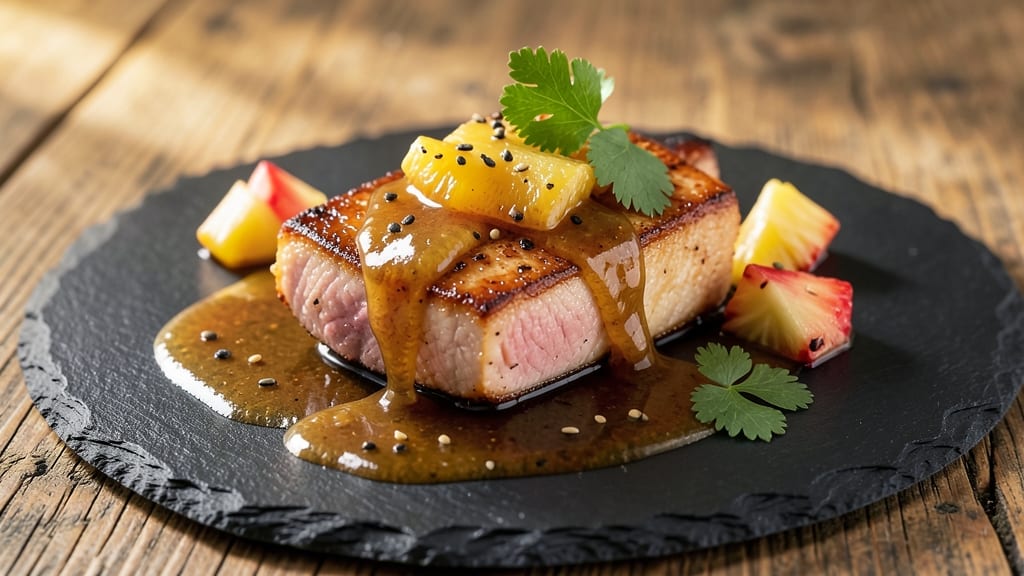
This pineapple sauce recipe transforms pork chops from ordinary to extraordinary with a boozy caramelized glaze that balances sweet, tangy, and savory notes. I developed it after years of perfecting the balance between pineapple's natural acidity and pork's richness—especially for those heritage pork chops I raise on my farm.
The secret lies in reducing pineapple juice with bourbon and spices until it thickens into a glossy, sticky sauce that clings beautifully to each bite.
The sauce begins with a simple simmer of pineapple juice, vinegar, and brown sugar to create a foundation of caramelized sweetness, then builds depth with celery seed and black pepper for a subtle, complex bite.
A splash of bourbon adds warmth and complexity, while a pat of butter at the end creates a velvety finish that elevates even the simplest pork chop. What makes this sauce truly special is how it transforms ordinary pork into something restaurant-worthy.
What you'll end up with is a glossy, aromatic glaze that caramelizes beautifully on the grill or stovetop, offering a perfect balance of sweetness and tang. The celery-pepper notes cut through the richness of the pork, while the bourbon adds a sophisticated depth that pairs perfectly with crispy-skinned chops.
This sauce isn't just a condiment—it's the star of the plate, turning a simple protein into a showstopper.
Best of all, this sauce keeps well in the refrigerator for up to five days, making it ideal for meal prep or entertaining. Whether you're grilling, pan-searing, or even slow-cooking pork, this glaze will take your dish to the next level. Let's make it—your taste buds will thank you.
Ingredients for pineapple sauce recipe for pork chops
Eight ingredients transform simple pork chops into a restaurant-worthy masterpiece.
| Ingredient | Amount | Notes |
|---|---|---|
| Fresh Pineapple Juice 🍍 | 1 ½ cups | From canned pineapple or fresh |
| White Vinegar 🍶 | ½ cup | Apple cider vinegar works too |
| Light Brown Sugar 🍚 | ¾ cup | Packed firmly for accuracy |
| Bourbon Whiskey 🥃 | ¼ cup | 80-proof minimum for depth |
| Celery Seed 🌿 | 1 tsp | Ground for maximum flavor |
| Ground Black Pepper 🌶️ | ½ tsp | Freshly cracked preferred |
| Unsalted Butter 🧈 | 2 tbsp | Cold, cubed for finishing |
| Fresh Ginger 🌿 | ½ tsp | Grated, aromatic freshness |
The pineapple juice is the heart of this sauce—fresh is ideal, but quality canned works too. I always use Dole brand canned pineapple because it's consistently sweet and tangy without being overly watery. The bourbon matters—Buffalo Trace or Maker's Mark add depth, but whatever's open in your cabinet works. Fresh ginger is non-negotiable for that bright, zesty kick, but if you're out, ground ginger at half the amount will get you close. Celery seed might sound odd, but trust me—it's the secret to that sophisticated celery-pepper bite that cuts through the sweetness.
No bourbon? Brandy or rum works in a pinch, though bourbon's caramel notes are unique. Substituting apple cider vinegar for white vinegar? Use the same amount—the flavor profile stays balanced. The brown sugar should be packed firmly—light brown for subtle molasses notes, dark brown if you prefer deeper caramelization. For the butter, European-style unsalted like Plugrá melts beautifully, but any good-quality butter will do. If you're making this ahead, reduce the sauce slightly longer to thicken it up for easier storage.
This sauce keeps beautifully in the fridge for five days, with flavor actually improving as it melds. For longer storage, freeze in ice cube trays—thaw and reheat gently on the stove before using. The sauce thickens as it cools, so if it seems too stiff when refrigerated, just warm it through with a splash of water or pineapple juice. I always make extra—it's perfect for brining pork chops or drizzling over grilled vegetables. The butter at the end is crucial—it adds that velvety finish that makes this sauce truly special.
Why You'll Love This Recipe
- No-Simmer Struggle: I’ll be real—this sauce doesn’t demand babysitting. You dump the pineapple juice, vinegar, and sugar into a saucepan, toss in a splash of bourbon (because why not?), and let it bubble for maybe five minutes. The celery seed adds this subtle, earthy kick without you having to measure it out like a scientist—just a pinch, eyeball it, done.
- Sweet-Sour Magic: That first bite? It’s like summer in a bottle. The brown sugar caramelizes just enough to coat the pork chops, while the vinegar cuts through the richness, and the bourbon? Oh, it mellows into this warm, almost spiced note that makes the pineapple shine. It’s the kind of sauce that turns a simple grilled chop into something you’d order at a fancy brunch.
- Weeknight to Weekend: Honestly, this sauce works everywhere. Drizzle it over pork chops for dinner, toss it with rice for lunch the next day, or even use it as a glaze for roasted veggies when you’re prepping ahead. I’ve even dumped extra into a jar and kept it in the fridge for months—it’s that versatile. (Yes, even on a Tuesday night when you’re exhausted.)
- Pantry Stash Winner: Between us, this recipe is ridiculously budget-friendly. You’re using pantry staples—vinegar, sugar, bourbon (if you’ve got it)—and a single pineapple lasts for three batches. No fancy ingredients, no last-minute grocery runs. Plus, the sauce thickens as it cools, so leftovers taste even better the second day. My secret weapon for lazy Sundays.
Step-by-step instructions for boozy pineapple glaze
Here's how to transform simple pantry staples into a rich, caramelized glaze that cuts through pork's richness.
Combine Base Ingredients in a Saucepan
In a medium saucepan, whisk together the 1.5 cups fresh pineapple juice, 0.5 cup white vinegar, 0.75 cup packed light brown sugar, and 0.25 cup bourbon whiskey. I like to use a heavy-bottomed pan here—it prevents scorching when the sugar starts caramelizing. Bring the mixture to a gentle simmer over medium heat, stirring occasionally to dissolve the sugar completely.
You'll notice the aroma immediately—bright pineapple, tangy vinegar, and the warm, woody notes of bourbon. Let it bubble steadily for 5 minutes, stirring every minute or so to prevent sticking. The sugar will begin to break down, creating a syrupy consistency. This initial simmering builds the foundation of your glaze, balancing sweetness with acidity.
Add Spices and Reduce to Thick Syrup
Once the mixture reaches a gentle boil, reduce heat to medium-low and stir in the 1 teaspoon celery seed, 0.5 teaspoon ground black pepper, and 0.5 teaspoon freshly grated ginger. The spices will infuse quickly, so don't let the sauce boil vigorously—you want a slow simmer that develops deep flavor without burning.
Cook uncovered for 15-20 minutes, stirring frequently, until the sauce reduces by about half and reaches a thick, syrupy consistency. You're looking for a glaze that coats the back of a spoon but still flows easily—it should be glossy with a deep amber color. If it reduces too quickly, add 1-2 tablespoons water to maintain the right texture. The alcohol will mostly cook off by now, leaving behind a rich, caramelized depth.
Finish with Butter for Richness
Remove the pan from heat and let the sauce cool slightly for 2 minutes—this prevents the butter from seizing. Add the 2 tablespoons cold, cubed unsalted butter and whisk vigorously until fully incorporated. The butter will create a velvety texture and add a luxurious mouthfeel that balances the sauce's tangy-sweet profile.
Taste and adjust seasoning if needed. I often find the glaze needs a pinch more black pepper or a splash of vinegar to perfect the balance. For extra depth, you can strain out the celery seeds if you prefer a smoother texture. Let the sauce cool to room temperature before using—this allows the flavors to meld completely and the consistency to set properly.
Use Immediately or Store for Later
This glaze is best used fresh, but it keeps well in an airtight container in the refrigerator for up to 1 week. When ready to use, reheat gently over low heat, stirring occasionally, until warmed through. The sauce should coat the back of a spoon smoothly—if it thickens too much, thin with 1-2 teaspoons water or pineapple juice.
For pork chops, brush the glaze on generously during the last 3-4 minutes of cooking when the meat is nearly done. The high heat will caramelize the sugars beautifully, creating a glossy, sticky exterior that pairs perfectly with the tender pork. The celery-pepper bite cuts through the richness, while the bourbon adds a sophisticated depth that elevates this simple sauce to restaurant-quality.
Pro Tips For Making Pineapple Sauce Recipe For Pork Chops
- Simmer Slow and Low: This sauce isn’t a race—keep it at a gentle boil (tiny bubbles, not roaring) for 10-12 minutes. I used to crank the heat and end up with a syrupy mess that tasted like vinegar overload. Let it reduce gradually, stirring occasionally, or you’ll lose that balanced sweet-tart depth.
- Strain the Juice: Fresh pineapple juice is a game-changer, but if you’re using chunks, strain them out after blending. The pulp clogs the sauce and makes it gloppy—trust me, I’ve served it that way. A fine-mesh sieve takes 30 seconds and keeps the texture silky smooth.
- Toast the Celery Seed: Dry-toast the whole celery seeds in a small pan for 30 seconds until fragrant before adding them to the sauce. This unlocks their flavor instead of letting them taste like sawdust. Grind them afterward for a smoother finish, or leave them whole for texture.
- Whiskey Last, Not First: Add the bourbon only in the final 2 minutes of simmering—otherwise, it burns off and leaves nothing behind. I learned this after a disastrous batch where the sauce smelled like charred alcohol. A splash at the end ensures that bright, boozy warmth.
Troubleshooting great pineapple sauce recipe for pork chops
Sauce Too Thin?
If your glaze isn't thickening enough, you're likely not reducing it long enough. I've seen this happen when using fresh pineapple juice with higher water content—simmer uncovered for an extra 5-10 minutes until it coats a spoon.
For immediate thickening, mix 1 tablespoon cornstarch with 1 tablespoon water, then whisk into the hot sauce and cook for 2 more minutes. The key is patience—rushing leads to a runny sauce that won't cling to pork chops. 🔥
Burnt Sugar Flavor?
This usually means your heat was too high during reduction. Always use medium-low heat after the initial simmer, and stir frequently to prevent scorching. I recommend a heavy-bottomed saucepan like my Lodge 3-quart Dutch oven—it distributes heat evenly.
If you catch it early, just skim off the burnt bits with a spoon before finishing with butter. For next time, reduce heat further or add 1 tablespoon water to dilute concentrated sugars.
Alcohol Taste Lingers?
The bourbon should mostly cook off during reduction, but if you still taste it strongly, you didn't simmer long enough. Cook uncovered for at least 15 minutes after adding spices—this ensures proper evaporation.
For a quicker fix, simmer an additional 5 minutes after the sauce has reduced. If you're sensitive to alcohol, consider reducing the bourbon to 2 tablespoons instead of ¼ cup in future batches.
Sauce Separates When Stored?
This happens when butter separates from the liquid during refrigeration. To prevent it, let the sauce cool completely before refrigerating in an airtight container. When reheating, warm over low heat and whisk gently until smooth.
For extra insurance, whisk in the butter when the sauce is still warm (around 150°F) rather than cold. The butter should emulsify completely—if not, add 1 teaspoon water and whisk vigorously.
Too Sweet or Tangy?
Balance is everything with this sauce. If it's too sweet, add 1-2 teaspoons white vinegar and reduce for 3 more minutes. For excessive tang, stir in ½ teaspoon brown sugar and simmer for 2 minutes.
Taste as you go—adjust gradually. I often find the sauce needs both tweaks: a touch more acid to brighten and a hint more sugar to round out the flavors. Trust your palate over the recipe measurements here!
Glaze Won't Stick to Pork?
This usually means the sauce wasn't reduced enough or the pork isn't hot enough when applying. For best results, reduce the sauce until it coats a spoon thickly, then brush onto pork chops that are 165°F internal temperature during the last 3-4 minutes of cooking.
The high heat will caramelize the sugars, creating that perfect sticky exterior. If needed, thicken the sauce further by simmering uncovered for 5 more minutes before using.
Nutrition facts
Frequently asked questions
Can I substitute fresh pineapple for canned juice in this recipe?
Yes, but you'll need to process it first. Blend 2 cups fresh pineapple chunks with 2 tablespoons water until smooth, then strain through a fine-mesh sieve to remove fiber. Use the juice as a 1:1 replacement for canned pineapple juice. Fresh pineapple adds vibrant sweetness but may require 1 extra minute of reduction time due to its higher water content.
What if I don't have bourbon? Can I use something else?
For a similar depth, use 2 tablespoons brandy or rum, or even dry sherry for a different profile. If avoiding alcohol completely, replace with 2 tablespoons extra pineapple juice—just reduce the sauce 2-3 minutes longer to compensate for the lack of alcohol evaporation.
How do I adjust this sauce for spicier pork chops?
Add ½ teaspoon smoked paprika or ¼ teaspoon cayenne pepper when whisking in the spices. For heat balance, also increase the butter to 3 tablespoons at the end to mellow the spice. If using pre-marinated chops, reduce the sauce's black pepper to ¼ teaspoon to avoid overpowering flavors.
Can I make this sauce ahead and still have it cling to pork?
Yes, but with one key trick: reduce it 10% longer than directed when making ahead. Store in an airtight container for up to 5 days. Before using, reheat gently and add 1 teaspoon water if needed to restore glossiness. The extra reduction prevents separation during storage.
Why does your recipe use celery seed instead of fresh celery?
Celery seed delivers 3x more concentrated flavor with no water content to dilute the sauce. Fresh celery would require 2 large stalks (finely chopped) and would add moisture that needs careful reduction. The seed also provides a subtle, aromatic complexity that fresh celery can't match in this application.