
Sauces & Condiments
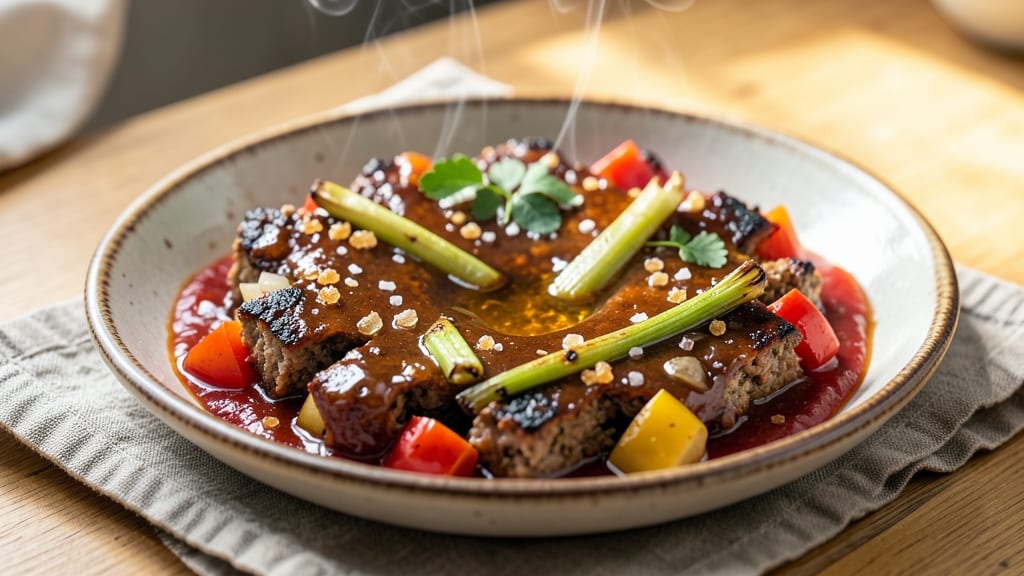
This meatloaf sauce recipe transforms ordinary meatloaf into a showstopper with its perfect balance of tangy apple cider vinegar and celery-pepper crunch. The secret lies in simmering ketchup, vinegar, and spices until thickened into a glossy, velvety sauce that clings beautifully to every bite.
I developed this recipe after years of testing—it’s the one that finally convinced even the biggest meatloaf skeptics to take seconds.
The sauce’s magic comes from the combination of apple cider vinegar for brightness and a finely chopped celery-pepper mix that adds subtle texture and depth. Unlike store-bought versions, this sauce develops rich, caramelized notes as it simmers, creating a flavor that’s both familiar and unexpectedly sophisticated.
It’s restaurant-quality without the fuss, and it takes just 15 minutes to make.
What makes this sauce truly special is its versatility—it elevates meatloaf, but also works perfectly with mashed potatoes, roasted vegetables, or even as a dipping sauce for fries. The tangy-sweet balance ensures it’s never cloying, and the celery-pepper crunch adds a satisfying bite that keeps every spoonful interesting.
Once you try this, you’ll never go back to the jarred stuff.
Store leftovers in the fridge for up to a week, or freeze for longer shelf life. The flavors only deepen over time, making this the ultimate make-ahead sauce for busy weeknights or holiday meals. Let’s get cooking—your meatloaf (and taste buds) will thank you.
Ingredients for meatloaf sauce recipe with apple cider vinegar
Eight simple ingredients transform basic ketchup into a restaurant-quality meatloaf sauce.
| Ingredient | Amount | Notes |
|---|---|---|
| Ketchup 🍅 | 1 cup | High-quality, homemade preferred |
| Apple Cider Vinegar 🍎 | ½ cup | Raw, unfiltered for best flavor |
| Celery Stems 🧅 | 1 cup | Finely chopped, no leaves |
| Bell Pepper 🌶️ | ¼ cup | Green or red, finely chopped |
| Onion 🧅 | ¼ cup | Yellow or white, finely diced |
| Granulated Sugar 🍚 | 2 tbsp | Light brown sugar works too |
| Mustard 🌿 | 1 tbsp | Dijon or yellow preferred |
| Worcestershire Sauce 🥫 | 1 tbsp | Ensure vegan if needed |
| Ground Black Pepper 🌶️ | ½ tsp | Freshly ground for best flavor |
| Salt 🧂 | 1 tsp | Kosher or sea salt preferred |
The apple cider vinegar is the secret weapon here—raw, unfiltered vinegar adds depth that regular vinegar can't match. Trader Joe's and Whole Foods carry great options, but any brand labeled 'raw' works. For the celery and bell pepper, buy fresh and chop finely—the texture is key. I usually grab a bunch of celery and a bell pepper at the same time since they both keep well in the fridge for a week. The onion adds sweetness as it cooks down, so don't skip it even if you're not a huge fan of raw onion flavor.
No apple cider vinegar? Balsamic vinegar at half the amount works in a pinch, though it won't be quite as bright. Running short on ketchup? Tomato paste with a splash of water gets you close, but add an extra pinch of sugar to balance the acidity. The mustard can be skipped if you're sensitive to heat, but I promise you'll want it—it rounds out the tangy-sweet balance beautifully. For extra crunch without chopping, store-bought salsa or relish (about 2 tbsp) can substitute the celery-pepper mix, though fresh is always better.
This sauce thickens as it cools, so store it in a jar with a loose lid to let excess air escape. Keeps for up to 2 weeks in the fridge and freezes beautifully for 6 months. I always double the batch—one for meatloaf, one for mashed potatoes or roasted veggies. The flavors actually improve overnight, so if you can, make it ahead. Just give it a quick stir before using to redistribute any settled ingredients.
Why You'll Love This Recipe
- Pantry Magic: I swear by this sauce when I forget to grocery shop—just ketchup, vinegar, and the veggies I already have lurking in the crisper. No fancy ingredients, no last-minute store runs.
- Tangy Twist: That apple cider vinegar cut? It’s the secret weapon—brightens the sweetness of the ketchup and adds this just-right sharpness that makes every bite feel special. Not too sour, not too mild—just perfect.
- Leftovers’ Best Friend: This sauce keeps like a champ in the fridge, so I make a double batch and use it on sloppy joes, baked potatoes, or even as a quick glaze for roasted veggies. Less waste, more flavor.
- Weeknight Workhorse: I’ve got a kid who’s always hungry, so this sauce is my go-to when I need something fast but still feels like a meal. Toss it on meatloaf, mix it into mashed potatoes—it’s the kind of thing that makes dinner feel effortless.
Step-by-step instructions for meatloaf sauce with apple cider vinegar
This tangy-sweet sauce brings depth and texture to your meatloaf—let's make it together.
Sauté the Celery, Bell Pepper, and Onion
Heat a large skillet over medium heat and add the 1 cup celery stems, ¼ cup bell pepper, and ¼ cup onion. Cook for 5-6 minutes until the vegetables soften and the celery becomes tender with just a hint of crunch remaining. Stir occasionally to prevent burning.
This step builds the sauce's texture and flavor foundation. You'll know it's ready when the vegetables release their natural juices and the mixture takes on a slightly caramelized aroma. If the vegetables stick, add a splash of water and scrape the bottom of the pan to release any flavorful browned bits.
Add the Apple Cider Vinegar and Sugar
Pour in the ½ cup apple cider vinegar and stir to deglaze the pan, scraping up any stuck-on bits. Add the 2 tablespoons granulated sugar and let the mixture simmer for 3-4 minutes until slightly thickened and fragrant. The vinegar will create a bright, tangy base that balances the sweetness.
Watch for the sauce to reduce slightly—you want it to coat the back of a spoon but still have a glossy sheen. If it thickens too quickly, add a splash of water to maintain the right consistency. This is where the sauce's signature tangy-sweet flavor starts to develop.
Incorporate the Ketchup and Seasonings
Stir in the 1 cup ketchup, 1 tablespoon mustard, 1 tablespoon Worcestershire sauce, ½ teaspoon ground black pepper, and 1 teaspoon salt. Simmer the mixture over medium-low heat for 5 minutes, stirring occasionally, until everything is fully combined and the sauce thickens slightly.
The ketchup adds richness while the mustard and Worcestershire sauce deepen the flavor profile. Taste the sauce as it simmers and adjust the salt or pepper if needed—this is where you fine-tune the balance between tangy, sweet, and savory. The sauce should be smooth and glossy, ready to coat your meatloaf beautifully.
Simmer to Perfect Consistency
Continue simmering the sauce for another 3-5 minutes until it reaches your desired thickness. You want it to be thick enough to cling to the meatloaf but still spreadable, with a glossy finish. If it thickens too much, thin it with a splash of water or apple cider vinegar.
This final step ensures the sauce has the ideal texture—neither too runny nor too stiff. The longer you simmer, the more concentrated the flavors become. Once it reaches the perfect consistency, remove it from heat and let it cool slightly before serving. This sauce pairs perfectly with your meatloaf, adding a layer of complex flavor that elevates every bite.
Pro Tips For Making Meatloaf Sauce Recipe With Apple Cider Vinegar
- SAUTÉ THE VEGETABLES LOW AND SLOW: I learned this the hard way—after burning three batches of celery, bell pepper, and onion, I finally figured out that medium-low heat is the way. These veggies release their flavor best when they’re gently broken down over 8-10 minutes, not rushed into oblivion in a screaming pan.
- USE RAW APPLE CIDER VINEGAR: Sounds weird, but it works: skip the cooking for the vinegar. Add it raw at the end, just before serving, to keep that bright, tangy punch. If you cook it off, you’ll lose the zing that cuts through the sweetness of the ketchup—your sauce will taste flat.
- CHOPPED ONIONS, NOT MINCED: I was skeptical until I tried it: finely chopped onions (about 1/4-inch dice) caramelize more evenly and faster than minced. They’ll sweeten the sauce without turning it mushy, and you’ll avoid the common mistake of ending up with a watery, sad base.
- SIMMER UNTIL THICK: Don’t walk away. Let that sauce bubble away uncovered for 10-15 minutes until it’s syrupy enough to coat the back of a spoon. If you rush it, you’ll end up with a gloppy mess that’ll make your meatloaf soggy—trust the process, even if you’re impatient like me.
Common mistakes when making this recipe
Overcooking the Vegetables
I’ve seen this happen more times than I can count—vegetables like celery and bell pepper turn mushy if cooked too long. They should soften but still retain a slight crunch.
Cook them for only 5-6 minutes over medium heat—any longer and you’ll lose that essential texture that makes this sauce special. 🧅
Skipping the Deglaze
After sautéing the vegetables, it’s tempting to rush to the next step, but deglazing with apple cider vinegar is crucial. Those browned bits stuck to the pan hold deep flavor—scrape them up with a wooden spoon to unlock maximum taste.
If you skip this, your sauce will taste flat and one-dimensional.
Ignoring the Sugar Balance
The 2 tablespoons of sugar aren’t just for sweetness—they help balance the acidity of the vinegar. If you omit them or use too little, the sauce will taste overly tangy.
Taste as you go: the sugar should mellow the sharpness while keeping the bright, tangy notes intact. Adjust in ½-teaspoon increments if needed.
Using Low-Quality Ketchup
Not all ketchups are created equal. Homemade or high-quality ketchup (like Heinz 57 Varieties or Organicville) adds richness and depth. Store-bought brands with preservatives or artificial flavors can make the sauce taste artificial.
If you’re using a budget brand, add ½ teaspoon of smoked paprika to compensate for the lack of complexity.
Rushing the Simmer
This sauce needs time to thicken and meld—don’t rush the 5-10 minutes of simmering over medium-low heat. The longer it cooks, the more the flavors develop. If you rush it, the sauce will taste raw and underdeveloped. Patience here makes all the difference in the final result. ⏳
Overthinning the Sauce
If the sauce thickens too much, it’s easy to overcorrect by adding too much water or vinegar. The goal is a glossy, spreadable consistency—not watery.
Thin it gradually with 1-teaspoon increments until it reaches the perfect texture. Too much liquid will dilute the hard-earned flavor balance you’ve worked to achieve.
Nutrition facts
Frequently asked questions
Why does apple cider vinegar make this sauce better than regular ketchup?
The apple cider vinegar adds a bright, tangy depth that regular ketchup alone can't provide. Its acidity cuts through the richness while developing caramelized notes as it simmers. The raw, unfiltered vinegar also brings subtle fruity complexity that elevates the sauce beyond basic tomato-based versions.
Can I make this sauce without fresh celery and bell pepper?
Yes! For convenience, substitute with 2 tablespoons store-bought salsa or relish (about ½ cup total when chopped). If using frozen diced vegetables, thaw and drain them first. The texture won't be identical, but it'll still add that essential crunch and flavor.
How long can I store this sauce, and does it taste better over time?
This sauce keeps for up to 2 weeks in the fridge and freezes beautifully for 6 months. The flavors actually improve as they meld—it develops deeper caramelized notes and a more balanced tangy-sweet profile. Store in an airtight container with a loose lid to let excess air escape.
What other dishes can I use this sauce for besides meatloaf?
This versatile sauce works perfectly with mashed potatoes, roasted vegetables, grilled chicken, or even as a dipping sauce for fries. The tangy-sweet balance makes it great for pulled pork sandwiches too. Just adjust the thickness slightly if using for dipping—thin with a splash of water if needed.
Can I make this sauce vegetarian?
Simply replace the Worcestershire sauce with 1 tablespoon soy sauce or vegetarian Worcestershire sauce. The mustard and vinegar still provide plenty of depth. For extra umami, add ½ teaspoon smoked paprika. The sauce remains just as flavorful without any meat-based ingredients.