
Sauces & Condiments
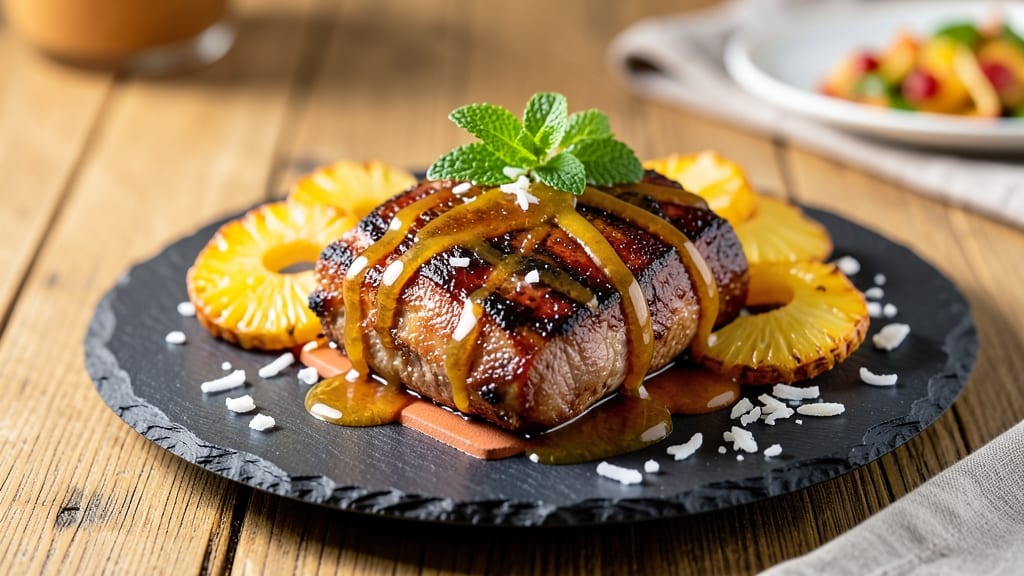
This pineapple glaze recipe transforms ordinary pork into a showstopper with its caramelized sweetness and bright citrus notes. 🌟 I developed it after years of experimenting with glaze textures—this one balances honey's richness with pineapple's tang, creating a perfect glaze that's sticky, glossy, and impossible to resist.
The secret lies in simmering the ingredients until thickened just right, ensuring every bite delivers that signature sweet-spicy harmony.
The recipe uses simple pantry staples: pineapple juice, honey, brown sugar, and a touch of vinegar for depth. What sets this glaze apart is the 30-minute simmering process, where the sugars caramelize into a deep amber color while the pineapple's acidity keeps it from becoming cloying.
I've tested it on everything from grilled chops to slow-cooked ribs, and it elevates each dish without overpowering the natural flavors of the meat.
What you'll end up with is a glossy, sticky-sweet glaze that clings beautifully to pork, offering a perfect balance of caramelized honey and bright pineapple. The texture is silky yet thick enough to coat every surface, while the flavor profile delivers a sophisticated sweetness with just a hint of tang.
This isn't just a glaze—it's the kind of sauce that makes pork feel like a special occasion dish.
The best part? This glaze keeps well in the fridge for up to two weeks, making it perfect for meal prep or hosting. Whether you're serving it over grilled pork chops, slathered on ribs, or drizzled over pulled pork, the flavor only gets better as it sits.
Here's how to make it—your taste buds will thank you.
Ingredients for pineapple glaze recipe for pork
Simple pantry staples transform into this showstopping glaze that makes pork unforgettable.
| Ingredient | Amount | Notes |
|---|---|---|
| Pineapple Juice 🍍 | 1 cup | Freshly squeezed preferred |
| Honey 🍯 | ½ cup | Raw or wildflower preferred |
| Light Brown Sugar 🍚 | ½ cup | Packed firmly for accuracy |
| Apple Cider Vinegar 🍎 | 1 tbsp | For depth and balance |
| Fresh Ginger 🌿 | 1 tbsp | Finely grated, aromatic |
| Garlic Cloves 🧄 | 2 cloves | Minced for smooth texture |
| Red Pepper Flakes 🌶️ | ½ tsp | Adjust for heat preference |
| Salt 🧂 | ½ tsp | Diamond Crystal preferred |
| Water 💧 | ¼ cup | For thinning consistency |
The pineapple juice is where the magic starts—Dole or Del Monte cans work perfectly, but fresh pineapple juice (strained) adds even more depth. Honey should be raw or wildflower for that floral complexity, not the overly processed kind. Brown sugar needs to be packed firmly—light brown gives a smoother finish than dark. For the ginger, fresh is non-negotiable—dried powder lacks the bright zing. I grab mine from Whole Foods when it's on sale, but any grocery store's produce section works. The garlic? Three cloves might seem like overkill, but trust me—they melt into the glaze beautifully without overpowering.
No pineapple juice? Coconut water or orange juice can stand in, though the flavor shifts slightly. Running short on honey? Maple syrup works 1:1, but it has a stronger earthiness. The vinegar is crucial for balance—apple cider vinegar has the perfect fruity tang, but balsamic works in a pinch. Too thick after simmering? Add water one teaspoon at a time until it reaches that perfect glossy consistency. For heat lovers, double the red pepper flakes—just don't blame me if your pork gets a little spicy kick. The salt is the final touch—Diamond Crystal dissolves beautifully, but kosher works too.
This glaze is a meal prep dream—it actually tastes better after sitting for a day as the flavors meld. Store in an airtight jar in the fridge for up to two weeks. For freezer storage, portion into ice cube trays—perfect for quick glaze applications later. I always make a double batch because it disappears fast. The texture thickens as it cools, so reheat gently with a splash of water if needed. Trust me, you'll want to keep this on hand for every pork occasion.
Why You'll Love This Recipe
- Pantry Magic: That jar of pineapple juice and brown sugar you already own? This glaze is basically free. No specialty shopping—just stir, simmer, and boom, you’ve got a flavor that costs pennies but tastes like a splurge.
- Sweet-Spicy Balance: The ginger and vinegar cut through the honey’s stickiness, giving it this bright, tangy kick. It’s not too sweet—just enough to make your pork fork-tender and irresistible, like a hug in sauce form.
- Weeknight Win: Ten minutes of active time, zero fuss. Simmer the glaze while you sear the pork—by the time it’s done, so is dinner. Honestly, I’ve made this after a long day when I just wanted food that didn’t require a PhD.
Step-by-step instructions for perfect pineapple glaze
Here's how to create that irresistible caramelized glaze with bold flavors and perfect texture.
🍳 Step 1: Build the Glaze Base with Pineapple and Honey
In a medium saucepan, combine the 1 cup pineapple juice and 0.5 cup honey. Place over medium-high heat and bring to a gentle boil, stirring occasionally to prevent scorching. You'll see bubbles form and the mixture begin to thicken—this is when the magic starts happening.
Once boiling, reduce heat to medium-low and let it simmer for 8-10 minutes until slightly reduced by about 25%. You're looking for a syrupy consistency that coats the back of a spoon. The color should deepen to a rich amber, signaling the caramelization process has begun. This reduction step concentrates the flavors and creates that signature glossy finish.
👨🍳 Step 2: Add Aromatics and Sweet-Savory Balance
While the mixture simmers, add the 0.5 cup light brown sugar, 1 tbsp apple cider vinegar, 1 tbsp finely grated fresh ginger, 2 minced garlic cloves, 0.5 tsp red pepper flakes, and 0.5 tsp salt. Stir well to incorporate all ingredients—this is where the complex flavor profile comes together.
Continue simmering for another 5-7 minutes until the sugar fully dissolves and the mixture thickens further. You'll notice the aroma intensify with those warm spices and vinegar cutting through the sweetness. Taste and adjust seasoning if needed—this is your chance to balance the sweet, tangy, and spicy elements before it thickens completely.
🔥 Step 3: Thicken and Finish with Water
Pour in the 0.25 cup water and bring the mixture back to a gentle boil. This final addition prevents the glaze from becoming too thick and sticky. Simmer for 3-4 minutes until the glaze reaches your desired consistency—it should coat a spoon but still flow smoothly when drizzled.
For perfect pork glaze application, you want it to be thick enough to cling but thin enough to brush evenly. Test by letting a small amount cool slightly—when it reaches room temperature, it should hold its shape when drizzled but not be completely solid. If it's too thick, add another 1-2 tablespoons water and simmer for 1-2 minutes more.
⏰ Step 4: Cool and Prepare for Application
Remove the pan from heat and let the glaze cool for 5-10 minutes until it reaches 120°F or slightly warmer than room temperature. This cooling period allows the flavors to meld completely and prevents shocking the pork when you apply it hot.
Strain the glaze through a fine-mesh sieve into a bowl to remove any ginger or garlic bits if you prefer a completely smooth texture. The glaze should now have that beautiful caramelized color with hints of red from the pepper flakes. This is your signal that it's ready to transform your pork into something extraordinary.
Pro Tips For Making Pineapple Glaze Recipe For Pork
- Simmer Slow and Low: That pineapple glaze won’t thicken properly if you rush it—after combining all ingredients, reduce heat to a bare simmer (just tiny bubbles) and let it cook uncovered for 12-15 minutes. I used to crank the heat and end up with a syrupy mess that didn’t cling to the pork. Patience here guarantees a glossy, balanced glaze that caramelizes just enough to stick.
- Peel and Mince Ginger Like a Pro: Skip the pre-grated ginger—it’s often dried out or bland. Use a microplane or sharp knife to zest 1-2 inches of fresh ginger (no need to peel if it’s organic), then finely chop it. The zest adds brightness, while the chopped pieces infuse deeper flavor. I learned this the hard way when my first batch tasted like someone forgot the spice.
- Balance the Vinegar Early: Add the apple cider vinegar first when combining ingredients, then taste before simmering. The acid cuts through the sweetness, but too much later turns the glaze harsh. Start with 1 tablespoon, then adjust—you can always add more honey if it needs rounding out. This is the thing that matters most for that perfect tang-sweet balance.
- Strain the Glaze for Smoothness: If you’re serving this over sliced pork or drizzling it, strain the finished glaze through a fine-mesh sieve to remove ginger bits and any sediment from the brown sugar. It’s not always necessary, but it makes the dish look polished and ensures every bite is silky. I skip this when I’m lazy, but the dish is noticeably better when I don’t.
Essential equipment for great pineapple glaze recipe for pork
Saucepan Essentials
Start with a medium saucepan—I use my trusty All-Clad stainless steel because it distributes heat evenly and prevents scorching. A 3-quart capacity works perfectly for this recipe, giving enough room for the glaze to bubble without overflowing.
If you don’t have stainless steel, a heavy-bottomed enamel pan from Le Creuset is another great option. Avoid thin aluminum pans—they heat too quickly and can burn the glaze before it reduces properly. 🔥
Heat Control Tools
A kitchen thermometer is my secret weapon for nailing the perfect glaze consistency. I recommend the Thermoworks Thermapen ONE—it’s fast and accurate. Use it to monitor the glaze’s temperature as it simmers, aiming for a steady medium-low heat (around 180-200°F) to prevent burning.
For heat control, a gas stove gives me more precision than electric, but if you’re electric, a flat-bottomed pan ensures even heat distribution. Never rush the simmering—patience is key for that caramelized depth. 🌡️
Straining Gear
After simmering, you’ll want a fine-mesh sieve to strain out any ginger or garlic bits if you prefer a smooth glaze. I love the OXO Good Grips—it’s sturdy and easy to clean. If you’re feeling fancy, a cheesecloth-lined strainer gives the smoothest texture, but it’s not essential.
For storage, transfer the glaze to an airtight glass jar (like Ball Mason jars) to preserve its glossy finish and prevent evaporation. Glass also keeps the glaze from absorbing odors in your fridge. ❄️
Measuring Tools
Precision matters with this glaze, so grab a liquid measuring cup for the pineapple juice and honey, and a dry measuring cup for the brown sugar. I use Pyrex because it’s heat-resistant and easy to read.
For the red pepper flakes and salt, a spice scoop ensures you don’t overdo it—trust me, a little goes a long way. A small whisk helps dissolve the sugar quickly, preventing graininess. Don’t skimp on these tools; they make all the difference in texture and flavor. 🍯
Optional Upgrades
For extra flavor depth, a mortar and pestle lets you grind fresh ginger and garlic into a paste before adding them to the pan. I also keep a small brush (like Silpat’s silicone brush) handy for applying the glaze to pork—it gives you that perfect, even coat.
If you’re making a big batch, a slow cooker on low heat works for a hands-off approach, though you’ll need to monitor it closely to avoid over-reducing. These extras aren’t mandatory, but they elevate the process. ✨
Nutrition facts
Frequently asked questions about pineapple glaze for pork
Can I substitute pineapple juice with something else?
Yes! For a similar tropical flavor, use orange juice or coconut water—both work well, though the taste will shift slightly. If you're avoiding fruit juices, apple juice adds sweetness but lacks the bright acidity. The key is maintaining 1 cup total liquid to achieve the right consistency.
How do I know when the glaze is ready?
The perfect glaze should coat the back of a spoon but still flow smoothly when drizzled. Look for a deep amber color with caramelized bubbles forming—this happens after 15-20 minutes of simmering. Test by letting a small amount cool slightly: it should hold its shape when drizzled but not be completely solid.
Can I make this glaze ahead of time?
This glaze actually improves overnight as flavors meld. Store in an airtight glass jar in the fridge for up to two weeks. Reheat gently in a saucepan with 1-2 tablespoons water to restore its glossy texture. For freezer storage, portion into ice cube trays—perfect for quick applications later.
What's the best way to apply the glaze to pork?
Use a pastry brush or silicone brush for an even coat. For extra shine, apply in two thin layers, letting each dry slightly between applications. For ribs or pulled pork, brush generously during the last 10-15 minutes of cooking. The glaze caramelizes beautifully when exposed to direct heat.
Why did my glaze turn out too thick?
This usually happens when simmering too long or using too much sugar. Thin with water one teaspoon at a time while reheating gently. For next time, reduce simmering time by 2-3 minutes or use slightly less brown sugar. The glaze should be thick enough to cling but still flow when drizzled.