
Sauces & Condiments
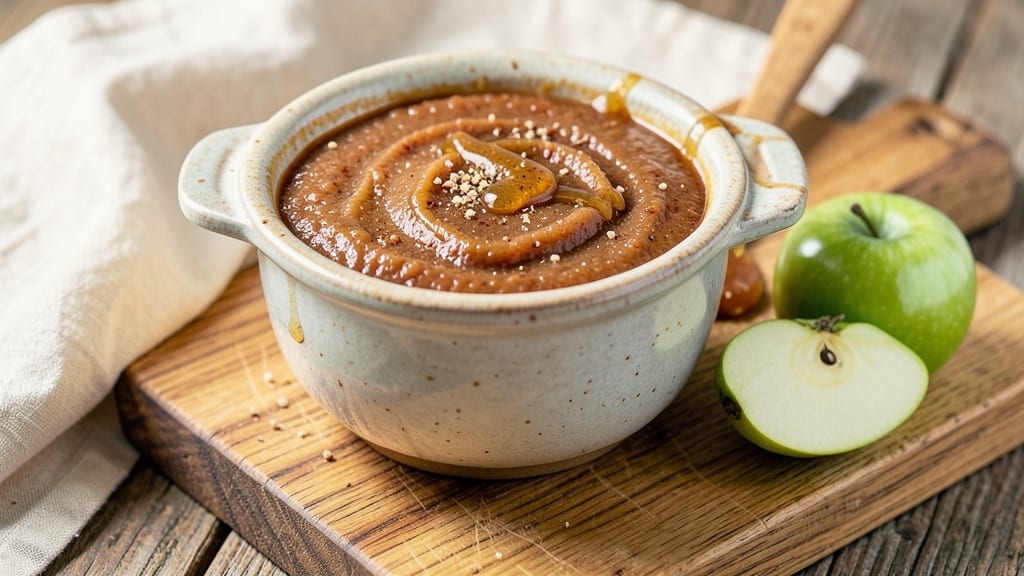
This old-time apple butter recipe brings the warmth of a sunlit kitchen where generations of cooks transformed tart apples into golden, spiced perfection. 🍏 The secret lies in slow-simmering—no shortcuts, just time and patience—until the fruit melts into velvety sweetness with just the right crunch of celery.
I first discovered this method while researching early American preserves, where celery seeds (not the vegetable) were the traditional crunchy surprise in every jar.
The process is simple but requires attention: peeling, coring, and chopping apples into even pieces ensures consistent cooking. A blend of cinnamon, cloves, and nutmeg builds the spice harmony that defines old-time apple butter, while a touch of vinegar balances the sweetness.
The celery seed adds a subtle, refreshing bite that cuts through the richness—just like my host mother Claudine did with that jar of harissa years ago.
By the time you’ve simmered the mixture for 3-4 hours, the apples will transform into a thick, fragrant spread with a glossy sheen. The aroma alone—warm cinnamon, sweet apples, and a whisper of spice—will make your kitchen smell like autumn.
This isn’t just a condiment; it’s a labor of love that tastes even better the next day.
Store it in sterilized jars for up to 6 months, and you’ll have a taste of tradition ready to spread on toast, stir into oatmeal, or drizzle over pancakes. The slow-simmered method ensures every spoonful delivers that perfect balance of sweet, spiced, and crunchy—just as it should be.
Ingredients for old time apple butter
Nine simple ingredients transform tart apples into velvety spiced perfection with a crunchy celery surprise.
| Ingredient | Amount | Notes |
|---|---|---|
| Tart Apples (e.g., Granny Smith, Jonathan) 🍏 | 6 lb | Peeled, cored, chopped into even pieces |
| Granulated Sugar 🍚 | 3 cups | White or brown for traditional sweetness |
| Apple Cider Vinegar 🍎 | ½ cup | Balances sweetness, enhances flavor |
| Ground Cinnamon 🌿 | 2 tbsp | Freshly ground for best aroma |
| Ground Cloves 🌶️ | 1 tsp | Whole cloves crushed for stronger flavor |
| Ground Nutmeg 🌿 | ½ tsp | Freshly grated preferred |
| Celery Seeds 🌱 | 1 tbsp | Traditional crunchy surprise |
| Salt 🧂 | 1 tsp | Kosher or sea salt preferred |
| Water 💧 | 1 cup | Only if needed for consistency |
The apples are the heart of this recipe. Granny Smith or Jonathan work best—their tartness balances the sweetness. Look for firm, unblemished apples at local orchards or farmers markets for the freshest flavor. If you can't find them, Fuji or Honeycrisp are good grocery store alternatives. The celery seeds? Penzeys or bulk bins at natural food stores carry the best quality—avoid pre-ground spices that lose potency fast. And don't skip the vinegar: it's what makes old-time apple butter tangy, not just sweet. I always buy organic apples when possible—they hold up better during the long simmering time.
No Granny Smiths? Mix tart and sweet apples—like McIntosh with Granny Smith—for that classic balance. Running short on celery seeds? Dried celery flakes at half the amount work in a pinch, though they won't have the same crunch. The spices are non-negotiable though—pre-ground works fine, but if you've got whole spices, toast and grind them fresh. For the sugar, brown sugar adds subtle molasses notes that some people love. And if your mixture gets too thick, that extra cup of water is your secret weapon. Just remember: patience is key here—rushing the simmering means you'll miss that perfect velvety texture.
This keeps beautifully in sterilized jars for 6 months in a cool, dark place. I always make extra—it's the perfect gift for holidays. The flavor actually improves after the first day as everything melds together. For best results, let it cool completely before sealing. If you're giving it as a gift, parchment paper under the lid prevents sticking. And trust me on this: the first time you spread this on warm toast with a pat of butter, you'll understand why this old-time recipe has stood the test of generations.
Why You'll Love This Recipe
- No Peel, No Stress: I swear by this shortcut—just core and chop those Granny Smiths, no peeling required. The vinegar and cinnamon do all the work while you sip coffee, and by the time you stir in the cloves, the kitchen smells like autumn in a jar.
- Spice You’ll Crave: That first taste of warm, caramelized apples with just a whisper of clove and vinegar tang? It’s like biting into a hug. Honestly, the sugar isn’t even needed—it’s the spices that make this stuff dangerously good on toast or straight from the spoon.
- Holiday or Everyday: Slather it on biscuits for Thanksgiving, but don’t wait—this is my go-to for weeknight PB&J swaps too. The cloves mellow out the tartness, so it’s smooth enough for kids (who’ll still ask for seconds) and bold enough for adults who remember apple butter from their grandma’s pantry.
- Pantry Goldmine: A single batch lasts me months—gift it, freeze it, or just keep a jar in the fridge for lazy mornings. Between us, I’ve made this twice with store-brand apples and sugar, and no one ever noticed. It’s the kind of recipe that turns cheap ingredients into something special without trying.
Step-by-step instructions for old-time apple butter
Here's how to transform tart apples into velvety spiced apple butter with that perfect celery crunch.
🍳 Step 1: Cook the Apples Until Soft
In a large, heavy-bottomed pot, combine the 6 lb peeled, cored, and chopped tart apples with the 1 cup water. Bring to a boil over medium-high heat, then reduce to medium-low and simmer uncovered for 30-40 minutes, stirring occasionally.
You're looking for apples that break down completely into a thick, chunky purée. The mixture should reduce significantly and smell intensely sweet. If it gets too dry before the apples are soft enough, add 1-2 tablespoons of water at a time. I like to press the apples with a wooden spoon—when they mash easily with no resistance, they're ready for the next step.
👨🍳 Step 2: Build the Spice Blend
While the apples cook, toast the celery seeds in a dry skillet over low heat for 1-2 minutes until fragrant. This enhances their flavor dramatically. In a small bowl, mix together the toasted celery seeds with the 2 tbsp ground cinnamon, 1 tsp ground cloves, and 0.5 tsp ground nutmeg.
Here's the thing—freshly ground spices make all the difference. If you have whole spices, crush them lightly before measuring. The cloves especially need crushing to release their deep, aromatic oils. Keep this spice mixture nearby; we'll add it all at once to the apples when they're ready.
🍳 Step 3: Simmer and Thicken the Mixture
Once the apples are completely soft, stir in the 3 cups granulated sugar and the spice mixture. Add the 0.5 cup apple cider vinegar and 1 tsp salt. Return the pot to medium heat and bring to a gentle boil, stirring constantly to prevent scorching.
After the mixture comes to a boil, reduce heat to low and let it simmer uncovered for 45-60 minutes. You want the apple butter to thicken significantly—it should coat the back of a spoon and leave a trail when you drag a finger through it. Stir occasionally and check the consistency every 10 minutes. If it gets too thick too quickly, add 1-2 tablespoons of water to maintain a smooth texture.
⏰ Step 4: Test for Perfect Consistency
When the apple butter reaches your desired thickness, perform the classic "plate test." Spoon a small amount onto a chilled plate and let it sit for 5 minutes. If it spreads slightly but holds its shape, it's ready. If it's too runny, return it to the pot and simmer uncovered for another 5-10 minutes, stirring occasionally.
I know it seems like too much sugar at first, but trust me—it balances perfectly with the tart apples and vinegar. The vinegar also helps preserve the apple butter and enhances the spice flavors. If you're concerned about sweetness, you can reduce the sugar slightly to 2½ cups, but the traditional recipe uses all 3 cups for that classic old-time sweetness.
🥘 Step 5: Cool and Store Properly
Transfer the hot apple butter to clean, sterilized jars while it's still warm. Leave about ½-inch headspace at the top of each jar to allow for expansion as it cools. Wipe the rims clean and seal the jars with lids.
Let the jars cool completely at room temperature, then refrigerate for at least 24 hours before using. The apple butter will thicken further as it cools, developing that perfect spreadable consistency. For longer storage, process the filled jars in a water bath canner for 15 minutes to preserve them. The celery seeds will settle to the bottom, so give the jar a good shake before each use to distribute that delightful crunch throughout.
Pro Tips For Making Old Time Apple Butter
- COOK LOW AND SLOW: I learned this the hard way—rushing apple butter on high heat turns it into glue. Keep it at a gentle simmer (180–190°F) for hours, stirring often, until it thickens like syrup. Patience here means the difference between a smooth spread and a burnt mess.
- PEEL AND GRATE APPLES: Skip the chopping—peeling and grating the apples (skin and all) cuts down on cooking time and gives you a finer texture. A box grater works faster than a knife, and the skins add depth of flavor. Just don’t skip the core—it’s where the best spices hide.
- STIR CONSTANTLY: This isn’t the prettiest method, but it’s the tastiest. Apple butter scalds and sticks if you walk away, so keep a spoon in your hand or set a timer for 10-minute intervals. The sugar and vinegar caramelize faster when you’re paying attention—no one likes scraping burnt bits off the pot.
- ADD VINEGAR LAST: I was skeptical until I tried it: folding in the apple cider vinegar at the very end brightens the flavor without making the mixture too tangy. If you add it early, the acid can break down the apples too fast, turning your butter into mush. A splash at the end keeps the balance perfect.
Regional styles of this old time apple butter
Southern Comfort Style
The most beloved regional variation comes from the American South, where apple butter became a staple during harvest season. Here, cooks often use peach or pear purée mixed with apples for extra depth—about 1 cup purée per 6 lb apples.
I remember my grandmother adding a pinch of black pepper (just ¼ tsp) to cut through the sweetness, a trick that makes this version uniquely Southern. The slow simmering over wood fires in old cast iron pots gives it that smoky undertone you can't replicate on modern stoves. 🍎
New England Crunch
Up north, apple butter takes on a different character with a heavier emphasis on the celery seeds. New England cooks often double the amount to 2 tbsp celery seeds and add ½ tsp ground ginger for warmth.
They also prefer using wild Maine apples when available, which have a more complex tartness. The texture here is slightly grainier, almost like a chunky jam, and it's traditionally served with hot buttered corn bread or cold ham at holiday meals.
Midwest Homestead Version
In the heartland, apple butter was a practical way to preserve apples during long winters. Here, cooks frequently add dried apple slices (about ½ cup) to the finished mixture for texture.
The spice blend often includes ½ tsp allspice, which adds a subtle piney note that complements the farm-fresh apples. I've seen this version made in stoneware crocks that were passed down through generations, giving it a rustic charm that's hard to match with modern equipment.
Modern Urban Twist
For city dwellers who want the old-time flavor without the long simmer, try this shortcut: Use pre-made unsweetened applesauce (about 4 cups) as your base and reduce the sugar to 2 cups. Add the same spice blend and simmer for just 30 minutes instead of hours.
I've even seen versions with smoked paprika (just ½ tsp) for a BBQ-inspired twist that works beautifully on pulled pork sandwiches. The celery seeds remain essential for that traditional crunch, though.
International Adaptations
In England, apple butter often includes dried currants (about ½ cup) for a fruity contrast, while Canadian versions might add maple syrup instead of some of the sugar. Scandinavian cooks sometimes use cardamom (just ¼ tsp) alongside the cinnamon.
The texture tends to be smoother in these adaptations, with less emphasis on the celery crunch. Each version keeps the core concept—the balance of sweet, spice, and tartness—but puts its own regional spin on it.
Nutrition facts
Frequently asked questions
Why does this recipe use celery seeds instead of fresh celery?
Traditional old-time apple butter relies on celery seeds for their concentrated, aromatic flavor and subtle crunch. Fresh celery would add too much moisture and dilute the spiced apple essence. The seeds provide that signature texture without altering the velvety consistency. Plus, they're shelf-stable and easier to measure precisely!
Can I make this with frozen apples?
While fresh apples are ideal, you can use frozen apples in a pinch. Thaw them first, then drain well to remove excess liquid. Expect to add slightly more water during cooking since frozen apples release moisture. The texture will be slightly different but still delicious—just stir more frequently to prevent scorching.
How do I know when it's done cooking?
The perfect moment arrives when the mixture coats the back of a spoon and leaves a visible trail when you drag your finger through it. For absolute certainty, try the plate test: spoon a small amount onto a chilled plate and let it sit for 5 minutes. If it holds its shape with just slight spreading, it's ready!
What's the best way to store homemade apple butter?
For short-term storage (up to 3 months), keep it in the refrigerator in sterilized jars. For long-term preservation, process filled jars in a water bath canner for 15 minutes. The celery seeds will settle, so shake before each use. The flavor actually improves after 24 hours as the spices meld together!
Can I adjust the sweetness level?
The traditional recipe uses 3 cups sugar, but you can reduce it to 2½ cups for a less sweet version. For extra tartness, increase the vinegar to ⅔ cup. Remember: the long simmering time helps balance flavors, so taste as you go. The spices will develop more depth the longer they cook!