
Sauces & Condiments
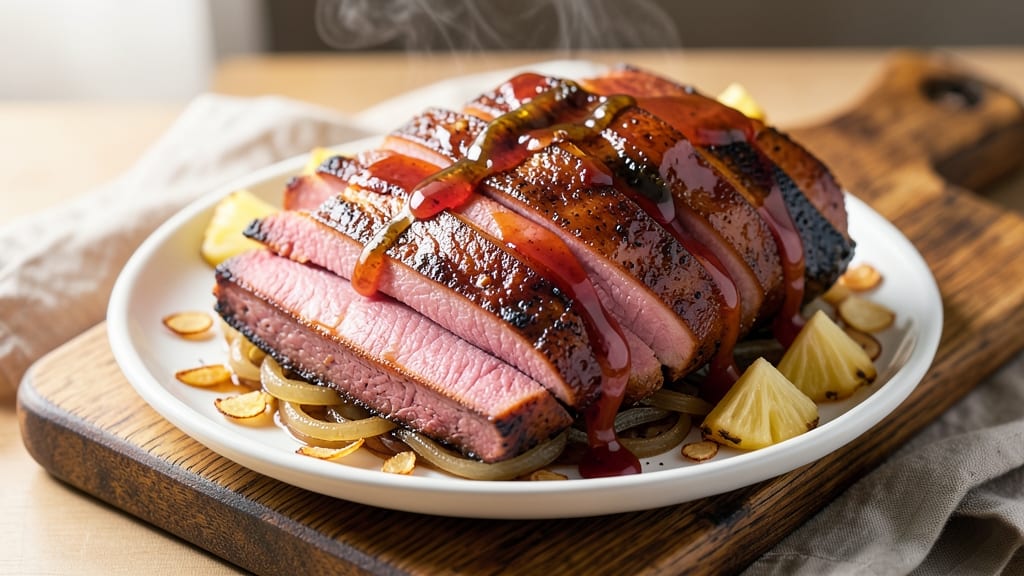
This cooked ham with pineapple glaze transforms ordinary ham into a showstopping centerpiece with just a few simple ingredients. The caramelized pineapple glaze adds a perfect balance of sweet and tangy flavors that'll have everyone asking for seconds.
I first made this recipe during a holiday gathering when I needed something impressive yet approachable—it became an instant crowd favorite.
The secret lies in the glaze itself: a blend of pineapple juice, brown sugar, and a touch of mustard that creates a sticky-sweet coating when reduced. While the ham roasts in the oven, the glaze simmers away, intensifying its flavors.
This method ensures the ham stays juicy inside while developing a beautiful golden-brown crust outside—no dry, overcooked slices here.
What you'll end up with is a perfectly glazed ham that's tender, flavorful, and visually stunning. The pineapple glaze gives it that irresistible shine and sweetness, while the mustard adds just enough depth to complement the ham's natural richness.
It's the kind of dish that makes holiday meals feel special without requiring hours of prep.
Serve it with classic sides like roasted potatoes, a fresh green salad, or pineapple salsa to balance the richness. The glaze works equally well on smaller cuts of ham, making this recipe perfect for weeknight dinners too. Let's get cooking!
Ingredients for cooked ham with pineapple glaze
Transform ordinary ham into a showstopping centerpiece with these carefully balanced ingredients.
| Ingredient | Amount | Notes |
|---|---|---|
| Fully Cooked Boneless Ham 🥓 | 4 lb | Center-cut for even glaze adherence |
| Pineapple Juice 🍍 | 1 ½ cups | Freshly squeezed preferred |
| Light Brown Sugar 🍚 | 1 cup | Packed firmly for accurate measure |
| Dijon Mustard 🧄 | 2 tbsp | High-quality for authentic tang |
| Honey 🍯 | 2 tbsp | Wildflower preferred for depth |
| Apple Cider Vinegar 🍏 | 1 tbsp | Balances sweetness effectively |
| Ground Black Pepper 🌶️ | ½ tsp | Freshly cracked for optimal flavor |
| Ground Cloves 🌿 | ¼ tsp | Whole cloves lightly toasted first |
| Unsalted Butter 🧈 | 2 tbsp | Cold for proper glaze emulsification |
| Fresh Pineapple Chunks 🍍 | ½ cup | For garnish and visual appeal |
| Fresh Mint Leaves 🌿 | ¼ cup | Chopped for garnish |
| Diamond Crystal Kosher Salt 🧂 | ½ tsp | For seasoning glaze |
The ham selection is critical for this recipe. Opt for a center-cut bone-in or boneless ham—it retains moisture better during glazing. Smithfield or Hormel brands consistently deliver excellent results, but any fully cooked ham will work. Look for one with good fat marbling; this ensures juiciness even after glazing. If using a bone-in ham, score the fat cap lightly to help the glaze penetrate. For smaller gatherings, a 3-4 lb ham works perfectly—simply halve the glaze ingredients proportionally. The pineapple juice should be 100% pure with no additives—Dole or Del Monte brands are reliable choices, though freshly squeezed is ideal if time permits.
No pineapple juice on hand? Coconut water or apple juice can substitute in a pinch, though the flavor profile will differ slightly. The brown sugar can be swapped for turbinado or muscovado sugar for deeper caramel notes, though light brown sugar provides the perfect balance here. Dijon mustard is essential—regular yellow mustard lacks the complexity. For a vegan adaptation, replace the honey with agave nectar or maple syrup, though the flavor will be slightly less nuanced. The cloves should be lightly toasted whole in a dry pan for 30 seconds before grinding to release their aromatic oils. Fresh pineapple chunks for garnish are optional but highly recommended—they add a vibrant contrast to the rich glaze.
The glaze can be prepared up to 2 days in advance and stored in an airtight container in the refrigerator. Reheat gently before brushing on the ham to maintain its consistency. The ham itself reheats beautifully—cover it with foil and bake at 325°F for 10-12 minutes per pound**, basting with the reserved glaze every 5 minutes. For make-ahead convenience, prepare the glaze and store it separately, then assemble everything just before serving. The garnish should be added immediately before serving to maintain its fresh appearance. Leftover glazed ham keeps for 4-5 days in the refrigerator, though it's rarely leftovers-worthy.
Why You'll Love This Recipe
- One-Pan Magic: The ham sits in the oven while the glaze simmers—no chopping, no fuss. Just slice the ham, pour the pineapple-honey mix, and let it caramelize. (Yes, even on a Tuesday night.)
- Sweet-Savory Balance: That sticky glaze—Dijon mustard cuts through the sweetness while the brown sugar melts into a glossy finish. It’s the kind of flavor that makes you reach for seconds without even thinking.
- Leftovers That Shine: Slice the ham thin for sandwiches or dice it into salads—it reheats beautifully. Honestly, I’ve had this ham last four days, and it’s still the star of every meal.
- Budget Crowd-Pleaser: A whole ham feeds a family for days, and the glaze costs pennies. Between us, this is my go-to for holiday leftovers or when friends drop by unexpectedly.
Step-by-step instructions for cooked ham with pineapple glaze
Master this glaze technique and transform ordinary ham into a showstopping centerpiece.
Prepare the Glaze Base
In a medium saucepan over medium heat, combine the 1.5 cups pineapple juice, 1 cup light brown sugar, 2 tablespoons Dijon mustard, 2 tablespoons honey, and 1 tablespoon apple cider vinegar. Stir until the sugar fully dissolves and the mixture reaches a gentle simmer. This should take about 3-4 minutes.
Real talk: The sugar needs to fully integrate to prevent graininess in your glaze. I like to taste the mixture at this stage—it should be sweet with a bright tang from the vinegar. If it's too thick, add 1-2 tablespoons water to loosen it. The glaze should coat the back of a spoon but still flow freely.
Infuse with Spices and Butter
Reduce heat to low and stir in the 0.5 teaspoon ground black pepper, 0.25 teaspoon ground cloves, and 2 tablespoons cold unsalted butter, cut into small pieces. The butter should melt completely but not brown—this could make the glaze bitter. Stir constantly for 2-3 minutes until the mixture becomes glossy and slightly thickened.
Here's the thing—those whole cloves should have been toasted first for depth of flavor. If you skipped that step, don't worry, but you'll notice a more subtle spice presence. The butter adds richness and helps the glaze cling beautifully to the ham. You're looking for a consistency similar to light syrup that coats a spoon but still drizzles when poured.
Glaze the Ham and Bake
Preheat your oven to 350°F. Place the 4 lb fully cooked boneless ham on a rack set in a roasting pan, fat side up. Spread half of the prepared glaze evenly over the ham, using a pastry brush for complete coverage. Transfer to the oven and bake for 20 minutes.
This initial baking time allows the glaze to set and begin caramelizing. After 20 minutes, remove the ham from the oven and brush on the remaining glaze. Return to the oven and continue baking for another 10-15 minutes until the glaze is deep amber in color and bubbling vigorously. The ham's internal temperature should reach 140°F—it's already cooked, but we're reheating it gently.
Finish with Garnish and Rest
Remove the ham from the oven and transfer it to a cutting board. Let it rest for 10 minutes before serving. This resting period allows the juices to redistribute and the glaze to set slightly, preventing a runny mess when you slice. While it rests, arrange the 0.5 cup fresh pineapple chunks and 0.25 cup chopped fresh mint leaves on a platter.
I know it seems counterintuitive to wait, but trust me—this makes all the difference. The glaze should be thick enough to hold its shape when sliced, with beautiful caramelized bubbles throughout. If you're serving immediately, arrange the ham on the platter with the pineapple and mint. For a more dramatic presentation, slice the ham and arrange it on the garnished platter.
Pro Tips For Making Cooked Ham With Pineapple Glaze
- Simmer Low and Slow: The glaze won’t caramelize properly if you rush it—keep the heat at a steady simmer (medium-low) once the pineapple juice hits the pan. I used to crank it up, and the sugar would burn before the flavors melded. Trust me, patience here makes the difference between a sweet glaze and a sad, bitter mess.
- Reduce Juice First: Pour the pineapple juice into a cold pan and let it come to a boil before adding anything else. This drives off some of the water upfront, so your glaze thickens faster and doesn’t turn out runny. (Yes, even if you’re impatient like me—just walk away for 3 minutes.)
- Skip the Pre-Cooked Ham Shortcut: If your ham is fully cooked but still cold, slice it before glazing—it’ll absorb the sauce better. I learned this the hard way by glazing a frozen ham and ending up with a soggy, uneven coating. Room temp ham slices? Glaze sticks like a dream.
- Balance Sweet and Tang: Taste your glaze before brushing it on—if it’s too cloying, add a splash of Dijon mustard (start with 1 tsp). If it’s too sharp, stir in a little extra honey. The mustard cuts through the sugar, and the honey rounds out the acidity. (Your taste buds will notice if you skip this step.)
Essential equipment for great cooked ham with pineapple glaze
Glaze Brush Essentials
You'll need a high-quality pastry brush with soft bristles to evenly distribute the glaze—my go-to is a silicon brush from OXO Good Grips because it holds more glaze and won’t leave brush marks.
Avoid stiff bristles that can tear the ham’s delicate surface. For extra precision, I keep a small offset spatula handy to spread glaze in hard-to-reach areas. 🍍
Roasting Pan with Rack
A stainless steel roasting pan with an adjustable rack is non-negotiable—it elevates the ham for even heat circulation and prevents soggy bottoms. I swear by the All-Clad Stainless Steel Roasting Pan (about $50), though budget-friendly options like Cuisinart’s work just as well.
The rack ensures the glaze doesn’t pool at the bottom, making cleanup a breeze.
Thermometer for Precision
Since the ham is pre-cooked, you’re reheating it gently, so a meat thermometer is your best friend. I use a Thermoworks Smoke (with dual probes) to monitor both the oven temp and the ham’s internal heat.
Aim for 140°F—any higher risks drying out the edges. A budget pick is the Taylor Precision probe thermometer for under $20.
Saucepan for Glaze
For the glaze, a medium-sized stainless steel saucepan with sloped sides prevents spills when stirring. I avoid nonstick pans—they can’t handle the medium-high heat needed to reduce the sugar properly. A 3-quart Le Creuset pan works beautifully, but any heavy-bottomed pan (like All-Clad) will do. Just
Garnish Tools
Fresh pineapple and mint elevate the dish, so a sharp chef’s knife and mandoline (for uniform slices) are handy. I also keep a small mixing bowl for tossing pineapple chunks with a pinch of Diamond Crystal kosher salt and a squeeze of lime before plating. A microplane comes in handy for zesting lime if you want extra brightness. 🌿
Optional: Stand Mixer
If you’re making glaze in bulk (for leftovers or larger hams), a stand mixer with the paddle attachment can save time. I use my KitchenAid Artisan on low speed to blend the glaze ingredients smoothly—just be sure to scrape down the sides frequently.
This is especially useful if you’re doubling the recipe for a crowd. The mixer ensures no sugar grains remain, giving you a silky-smooth finish. ⚡
Nutrition facts
Frequently asked questions
Can I use canned pineapple instead of fresh pineapple juice?
Yes, but with a few adjustments! Use 1 cup crushed pineapple (drained well) plus 0.5 cup water to replace the 1.5 cups pineapple juice. The texture will be slightly thicker, so you may need to add 1-2 extra tablespoons of water while reducing to achieve the right consistency. For garnish, fresh pineapple still works best—canned chunks lack the bright visual contrast.
How do I adjust this recipe for a smaller ham (2-3 lbs)?
Simply halve the glaze ingredients and reduce the baking time. For a 2 lb ham, use 0.75 cup pineapple juice, 0.5 cup brown sugar, and 1 tbsp each of mustard, honey, and vinegar. Bake at 350°F for 15-20 minutes total (split into two 10-minute sessions with glaze applications). The smaller surface area cooks faster.
What if my glaze turns out too runny?
Don't panic! If the glaze is too thin after baking, simply reduce it further by simmering uncovered for 3-5 extra minutes on the stovetop. For a quick fix, mix 1 tsp cornstarch with 1 tbsp cold water, stir into the glaze, and simmer for 1 minute until thickened. Brush it on the ham immediately—it'll set beautifully when reheated.
Can I make this glaze ahead of time?
The glaze keeps well in an airtight container in the fridge for up to 5 days. Reheat it gently in a saucepan over low heat, stirring constantly until warm (about 3-4 minutes). For best results, reheat just before brushing on the ham. The flavors actually improve overnight as the spices infuse further.
What are the best sides to serve with this glazed ham?
This sweet-and-tangy ham pairs beautifully with savory contrasts. Try roasted garlic mashed potatoes (the creaminess balances the glaze), crispy Brussels sprouts with bacon, or a fresh arugula salad with lemon vinaigrette. For tropical vibes, serve with coconut rice or grilled pineapple slices**. The mint garnish ties everything together perfectly!