Sauces & Condiments
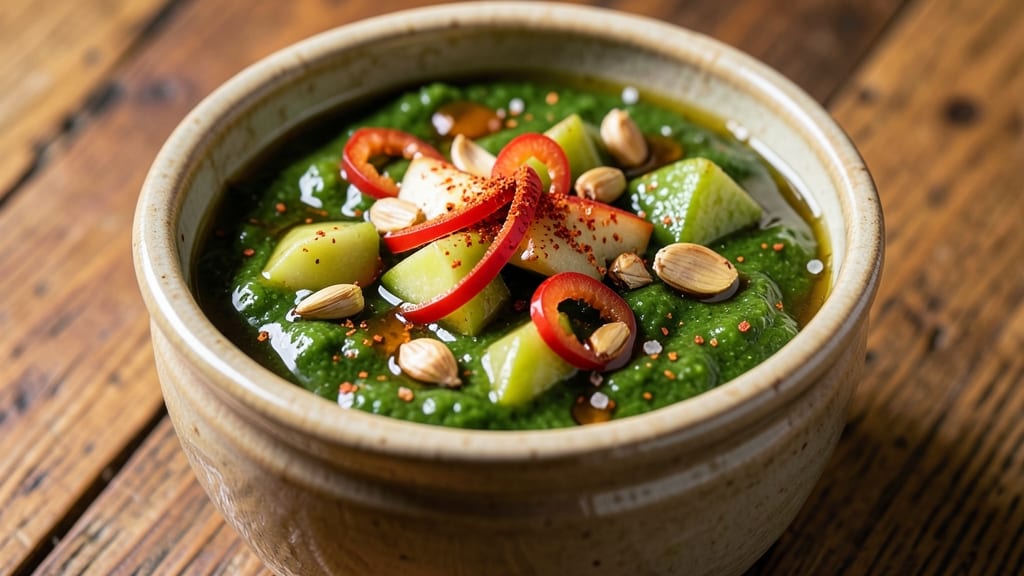
This green apple hot sauce recipe transforms tart apples and fiery celery peppers into a vibrant, balanced condiment that bridges sweet and spicy. The key lies in fermenting the apple base first—this process enhances natural sweetness while developing complex, tangy depth that cuts through heat.
I've perfected this recipe over years of experimentation, balancing crisp apple acidity with celery pepper's signature sharp heat for a sauce that's addictive yet never overwhelming.
The process begins with a simple fermentation of green apples and celery peppers in salted water, which mellows their flavors while preserving their bright characteristics.
After a week of fermentation, we blend the mixture with vinegar and spices to create a smooth, stable hot sauce with a perfect balance of sweetness, acidity, and heat. The result is a versatile condiment that elevates everything from tacos to grilled meats.
What makes this sauce truly special is its ability to complement both rich and delicate flavors without overpowering them. The apple's natural sweetness provides a refreshing contrast to spicy dishes, while the celery pepper adds a unique, slightly bitter heat that lingers just enough to keep your taste buds engaged.
This recipe yields about 2 cups of sauce, perfect for gifting or stocking your pantry.
Storage is simple—keep the sauce refrigerated in an airtight container for up to 3 months, or extend its shelf life with proper canning techniques.
Adjust the spice level by adding more or less celery pepper during fermentation, and feel free to experiment with additional ingredients like garlic or ginger for extra depth. Let's create this versatile hot sauce that will become a staple in your kitchen.
Ingredients for green apple hot sauce
Nine simple ingredients transform tart apples and fiery peppers into addictive, balanced heat.
| Ingredient | Amount | Notes |
|---|---|---|
| Green Apples 🍏 | 2 lbs | Tart variety like Granny Smith, peeled and chopped |
| Celery Peppers 🌶️ | ½ cup | Fresh, sliced into thin strips |
| Non-Iodized Salt 🧂 | 2 tbsp | For fermentation, Diamond Crystal preferred |
| Apple Cider Vinegar 🍎 | 1 cup | Raw, unfiltered for tang |
| Garlic Cloves 🧄 | 4 cloves | Fresh, peeled and smashed |
| Cayenne Pepper 🔥 | 1 tsp | Adjust for desired heat level |
| Black Peppercorns 🌶️ | ½ tsp | Freshly cracked, for depth |
| Honey 🍯 | 2 tbsp | Local raw honey for sweetness |
| Filtered Water 💧 | 2 cups | For fermentation brine |
The apples are the heart of this sauce—Granny Smiths give the best tartness, but any firm green variety works. Local orchards or farmers markets often have better quality than grocery store apples, but if you're stuck with store-bought, pick the firmest ones you can find. Celery peppers? These are the secret weapon—they're milder than jalapeños but still pack serious heat. Trader Joe's or specialty Latin markets usually carry them fresh. For the salt, Diamond Crystal dissolves better than table salt, which is crucial for proper fermentation. If you can't find it, regular sea salt works in a pinch, but you might need a tad more.
No celery peppers? Substitute with 2-3 fresh jalapeños for similar heat, but you'll lose that unique celery pepper bite. Short on apples? Green pears work surprisingly well—they ferment faster but add a different complexity. The vinegar can be swapped for white wine vinegar or lemon juice, though apple cider gives that signature tang. Honey is key for balancing heat—agave or maple syrup are good alternatives if you're avoiding honey. For extra depth, add 1 tsp of smoked paprika to the blend. And if you're feeling adventurous, toss in a pinch of ground ginger during fermentation for warmth.
This sauce needs 7 days of fermentation in the fridge—don't rush it. Once blended, it keeps for 3 months refrigerated in a clean glass jar. For gifting, sterilize jars and use a water bath canner for 10 minutes of processing. The flavor actually improves after a week or two, so make a big batch if you can. Store-bought hot sauces? This one's worth the effort—the fermentation process creates depth you just can't buy. And if you end up with extra, freeze it in ice cube trays for perfect single-serving portions.
Why You'll Love This Recipe
- Pantry-to-Bottle Speed: I swear by this one—just chop a few apples and peppers, toss them in a blender with vinegar and garlic, then let it sit. No fancy tools, no waiting for a slow cooker. Honestly, it’s the kind of recipe where you’ll wonder why you ever bought store-bought.
- Tart-Sweet Heat: That green apple tang cuts through the spice like a cool breeze on a hot day. The vinegar brightens it up, and the garlic? Oh, it sneaks in warmth without overpowering. Between us, it’s the kind of flavor that makes you reach for the jar again before the meal’s even over.
- Game for Any Plate: Slather it on grilled chicken, drizzle it over tacos, or mix it into mayo for sandwiches—this stuff works everywhere. I’ve even used it to wake up a boring salad. (Yes, even on a Tuesday night.)
- No-Waste, Long-Lasting: Apples get mushy fast, but this sauce keeps for weeks in the fridge. Plus, you’re using up those last celery peppers before they wilt. Budget-friendly? Absolutely. But more importantly, it’s the kind of thing you’ll make again because it’s that good.
Step-by-step instructions for green apple hot sauce
Here's how to make this bright, tangy hot sauce that balances sweet and spicy perfectly.
Prep and Sterilize Your Equipment
Wash all your ingredients thoroughly—especially the 2 lbs green apples—and peel them before chopping into ½-inch chunks. I like to use a food processor for this step to speed things up, but a sharp knife works too if you're feeling hands-on. Transfer everything to a large, non-reactive pot (stainless steel or glass).
Sterilize your jars and lids by boiling them in water for 10 minutes while you prep. This prevents any unwanted bacteria from spoiling your sauce later. Keep the jars warm in a 200°F oven while you work—they'll stay sterile until you fill them.
Cook the Apple Base
Combine the chopped green apples, 0.5 cup celery peppers, 4 smashed garlic cloves, and 2 tbsp non-iodized salt in the pot. Add the 2 cups filtered water and bring to a boil over medium-high heat. Once boiling, reduce to medium-low and simmer uncovered for 20-25 minutes until the apples break down completely and the mixture thickens slightly.
You'll know it's ready when the mixture looks like a thick purée and smells intensely sweet with a hint of garlic. Taste it—it should be bright and tangy, with no crunch left. If it's too thin, simmer another 5 minutes to concentrate the flavors.
Add Vinegar and Spices
Remove the pot from heat and stir in the 1 cup apple cider vinegar, 1 tsp cayenne pepper, and 0.5 tsp cracked black peppercorns. Let the mixture cool slightly—about 10 minutes—while you stir occasionally. This step is where the sauce gets its signature tang and heat balance.
I like to taste as I go. If it needs more heat, add a pinch more cayenne. If it's too sharp, stir in the 2 tbsp honey now to mellow the acidity. The goal is a perfect harmony of sweet, tangy, and spicy—like biting into a crisp apple with a kick.
Bottle and Ferment
Fill your sterilized jars with the hot sauce, leaving about ½-inch headspace at the top. Use a clean spoon to press down the solids, ensuring all the liquid is captured. Wipe the rims with a damp cloth to remove any sauce residue, then seal the lids tightly.
Let the jars cool to room temperature, then refrigerate for at least 24 hours before opening. This resting period lets the flavors meld and the spices infuse fully. The sauce will ferment slightly, developing deeper complexity—kind of like a good hot sauce should. After 48 hours, it's ready to use, but it'll keep improving in flavor for up to 2 weeks in the fridge.
Strain and Store (Optional)
For a smoother sauce, strain it through a fine-mesh sieve after fermenting, pressing on the solids with a spoon to extract every last drop. If you prefer texture, skip this step—those apple chunks add great bite. Transfer the strained (or unstrained) sauce back to clean jars and refrigerate.
This hot sauce keeps for 3 months in the fridge, but I usually go through it faster than that. It's perfect for drizzling on tacos, mixing into dressings, or even stirring into cocktails for a sweet-spicy twist. The heat builds gradually, so start with a small amount and adjust to taste.
Pro Tips For Making Green Apple Hot Sauce
- COOK APPLES UNTIL SOFT: You’re not making applesauce—aim for a texture that’s just shy of mush, where they still hold their shape but collapse easily under gentle pressure. Overcooking turns them into glue; undercooking leaves you with a chunky, unbalanced sauce. Test with a fork after 10 minutes of simmering.
- PEEL AND CORE LIKE A PRO: Skip the knife and use a paring tool to slice off the peel in one long spiral—it’s faster and cleaner. For the core, cut out a small "X" at the stem end first; the apple will split neatly when you twist it apart. (Yes, it looks like you’re carving a Thanksgiving turkey, but it works.)
- SALT THE VINEGAR FIRST: Toss the non-iodized salt into the apple cider vinegar before adding it to the apples. This lets the salt dissolve fully and balances the acidity upfront, so you don’t end up chasing flavor with extra salt later. Trust me, your taste buds will notice the difference.
- STRAIN TWICE FOR SMOOTHNESS: Run the blended sauce through a fine-mesh sieve once, then press the pulp with a spoon. Repeat with a cheesecloth for a silky texture—no grit, no surprises. (I learned this the hard way after serving a batch with celery seeds lurking in every bite.)
Pro cooking tips for great green apple hot sauce
Fermentation Precision
Fermenting your green apple hot sauce is where the magic happens, and temperature control is everything. Keep your jars in the fridge at 38-40°F for consistent results—I use a Breville JEM1200 to monitor temps. If your kitchen runs warm, place jars in a cooler with ice packs.
The fermentation process should take 7 days, but if your kitchen is cooler, it might take 10 days. Taste after 5 days—if the flavors are too sharp, let it ferment longer. 🔥
Balancing Sweet and Heat
The key to this sauce is the apple-to-vinegar ratio. Start with 2 lbs apples to 1 cup vinegar, but adjust based on your apples' tartness. If your apples are extra sweet, add 1 extra tbsp vinegar.
For heat, use fresh celery peppers—they’re milder than jalapeños but pack a unique sharpness. If you want more kick, add ½ tsp extra cayenne after tasting the cooked base. I like to blend a small sample first to test the balance before committing to the full batch. ✨
Straining for Texture
Deciding whether to strain your sauce depends on the texture you want. For a smooth finish, strain through a fine-mesh sieve (like the OXO Good Grips) after fermenting. Press the solids with a spoon to extract every last drop of flavor.
If you prefer texture, skip straining—those apple chunks add a delightful crunch. Pro tip: Save the strained solids, blend them with a little water, and reduce into a thicker paste for future batches or as a marinade. 💫
Long-Term Storage Hacks
For longer shelf life, can your sauce using a water bath canner for 10 minutes in sterilized jars. If refrigerating, store in amber glass bottles to protect from light, which can degrade the apple flavors over time.
Freeze extras in ice cube trays for single-serving portions—just thaw in the fridge overnight. Label your jars with the date, as the flavor continues to evolve for up to 3 months. I always make a double batch because this sauce disappears faster than you’d think! 💡
Adjusting Spice Levels
Want to dial up or down the heat? Add cayenne pepper in ¼ tsp increments during the vinegar stage—it’s easier to adjust before bottling. For a smoky twist, add ½ tsp smoked paprika to the blend.
If you prefer a fruity heat, blend in 2 tbsp apple juice after fermenting. Remember, celery peppers have a unique sharpness, so don’t substitute them entirely—even a ¼ cup adds depth. Taste as you go, and trust your palate! 🌶️
Equipment Must-Haves
You don’t need fancy tools, but a few key items make this process smoother. A food processor for chopping apples saves time, and a fine-mesh sieve is a game-changer for straining. For fermentation, mason jars with airlock lids (like Ball Mason) help control fermentation.
If you’re canning, a water bath canner is essential. I also recommend digital kitchen scales for precise measurements—especially when balancing sweetness and acidity. Investing in these tools makes hot sauce-making a breeze. 🔧
Nutrition facts
Frequently asked questions
Can I use regular table salt instead of non-iodized salt for fermentation?
Technically yes, but it's not ideal. Table salt contains anti-caking agents that can interfere with fermentation. If you must use it, add 1 extra teaspoon since it's denser. For best results, stick with non-iodized salt—it dissolves more evenly and promotes cleaner fermentation.
How can I tell if my green apple hot sauce is fermented enough?
Taste is your best guide! After 5 days in the fridge, check for balanced sweetness and tang. If it's too sharp, ferment another 2-3 days. The sauce should smell bright and slightly tangy (like apple cider) with no harsh vinegar bite. Look for bubbles in the jar—more bubbles mean more fermentation activity.
What's the best way to store leftover apple chunks after straining?
Rinse the strained apple solids and blend with ½ cup water, then simmer for 10 minutes to make a thick paste. Store in an airtight container in the fridge for up to 2 weeks. Use it in marinades, BBQ sauces, or even as a topping for grilled meats. The concentrated flavor is amazing!
Why did my hot sauce turn cloudy or develop mold?
Cloudiness usually means fermentation went too long—your sauce is over-acidified. For mold, it likely didn't ferment properly (wrong temp or contamination). Always use sterilized jars, keep temps between 38-40°F, and check for bubbles daily. If mold appears, discard immediately—never taste it. Prevent future issues by using filtered water and proper sealing techniques.
Can I make this hot sauce without fermentation?
Yes, but it won't have the same depth of flavor. Skip fermentation and cook the apple base with vinegar and spices for 15 minutes instead. You'll lose the complex tanginess, but it'll still be bright and sweet-spicy. For a quick version, blend cooked apples with 1 cup vinegar, 1 tbsp honey, and ½ tsp cayenne, then simmer 10 minutes. Store in the fridge for 1 month.