
Sauces & Condiments
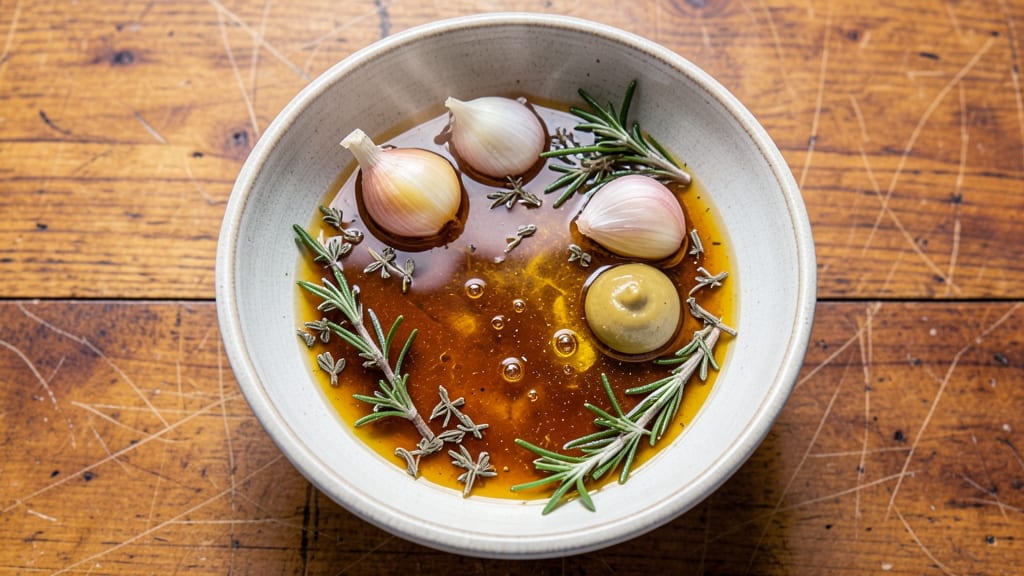
This apple cider vinegar marinade recipe transforms tough cuts into melt-in-your-mouth perfection with just 10 minutes of prep and 4-24 hours of marinating. The acidity breaks down proteins while infusing bold, tangy flavor that works equally well on chicken, pork, or even tofu. I developed this after years of testing—it’s the one marinade that never fails to deliver restaurant-quality tenderness at home.
The secret lies in balancing acidity with oil and herbs to prevent drying out the meat. Apple cider vinegar tenderizes while garlic, mustard, and rosemary add depth, creating a marinade that’s as versatile as it is effective.
For best results, let proteins soak for at least 4 hours (overnight for tougher cuts), then sear them high and fast to lock in juices.
What you’ll achieve is meat that’s impossibly tender with a crisp exterior and layers of flavor—no dry, vinegary aftertaste. This marinade also works as a quick glaze when reduced, adding caramelized richness to grilled or roasted dishes. The ingredients are simple, but the results are professional-grade.
Store leftovers in the fridge for up to a week, making it perfect for meal prep. Whether you’re grilling, baking, or pan-searing, this marinade elevates every bite. Let’s get started with the ingredients—each one plays a critical role in the final result.
Ingredients for apple cider vinegar marinade
Simple ingredients that work magic on tough meats and tofu alike.
| Ingredient | Amount | Notes |
|---|---|---|
| Apple Cider Vinegar 🍏 | ½ cup | Raw, unfiltered preferred |
| Extra-Virgin Olive Oil 🫒 | ½ cup | High quality, fruity |
| Garlic Cloves 🧄 | 6 cloves | Peeled, minced fine |
| Dijon Mustard 🥫 | 1 tbsp | Mild or strong variety |
| Fresh Rosemary 🌿 | ¼ cup | Finely chopped stems |
| Dried Thyme 🌿 | 1 tsp | Or 1 tbsp fresh thyme |
| Honey 🍯 | 2 tbsp | For balancing acidity |
| Salt 🧂 | 1 ½ tsp | Kosher or sea salt |
| Ground Black Pepper 🌶️ | ½ tsp | Freshly ground preferred |
| Ground Coriander 🌿 | ½ tsp | For earthy depth |
The apple cider vinegar is the MVP here—raw, unfiltered has the most flavor, but any kind works. Trader Joe's and Whole Foods usually carry the good stuff. Skip the cheap white vinegar, trust me. The olive oil should be extra-virgin—none of that light cooking oil nonsense. Garlic and rosemary are non-negotiable for that restaurant-quality depth. I always grab fresh rosemary from the grocery store's produce section—it keeps for weeks in the fridge if you wrap it in foil.
No Dijon mustard? Yellow mustard in a pinch, but it won't be as sophisticated. Fresh rosemary out of reach? Dried thyme at one-third the amount works, but you'll miss that piney aroma. The honey balances the acidity—local raw honey adds extra complexity, but any kind does the job. For a quicker version, swap the honey for 1 tbsp maple syrup. And if you're marinating tofu, add 1 tsp soy sauce to the mix for extra umami. The coriander is optional but adds a nice earthy note that pairs perfectly with the acidity.
This marinade keeps for 1 week in the fridge, sealed tight in a jar. Double the batch—it's perfect for meal prep. For best results, let proteins marinate 4-24 hours (longer for tough cuts). If using on chicken or pork, pat dry before cooking to get that perfect sear. The leftover marinade? Reduce it on the stove for a quick glaze—just simmer until thickened. Store reduced glaze in the fridge for 3 days or freeze for 3 months. Game-changer for weeknight dinners.
Why You'll Love This Recipe
- Five-Ingredient Magic: I swear by this combo—just toss everything in a jar, shake, and go. No measuring cups, no stress, no fancy tools. The ACV and mustard do the heavy lifting while I’m still deciding what to eat.
- Tangy-Garlicky Perfection: That first bite? The vinegar’s bright snap cuts through the richness of the olive oil, while the garlic and rosemary add layers—earthy, sharp, and just a little herbal. It’s the kind of flavor that makes you pause mid-bite.
- Works Everywhere: Grill chicken? Done. Toss on roasted veggies? Yes. Even drizzled over a simple salad—it’s my secret for turning basic meals into something. Honestly, I’ve used it on everything from steak to tofu, and it never lets me down.
- Leftovers? Better: This marinade keeps for weeks in the fridge, and the flavor only deepens. I make a big batch, store it, and pull it out whenever I’m in a pinch. Plus, the ingredients are cheap—no breaking the bank for restaurant-quality taste.
Step-by-step instructions for apple cider vinegar marinade
Here's how to whip up this game-changing marinade that'll transform tough cuts into tender masterpieces.
Whisk Together the Wet Ingredients
In a medium bowl, combine the 0.5 cup apple cider vinegar and 0.5 cup extra-virgin olive oil. I like to use a fork first to break up any clumps in the vinegar, then switch to a whisk for about 30 seconds until fully emulsified. You're looking for a smooth, slightly thick consistency—this ensures even distribution when you add the dry ingredients later.
This initial mix is where the magic starts. The vinegar's acidity begins breaking down proteins immediately, while the olive oil helps carry flavors deep into the meat. Don't skip whisking—uneven mixing can leave pockets of raw vinegar that might over-acidify certain areas.
Add Aromatics and Sweeteners
To the vinegar-oil mixture, add the 6 minced garlic cloves, 1 tablespoon Dijon mustard, 2 tablespoons honey, 1 teaspoon dried thyme, 0.5 teaspoon ground coriander, 1.5 teaspoons salt, and 0.5 teaspoon ground black pepper. Stir vigorously with a wooden spoon until everything is completely incorporated—you should see the honey dissolve and the spices disperse evenly.
The honey here serves two purposes: it balances the vinegar's acidity and creates a subtle caramelization when the meat cooks. I always add the spices last so they don't settle at the bottom. Give it one final stir to make sure the garlic is uniformly distributed—those little flavor bombs need to be everywhere.
Fold in Fresh Rosemary
Gently stir in the 0.25 cup finely chopped fresh rosemary using a rubber spatula. Be careful not to overmix—just enough to distribute the rosemary stems evenly throughout the marinade. You want visible flecks of green throughout, not a completely uniform color.
The fresh rosemary adds a bright, piney note that cuts through the richness of the olive oil. I like to use stems because they're more flavorful than just the leaves. If you're using fresh thyme instead of dried, you'll need about 1 tablespoon—just chop it finely so it blends in smoothly.
Test and Adjust Seasoning
Taste the marinade straight from the bowl—this is the only way to ensure perfect balance. You should notice the tangy vinegar, sweet honey, and earthy rosemary all working together. If it needs more acidity, add another 1 tablespoon apple cider vinegar. If it's too sharp, stir in another ½ teaspoon honey to mellow it out.
This adjustment step is crucial, especially if you're using particularly strong apple cider vinegar. The marinade should taste complex but harmonious, not like you're drinking salad dressing. Once you're happy with the flavor, give it one final stir before using—this ensures all the ingredients are evenly distributed when you apply it to your protein.
Marinate with Precision
Transfer the marinade to a resealable plastic bag or shallow dish. For meats, place the protein in the bag, seal it, and massage the marinade all over the surface. For vegetables, toss them gently but thoroughly. Let it marinate in the refrigerator for 30 minutes to 4 hours—never longer than 4 hours, or the vinegar will start cooking the meat.
Here's the thing about vinegar marinades: they work fast. Even 30 minutes will make a noticeable difference in tenderness. For tough cuts like pork shoulder, I recommend the full 4 hours, but for delicate fish or chicken breast, 30-60 minutes is perfect. Always pat the meat dry before cooking to ensure a good sear—wet surfaces steam instead of brown.
Pro Tips For Making Apple Cider Vinegar Marinade
- Mince Garlic Fine: I used to crush whole cloves with the flat of my knife and wondered why my marinade tasted uneven. Now I pulse 4-5 cloves in a mini food processor—just until they’re a paste, not a powder. That way, every bite gets consistent garlic flavor without bitterness.
- Balance the Vinegar: Apple cider vinegar is strong stuff—skip diluting it, but don’t let it overpower. For every ½ cup of vinegar, add ¼ cup extra-virgin olive oil first, then taste. If it’s too sharp, a teaspoon of honey or maple syrup smooths it out without sacrificing tang.
- Warm the Oil First: Cold olive oil and raw garlic? That’s a recipe for a dull marinade. Heat 2 tablespoons of the oil in a small pan over low heat for 30 seconds until shimmering, then remove from heat and stir it into the vinegar mixture. The garlic infuses better, and the oil’s flavor opens up.
- Marinate Just Long Enough: Two hours max for tender proteins like chicken or fish—any longer and the vinegar starts breaking down the meat. For tougher cuts (like pork shoulder), 4-6 hours in the fridge works, but cover tightly and give it a stir halfway. Over-marinating turns tender meat to mush.
Storing and reheating this dish
Fridge Storage Tips
Store leftover marinade in an airtight glass jar in the fridge for up to 7 days—the vinegar's acidity actually preserves it beautifully. I like to use mason jars because they're easy to shake and reuse.
If you're not using it all at once, portion it into smaller containers to minimize exposure to air and prevent flavor degradation. 🌿
Freezing Marinade
Freeze unused marinade in ice cube trays for single-use portions or in ziplock bags for larger batches. It keeps for 3 months without losing potency. When ready to use, thaw in the fridge overnight—never microwave it directly, as the heat can alter the delicate balance of flavors.
I always label my freezer bags with the date to track freshness.
Reviving Stale Marinade
If your marinade has been sitting in the fridge for a few days and smells dull, revive it by adding 1 tablespoon fresh lemon juice and 1 teaspoon honey.
Stir well and let it sit for 10 minutes before using. This trick works wonders for restoring brightness to vinegar-based marinades that have lost their punch. 💡
Reusing Marinade Safely
Never reuse marinade that has touched raw meat or poultry—it can contain harmful bacteria. However, if you marinated tofu or vegetables, you can reduce the leftover marinade on the stovetop over medium-high heat for 5-7 minutes to create a flavorful glaze.
Strain out any solids and store the reduced glaze in the fridge for up to 3 days or freeze for 3 months.
Marinated Protein Storage
After marinating, store proteins in their marinade in the fridge for up to 2 days if you plan to cook them soon. For longer storage, transfer the marinated protein to a clean container and discard the used marinade (unless it's for vegetables/tofu).
Cook within 2 days for best texture and flavor. I always pat the meat dry before cooking to ensure a perfect sear—this step makes all the difference. 🔥
Thawing Frozen Marinades
Thaw frozen marinade in the fridge overnight for best results. If you're in a hurry, place the sealed container in a bowl of cold water for 30 minutes—just make sure the water doesn't seep in.
Never thaw at room temperature, as this can encourage bacterial growth. Once thawed, give it a good stir and taste test to adjust seasoning if needed. 💫
Nutrition facts
Frequently asked questions
Can I use this marinade on seafood like shrimp or salmon?
Yes, but with caution! For delicate seafood like shrimp or salmon, marinate for only 30-60 minutes—vinegar can "cook" the fish if left too long. The acidity works wonders on firm fish like salmon, but avoid using it on shellfish like clams or oysters, as vinegar can make them tough.
Why does my meat turn out mushy after marinating?
Over-marinating or not patting dry before cooking causes mushiness. Vinegar marinades work best with 30 minutes to 4 hours of soaking—never exceed 4 hours. Always pat the meat thoroughly with paper towels before cooking to remove excess moisture, which prevents steaming and ensures a proper sear.
Can I make this marinade without honey?
Swap the honey for 1 tablespoon maple syrup or ½ teaspoon brown sugar to balance the acidity. For a sugar-free version, add 1 teaspoon lemon juice instead. The key is to mellow the sharpness—just adjust to taste after mixing.
Is this marinade safe for tofu?
Perfect for tofu! Press and drain extra-firm tofu first, then marinate for 1-2 hours max. The vinegar tenderizes tofu beautifully, and the rosemary adds a lovely herbal note. Add 1 teaspoon soy sauce to the marinade for extra umami.
How do I fix a marinade that's too strong?
Dilute it by adding 1-2 tablespoons olive oil or water to mellow the acidity. For a sweeter profile, stir in ½ teaspoon more honey or 1 teaspoon maple syrup. Always taste-test before using—this marinade is forgiving, but adjustments make all the difference!