Sauces & Condiments
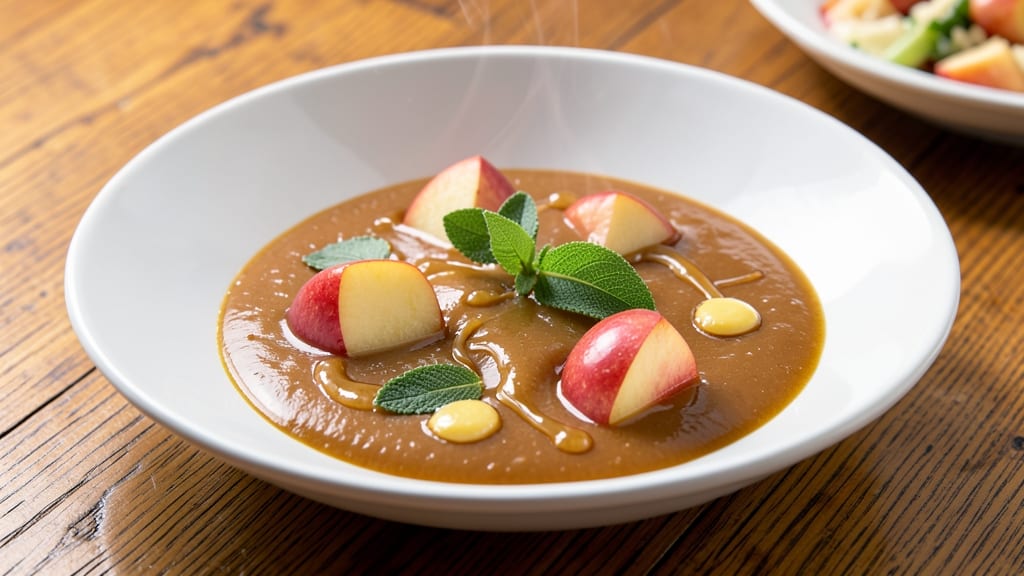
This apple and sage sauce recipe transforms simple ingredients into a rich, aromatic glaze that elevates roasted meats, stuffing, or even desserts. The combination of tender apples, earthy sage, and warm spices creates a sauce that's both versatile and deeply flavorful.
I developed this recipe after years of searching for the perfect balance of sweetness and herbal depth—something that works as beautifully over pork as it does drizzled over roasted carrots.
The secret lies in simmering the apples until they break down into a smooth purée, then blending them with melted butter, fresh sage, and a touch of broth for depth. A pinch of cinnamon and thyme adds warmth, while a splash of apple cider vinegar brightens the flavors.
The result is a sauce that's silky, fragrant, and packed with layers of autumnal comfort.
What makes this sauce truly special is its ability to adapt—use it as a drizzle for roasted pork chops, a glaze for holiday stuffing, or even a drizzle over vanilla ice cream for a sophisticated dessert.
It keeps well in the refrigerator for up to a week, making it perfect for meal prep or gifting.
Whether you're hosting a dinner party or simply craving a cozy weeknight meal, this sauce delivers restaurant-quality flavor with minimal effort. The process is straightforward, and the ingredients are likely already in your pantry. Let’s get started!
Ingredients for apple and sage sauce
Nine simple ingredients create a restaurant-quality glaze perfect for roasted meats and veggies.
| Ingredient | Amount | Notes |
|---|---|---|
| Honeycrisp Apples 🍎 | 4 medium | Peeled, cored, chopped small |
| Unsalted Butter 🧈 | ½ cup | Cold, cubed for even melting |
| Fresh Sage Leaves 🌿 | ½ cup | Chopped, stems removed |
| Apple Cider Vinegar 🍶 | 2 tbsp | For brightness and balance |
| Chicken or Vegetable Broth 💧 | ½ cup | Low-sodium preferred |
| Granulated Sugar 🍚 | ¼ cup | Adjust to taste |
| Ground Cinnamon 🌶️ | ½ tsp | For warm depth |
| Fresh Thyme Leaves 🌿 | 1 tsp | Chopped, or 0.25 tsp dried |
| Sea Salt 🧂 | ½ tsp | Fine grain preferred |
| Freshly Ground Black Pepper 🌶️ | ¼ tsp | For subtle heat |
The apples are the foundation—Honeycrisp holds its shape beautifully while cooking, but Fuji or Granny Smith work too. Whole Foods or local orchards often have the best selection, especially in fall. If you can't find Honeycrisp, any crisp apple with minimal core will do. The butter should be cold when you start, so pull it from the fridge right before using. For extra richness, use European-style butter—it has a higher fat content and melts more smoothly. Fresh sage is non-negotiable here; dried loses its delicate aroma when cooked. If you must use dried, reduce to one-third the amount.
No apple cider vinegar? White vinegar or lemon juice works in a pinch, but the apple flavor will be less pronounced. The broth can be swapped for apple juice or extra broth—just reduce the sugar slightly if using juice. Running short on thyme? Dried oregano or marjoram adds earthy notes, though not identical. For a deeper herbal profile, add a pinch of rosemary or tarragon. The sugar is entirely adjustable—start with the full amount, then taste and reduce if your apples are particularly sweet. If you're using this sauce for dessert, consider adding a touch of vanilla extract or cinnamon for extra warmth.
This sauce thickens as it cools, so reheat with a splash of broth or water if it becomes too stiff. Store in an airtight container in the fridge for up to 7 days, or freeze for 3 months in small portions. For gifting, transfer to a pretty jar with a ribbon—it makes a thoughtful holiday present. If you find yourself with leftover apples, toss the peels and cores into the compost or save them for homemade apple cider. The sage stems can be composted or saved for making sage-infused oil later.
Why You'll Love This Recipe
- Five-Ingredient Magic: I swear, this sauce comes together with just apples, butter, sage, vinegar, and broth—no fancy gadgets or last-minute grocery runs. Honestly, I keep a bag of Honeycrisp apples and a bunch of sage in my fridge just for this.
- Sagey, Sweet, Savory: That first bite of crispy apples with the earthy sage and buttery richness? It’s the kind of flavor that makes you pause mid-spoonful. The apple cider vinegar cuts through the sweetness just enough to keep it bright and addictive.
- Weeknight to Dinner Party: Slather it on roasted chicken, drizzle it over mashed potatoes, or serve it with grilled fish—it’s my go-to for busy nights and when I’m trying to impress. (Yes, even on a Tuesday night.)
- Leftovers That Shine: This sauce actually tastes better the next day—thicker, more concentrated, and perfect for reheating with a splash of broth. I’ll be real: I’ve made a double batch just to have it on hand for lazy mornings.
Step-by-step instructions for apple and sage sauce
Transform simple ingredients into a rich, aromatic glaze perfect for roasted dishes.
Sauté Apples and Herbs in Butter
Melt the 0.5 cup unsalted butter in a medium saucepan over medium heat until it foams but doesn't brown. Add the 4 medium chopped Honeycrisp apples and cook for 5-6 minutes until they begin to soften and release their juices. The apples should turn translucent at the edges—that's your cue they're ready for the next step.
Stir in the 0.5 cup chopped fresh sage leaves and 1 tsp chopped fresh thyme leaves, letting them sizzle gently for 1-2 minutes until fragrant. This step builds the herbal foundation of your sauce. Don't let the herbs burn—they should smell like a forest after a light rain, not like charred leaves.
Deglaze and Simmer with Vinegar and Broth
Pour in the 2 tbsp apple cider vinegar and scrape up any browned bits from the bottom of the pan with a wooden spoon. This deglazing step captures all the caramelized apple flavors that would otherwise stick to your pan. Let the mixture bubble gently for 1 minute to cook off the sharp vinegar acidity.
Add the 0.5 cup chicken or vegetable broth, stirring to combine. Bring to a gentle simmer over medium-low heat, then reduce heat to maintain a steady simmer. You want the sauce to bubble softly—not vigorously—so it reduces properly without losing its delicate flavors. This simmering process will concentrate the apple and herb essence into a velvety glaze.
Sweeten and Season to Perfection
Sprinkle in the 0.25 cup granulated sugar, stirring constantly until fully dissolved. Add the 0.5 tsp ground cinnamon, 0.5 tsp sea salt, and 0.25 tsp freshly ground black pepper. Let the sauce simmer uncovered for 8-10 minutes until it thickens to a glossy consistency that coats the back of a spoon. You're aiming for a syrupy texture that will cling beautifully to roasted meats and vegetables.
Taste and adjust the seasoning if needed—you might want to add a pinch more salt or sugar depending on your preference. The sauce should balance sweet, tart, and herbal notes perfectly. If it thickens too much while reducing, you can thin it slightly with a splash of warm water or broth, but it should hold its shape when drizzled.
Finish and Strain for Smooth Texture
Once the sauce reaches your desired consistency, remove it from heat and let it cool for 2-3 minutes. This brief resting period allows the flavors to meld completely. For a silky-smooth finish, strain the sauce through a fine-mesh sieve into a clean bowl, pressing gently on the solids with a spoon to extract all the liquid.
Your apple and sage sauce is now ready to elevate any dish. For immediate use, return it to the saucepan and warm gently over low heat for 1-2 minutes before drizzling over roasted pork tenderloin, glazed carrots, or even as a pan sauce for chicken. The sauce keeps well in the refrigerator for up to 5 days, though it's best enjoyed fresh when its aromatic qualities are at their peak.
Pro Tips For Making Apple And Sage Sauce
- PEEL AND CORE THINLY: Honeycrisp apples are dense—cut them into ¼-inch slices instead of chunks, or the sauce will taste like you’re eating apple stew. A mandoline makes this faster, but if you’re doing it by hand, angle the knife away from you (safety first, but also for cleaner cuts).
- SIMMER NOT BOIL: Start on medium-high to get the butter melting, then drop to a gentle simmer. I learned this the hard way—boiling reduces the broth too fast, and the sauce turns into glue. Keep it at a whisper-bubble, and the flavors meld instead of evaporating.
- STACK THE SAGE: Tuck whole sage leaves under the butter before adding apples—this keeps them from floating like lost confetti. If you’re using dried sage, halve the amount and add it at the end, or the sauce will taste like you raided your grandma’s medicine cabinet.
- ACID TEST FIRST: Taste the vinegar-broth mix before adding it to the apples. If it’s too sharp, dilute with a splash of water or a pinch of sugar. I was skeptical until I tried it—balancing the acid upfront means you won’t need to overcorrect later with extra honey.
Troubleshooting your apple and sage sauce
Apples Not Softening
If your apples aren't breaking down enough after 5-6 minutes of sautéing, they're likely too firm. This usually happens with overly tart varieties like Granny Smith. Swap in Honeycrisp or Fuji apples next time, or add 1 tbsp lemon juice to the pan to help tenderize them faster.
For stubborn apples, increase heat slightly to medium-high for 1-2 minutes to kickstart the process. 🍎
Sauce Too Thin
If your sauce remains watery after simmering, you likely used too much broth or didn't reduce it enough. For immediate fixes, simmer uncovered for an additional 5-10 minutes until it thickens.
If that's not enough, mix 1 tsp cornstarch with 1 tbsp cold water, stir into the sauce, and cook for 1-2 minutes until it reaches a glossy consistency. I've found this trick works wonders for rescuing runny sauces without altering flavor.
Herb Bitterness
Overcooked sage or thyme can turn bitter and overpower the sauce. To prevent this, remove the herbs after 1-2 minutes of sizzling and strain them out before finishing the sauce. If you notice bitterness after the fact, balance it with 1-2 tsp honey or maple syrup to mellow the harshness.
Fresh herbs should smell fragrant, not burnt—if they do, start fresh with a new batch.
Grainy Texture
A grainy texture usually means the sauce wasn't strained properly or the apples weren't cooked enough. For a silky finish, press the cooked apple mixture through a fine-mesh sieve using a spoon.
If you skipped straining, blend the sauce briefly with an immersion blender to break up any remaining apple chunks. For extra smoothness, add 1 tbsp heavy cream at the end and whisk vigorously.
Overly Tart Flavor
Too much apple cider vinegar can make the sauce taste sharp. Balance it by adding ½ tsp sugar or 1 tsp honey to sweeten the acidity. If the tartness persists, simmer the sauce uncovered for 2-3 extra minutes to let some of the vinegar cook off.
I've found that reducing the vinegar to 1 tbsp (instead of 2) often prevents this issue entirely in the first place.
Sauce Separates
Sauces sometimes separate when they cool if too much butter is added at once. To fix this, gently reheat the sauce over low heat while whisking constantly until smooth. For prevention, melt the butter slowly and stir continuously during the sautéing stage.
If the separation is severe, whisk in 1 tbsp warm water or broth to emulsify the mixture. This is a common issue with high-fat sauces, but it's easily remedied with patience.
Nutrition facts
Frequently asked questions
Can I use dried sage instead of fresh?
Fresh sage is ideal for this recipe, but you can substitute ⅓ cup dried sage if needed. Dried herbs are more concentrated, so use less than the fresh amount. For best results, toast the dried sage in the butter for 30 seconds before adding apples to enhance its aroma.
What's the best way to store leftover sauce?
Transfer the cooled sauce to an airtight container and refrigerate for up to 5 days. For longer storage, freeze in ice cube trays or small jars for 3 months. Thaw overnight in the fridge and reheat gently on low heat with a splash of broth to restore its glossy texture.
Can I make this sauce without butter?
Yes! Replace the butter with ½ cup olive oil or coconut oil for a dairy-free version. The sauce will have a slightly different richness, but the apple-sage flavor remains vibrant. For extra depth, add 1 tbsp apple cider vinegar to balance the oil's neutral taste.
What dishes pair best with this sauce?
This versatile sauce shines over roasted pork tenderloin, herb-crusted chicken, or glazed carrots. It also works beautifully as a drizzle for stuffing or even as a dessert sauce with vanilla ice cream. The sweet-tart balance makes it perfect for both savory and slightly sweet applications.
Why did my sauce turn out too sweet?
If your apples were very tart (like Granny Smith), they may have needed less sugar. Next time, reduce the sugar to ¼ cup and taste as you simmer. For immediate fixes, balance excess sweetness with 1 tsp apple cider vinegar or a pinch of salt to highlight the herbal notes.