
Main Courses
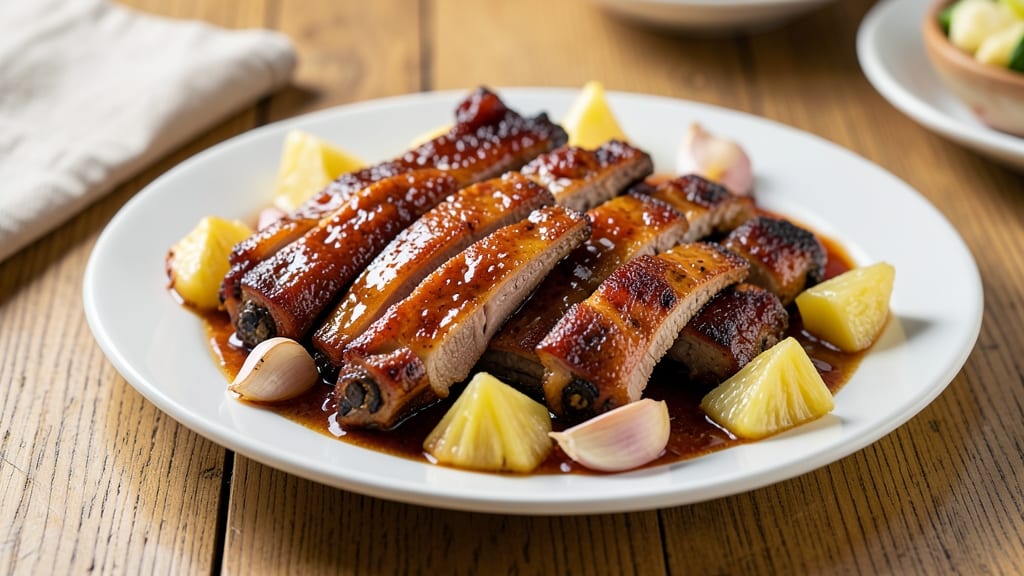
This Panlasang Pinoy pork ribs with pineapple recipe brings bold Filipino flavors to your table with a perfect balance of sweet, tangy, and savory. ✨ After years of perfecting this dish, I’ve cracked the code for tender ribs that stay juicy while caramelizing beautifully with the pineapple’s tropical sweetness.
The secret lies in the marinade—soy sauce, vinegar, and garlic work together to create that signature Filipino depth.
The recipe starts with a foolproof marinade that transforms tough ribs into melt-in-your-mouth perfection. You’ll grill or braise them until they’re fall-off-the-bone tender, then finish with fresh pineapple chunks that add a bright, juicy contrast.
The combination of smoky ribs and sweet pineapple is what makes this dish irresistible—it’s comfort food with a tropical twist.
What you’ll end up with is a dish that’s restaurant-quality at home, served with steamed rice and optional atchara (pickled papaya) for that authentic Filipino touch. The aroma alone will have everyone gathering around the table, and the flavors—sweet, tangy, and umami-rich—will leave them asking for seconds.
This is the kind of meal that feels like a celebration.
Ready in about 2 hours (mostly hands-off time), this recipe is perfect for weekends or special occasions. The marinating and cooking process is simple, but the results are anything but basic. Let’s get started—your taste buds will thank you!
Ingredients for pork ribs with pineapple recipe panlasang pinoy
Bold Filipino flavors start with these 13 ingredients—sweet, tangy, and smoky all in one dish.
| Ingredient | Amount | Notes |
|---|---|---|
| Baby Back Pork Ribs 🍖 | 3 lb | Meaty, bone-in preferred |
| Fresh Pineapple 🍍 | 2 cups | Chunks, fresh or canned |
| Soy Sauce 🍶 | ½ cup | High-quality, preferably Filipino |
| Cane Vinegar 🍶 | ¼ cup | White or apple cider vinegar |
| Garlic Cloves 🧄 | 8 cloves | Minced, fresh preferred |
| Fresh Ginger 🌿 | 2 tbsp | Grated, fresh preferred |
| Brown Sugar 🍚 | ¼ cup | Packed, light or dark |
| Olive Oil 🫒 | 2 tbsp | For cooking ribs |
| Black Peppercorns 🌶️ | 1 tsp | Freshly ground |
| Salt 🧂 | 1 ½ tsp | Kosher or sea salt |
| Green Onions 🧅 | 4 whole | Sliced, for garnish |
| Fresh Cilantro 🌿 | ¼ cup | Chopped, for garnish |
| Fish Sauce 🍶 | 1 tbsp | Optional, for umami depth |
The ribs are the star—baby back pork ribs give you that perfect balance of meat and fat. Look for meaty, bone-in cuts at your butcher or grocery store's meat department. Costco or Trader Joe's usually have great options if you're buying in bulk. The pineapple should be fresh and vibrant—golden or red varieties work best, and if you can't find fresh, high-quality canned pineapple chunks (no syrup) will do in a pinch. The soy sauce matters too—Filipino brands like Silver Swan have that extra depth, but any good-quality soy sauce will work.
No fresh ginger? Powdered ginger at half the amount works, but it won't have the same punch. Running low on fish sauce? Soy sauce or Worcestershire sauce can substitute, though the flavor won't be identical. The brown sugar can be swapped for white sugar or coconut sugar—just know it might caramelize differently. For the garlic, garlic powder at one-third the amount is a decent backup, but fresh is always better. If you're feeling adventurous, add a dash of calamansi juice (Filipino lime) for that authentic tang—it's a game-changer if you can find it.
Marinate the ribs for at least 4 hours (overnight is even better)—this is where the magic happens. Store the marinade in an airtight container in the fridge. The cooked ribs reheat beautifully—350°F for 10-15 minutes until warmed through. Leftovers keep for 3-4 days in the fridge or 3 months frozen. Garnish with fresh cilantro and green onions right before serving—they wilt fast, so wait until the last minute.
Why You'll Love This Recipe
- One-Pan Magic: I swear by this recipe because it’s literally one pan, one sauce, and done. No basting, no flipping—just toss those ribs with pineapple chunks, a splash of soy and vinegar, and minced garlic, then let the oven do the work. (Yes, even on a Tuesday night.)
- Sweet-Savory Balance: That tangy-sweet glaze from the pineapple and cane vinegar? It’s ridiculously good—like a BBQ-meets-adobo hug for your ribs. The garlic cloves sizzling in the pan? Pure satisfaction.
- Weeknight Crowd-Pleaser: Between us, this feeds six with minimal effort. My in-laws rave about it, my kids scarf it down, and it’s the only thing I make when friends drop by unannounced. (No stress, no fuss.)
- Leftovers That Don’t Suck: Honestly, the second day is even better. The ribs stay tender, the pineapple caramelizes, and it reheats like a dream. I pack half for lunch the next day—no sad, dry meat here. Budget-friendly? Check.
Step-by-step instructions for pork ribs with pineapple Panlasang Pinoy
Transform tender ribs into a sweet-savory masterpiece with this Filipino-inspired method.
🔥 Step 1: Sear the Ribs for Maximum Flavor
Preheat your oven to 300°F for later cooking. In a large oven-safe skillet, heat 2 tablespoons olive oil over medium-high heat. Pat the 3 lb baby back pork ribs dry with paper towels—this ensures a perfect sear. Place the ribs bone-side down and cook undisturbed for 8-10 minutes until they develop a deep golden-brown crust.
Here's the thing—don't move them during this time. You're building that flavorful crust that'll carry the sweet-savory sauce later. Flip the ribs and sear the other side for another 8-10 minutes. The meat should be deeply caramelized and release easily from the pan. Remove ribs and set aside on a plate.
🍳 Step 2: Build the Tropical Glaze
In the same skillet (no need to clean it—those browned bits are flavor gold), add 8 cloves minced garlic cloves and 2 tablespoons grated fresh ginger. Sauté for 1-2 minutes until fragrant—you should smell that aromatic punch. Add 2 cups fresh pineapple chunks and cook for 3 minutes until they soften slightly.
Pour in 0.5 cup soy sauce, 0.25 cup cane vinegar, and 0.25 cup packed brown sugar. Stir well and bring to a gentle simmer. Let it reduce for 5 minutes until the sauce thickens slightly and coats the back of a spoon. The pineapple should release its juices, creating a glossy, sticky glaze.
🥘 Step 3: Braise the Ribs to Tenderness
Return the seared ribs to the skillet, bone-side up, and spoon the pineapple glaze evenly over the top. Transfer the entire skillet to your preheated 300°F oven. Braise for 2-2.5 hours until the ribs are fork-tender and the meat pulls away from the bones easily.
Real talk: The ribs should be falling-off-the-bone tender. If you're worried about drying out, don't be—the pineapple and sauce keep them moist. Check at the 2-hour mark—they're done when a meat thermometer reads 195°F in the thickest part. The sauce should be thick and syrupy, clinging beautifully to the ribs.
🍽️ Step 4: Finish with Umami and Garnish
Remove the ribs from the oven and increase heat to medium-high. Add 1 tablespoon fish sauce and 1 teaspoon freshly ground black peppercorns to the sauce in the skillet. Simmer for 2-3 minutes to let the fish sauce mingle with the other flavors—this adds that signature umami depth.
Spoon the sauce generously over the ribs, making sure every surface is coated. Garnish with 4 sliced green onions and 0.25 cup chopped fresh cilantro for freshness. The contrast of bright green against the caramelized ribs is pure visual appeal. Let the ribs rest for 5 minutes before serving to let the juices redistribute.
Pro Tips For Making Pork Ribs With Pineapple Recipe Panlasang Pinoy
- SEAR THE RIB BONES: Hit the ribs bone-side down first—high heat, no crowding—and let them sizzle until the meat releases easily. I used to skip this, thinking the sauce would handle it, but those dark, crispy bones make the whole dish taste deeper. Works best with a dry pan or light oil before adding anything else.
- CUT PINEAPPLE SMALL: Dice that pineapple into ½-inch cubes or smaller—no big chunks. I learned this the hard way when my first batch had one stubborn piece that stayed raw. The sauce needs to coat every surface, and smaller pieces absorb faster, too.
- SIMMER LOW AND SLOW: After the initial sear, drop the heat to a bare simmer and let the ribs cook uncovered for at least 45 minutes. Rushing this turns the sauce into a glaze and leaves the meat tough. The ribs should fall off the bone when prodded gently.
- SALT THE GARLIC: Toss your minced garlic with a pinch of salt before frying—it keeps it from burning and adds a subtle depth. I was skeptical until I tried it; now I can’t imagine cooking without it. Works especially well when you’re also frying onions in the same pan.
Best sauces and condiments for this dish
Filipino-Inspired Sauce
The heart of this dish is the sweet-savory glaze that balances soy, vinegar, and pineapple. I start by sautéing 8 cloves minced garlic and 2 tbsp grated ginger in the same skillet used for searing—the browned bits add depth.
Then, I combine ½ cup soy sauce, ¼ cup cane vinegar, and ¼ cup brown sugar to create a sticky, caramelized base. The 2 cups pineapple chunks release juices that thicken into a glossy sauce, perfect for coating the ribs. 🍶
Umami Boost with Fish Sauce
For that authentic Filipino umami punch, I finish with 1 tbsp fish sauce (like Red Boat) simmered into the sauce. If you can’t find it, Worcestershire sauce works in a pinch, though it’s not identical.
The fish sauce deepens the savory notes, balancing the sweetness. Add it in the last 2-3 minutes of cooking so it doesn’t overpower the dish. A little goes a long way—taste as you go! 🌶️
Tangy Vinegar Variations
While cane vinegar is traditional, I’ve swapped it for apple cider vinegar or even white vinegar when needed. For extra tang, add 1 tbsp calamansi juice (Filipino lime) if you can find it—it’s a game-changer.
The acidity cuts through the richness, keeping flavors bright. If using white vinegar, reduce to 2 tbsp to avoid overpowering the dish. 💫
Sweetness Control
The brown sugar caramelizes beautifully, but if you prefer less sweetness, reduce it to 2 tbsp and add 1 tsp honey for depth. For a smokier twist, sprinkle ½ tsp smoked paprika into the sauce while simmering.
The pineapple’s natural sweetness will still shine, but the flavors become more complex. Adjust to taste—this dish is all about balance! 🔥
Garnish for Freshness
Topping the ribs with 4 sliced green onions and ¼ cup chopped cilantro adds a pop of color and freshness. The green onions should be thinly sliced for a delicate crunch, while the cilantro brightens the dish.
Add them right before serving—they wilt quickly under heat. For extra flair, sprinkle toasted sesame seeds or crushed peanuts for texture. 🌿
Sauce Storage Tips
Leftover sauce keeps well in an airtight container in the fridge for 3-4 days. Reheat gently over low heat, adding a splash of water if it thickens too much.
For freezing, portion into ice cube trays, then transfer to a bag—this makes it easy to thaw just what you need. The sauce also freezes beautifully for up to 3 months, perfect for future meals. ❄️
Nutrition facts
Frequently asked questions
Can I use regular pork ribs instead of baby back ribs?
Yes, but you'll need to adjust the cooking time. Spare ribs have more connective tissue, so braise them for 3-3.5 hours instead of 2-2.5 hours until fork-tender. The pineapple glaze will still work beautifully—just monitor the internal temperature closely. For extra tenderness, wrap the ribs in foil during the first 2 hours of cooking.
What's the best way to prep pineapple for this recipe?
For fresh pineapple, cut off the top and bottom, then slice off the skin and core. Cut into 1-inch chunks—smaller pieces cook faster and release more juice for the sauce. If using canned pineapple, drain well and pat dry with paper towels to prevent a watery sauce. For extra flavor, grill the pineapple chunks with the ribs for 5 minutes before adding to the sauce.
Can I make this recipe in a slow cooker?
Sear the ribs first, then transfer them to a slow cooker with the pineapple glaze. Cook on low for 6-7 hours or high for 3-4 hours until tender. The sauce will thicken more in the slow cooker, so reduce the brown sugar to 2 tablespoons to prevent over-sweetness. Stir occasionally to distribute the sauce evenly.
Why do my ribs turn out tough instead of tender? This usually happens from overcooking or not enough marinating time.
What are the best sides to serve with these ribs?
Steamed jasmine rice is the classic pairing, but you can also try garlic fried rice or sautéed green beans with garlic. For authentic Filipino flavors, serve with atchara (pickled papaya) or sinigang (sour soup) on the side. A simple mango salad adds refreshing contrast to the rich ribs. Don't forget piloncillo (unrefined cane sugar) candies for dessert!