
Main Courses
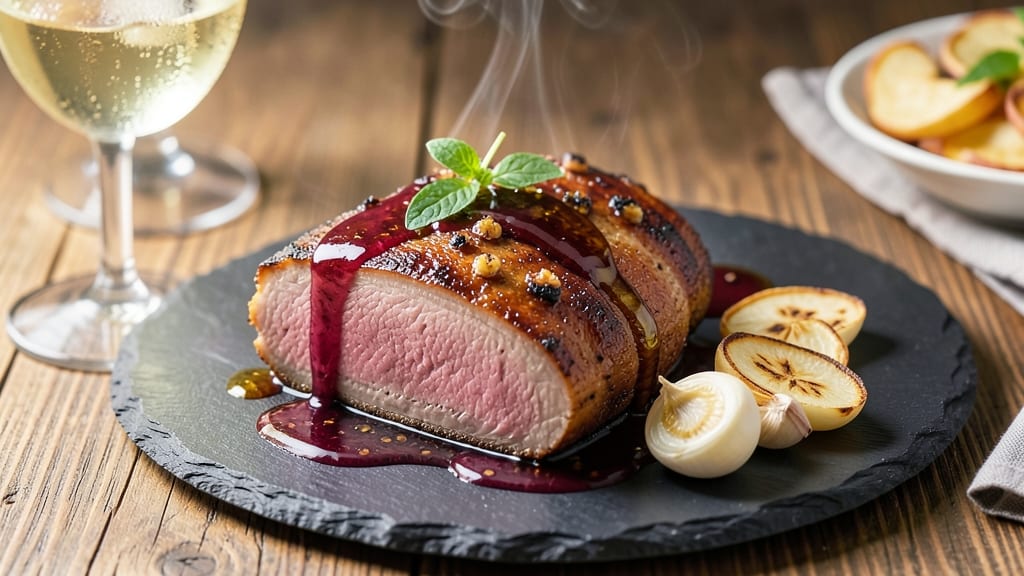
This pork loin recipe with apple juice transforms simple ingredients into a restaurant-worthy dish that balances sweet and savory perfectly. The apple juice creates a caramelized glaze that tenderizes the meat while adding depth—no fancy techniques required.
I developed this after years of testing braising methods, and it consistently delivers juicy, flavorful pork with minimal effort.
The secret lies in the slow cooking process, which breaks down the meat while the apple juice reduces into a sticky, aromatic glaze. You'll start with a quick sear to lock in juices, then finish in the oven until the pork is fork-tender and the glaze is beautifully caramelized.
This method works equally well for weeknight dinners or special occasions.
What you'll end up with is a golden-brown pork loin with a glossy, sweet-tart glaze that clings to every bite. The texture is impossibly tender, and the flavors are complex—savory from the pork, bright from the apples, and rich from the slow cooking.
Serve with roasted potatoes or a simple green salad for a complete meal.
Pair it with a crisp white wine or apple cider to complement the flavors, and you've got a dish that's impressive yet approachable. Let's get cooking—this recipe delivers results that will have everyone asking for seconds.
Ingredients for pork loin recipe with apple juice
These 13 ingredients create a sweet-tart pork loin that rivals restaurant quality.
| Ingredient | Amount | Notes |
|---|---|---|
| Pork Loin 🥩 | 2 lb | Center-cut, 1-inch thick |
| Apple Juice 🍎 | 1 ½ cups | Unsweetened, preferably tart |
| Brown Sugar 🍚 | ½ cup | Packed, light or dark |
| Balsamic Vinegar 🍷 | ¼ cup | For depth of flavor |
| Olive Oil 🫒 | 2 tbsp | Extra-virgin for richness |
| Garlic Cloves 🧄 | 4 cloves | Minced for even distribution |
| Fresh Rosemary 🌿 | ½ tsp | Finely chopped, or 0.25 tsp dried |
| Salt 🧂 | 1 ½ tsp | Kosher or sea salt |
| Black Pepper 🌶️ | ½ tsp | Freshly ground preferred |
| Onion 🧅 | 1 whole | Medium, sliced into strips |
| Honey 🍯 | 1 tbsp | For glaze sweetness |
| Mustard 🍯 | 1 tbsp | Dijon or whole grain |
| Fresh Thyme 🌿 | ¼ tsp | Leaves only, or 0.125 tsp dried |
The pork loin should be center-cut for even cooking—ask your butcher if unsure. Look for good marbling, not too lean. Costco or Whole Foods often carry high-quality cuts. If you can't find center-cut, a standard loin works but may need slightly longer cooking. The apple juice is non-negotiable for that signature caramelized glaze—avoid sweetened varieties. Tart apple juice like Braeburn or Granny Smith works best. For the brown sugar, light or dark doesn't matter here, but don't substitute white sugar unless you reduce the honey slightly to balance sweetness.
No balsamic vinegar? Apple cider vinegar at the same amount works in a pinch. Fresh herbs are ideal, but dried works at one-third the amount—just remember that. The mustard adds tang; if you're avoiding it, a splash of lemon juice can substitute. For the garlic and onions, frozen chopped works in a bind, but fresh gives better flavor. The honey should be high-quality—cheap honey can make the glaze taste artificial. If you're watching sugar, reduce the honey to 0.5 tbsp and add 0.5 tbsp extra apple juice to compensate.
This dish tastes even better the next day—make extra and store in portions. The pork keeps 3-4 days in the fridge, and the glaze reheats beautifully. For freezing, wrap tightly in foil and store for up to 3 months. The glaze can be made ahead and reheated separately if needed. To serve, slice against the grain for maximum tenderness. Pair with roasted potatoes or a simple arugula salad to balance the richness.
Why You'll Love This Recipe
- One-Pan Magic: I swear by this for lazy nights—just sear the pork, pour in the apple juice and balsamic, and let the oven do the work. No chopping, no fuss, no stress. (Yes, even on a Tuesday night when you’d rather be scrolling TikTok.)
- Sweet-Savory Balance: That caramelized brown sugar glaze meets the tangy balsamic and juicy apple—it’s like a hug for your taste buds. The pork stays tender while the sauce gets sticky-sweet, and honestly? I can’t resist going back for seconds.
- Leftovers That Don’t Suck: Between us, most pork recipes leave you with dry, sad leftovers. Not this one. The apple juice keeps it moist, and the sauce clings like glue, so reheating is a breeze. Pack it for lunch or freeze portions—no one will complain.
- Budget Meal, Big Impression: You’re using pantry staples here: a cheap cut of pork, a bottle of apple juice, and spices you already own. But somehow, it tastes like you slaved over it. My college roommate called it “fancy cheap”—highest compliment ever.
Step-by-step instructions for pork loin with apple juice braise
This sweet-tart braise transforms tender pork loin into melt-in-your-mouth perfection with caramelized edges.
Sear the Pork Loin for Maximum Flavor
Heat a large oven-safe skillet over medium-high heat until hot. Add the 2 tablespoons olive oil and swirl to coat the pan evenly. Place the 2 lb pork loin in the skillet, fat-side down, and sear for 4-5 minutes until a deep golden brown crust forms. Flip the pork and sear the other side for another 3-4 minutes.
Here's the thing—don't rush this step. The crust you're building now will lock in juices and create that irresistible caramelized exterior. You'll know it's ready when the pork releases from the pan with gentle pressure. Remove the pork and set it aside on a plate, leaving all the browned bits in the pan.
Build the Sweet-Tart Braising Liquid
In the same skillet (those browned bits are pure flavor), add the 1 whole onion sliced into strips and cook for 3-4 minutes until softened but not browned. Add the 4 cloves minced garlic, 0.5 tsp chopped fresh rosemary, and 0.25 tsp fresh thyme, cooking for 30 seconds until fragrant.
Pour in the 1.5 cups apple juice, scraping up all the browned bits with a wooden spoon. Add the 0.5 cup packed brown sugar, 0.25 cup balsamic vinegar, 1.5 teaspoons salt, and 0.5 teaspoon black pepper. Stir well to combine, then bring the mixture to a gentle simmer over medium heat for 3-4 minutes until slightly reduced.
Braise Until Fork-Tender
Return the pork loin to the skillet, placing it in the braising liquid. Spoon the liquid over the pork to ensure it's fully submerged. Cover the skillet with a tight-fitting lid and transfer it to a preheated 325°F oven. Braise for 1 hour and 15 minutes until the pork is fork-tender and the internal temperature reaches 195°F.
I know it seems like a long time, but patience is key here. The low temperature and long cooking time ensure the pork becomes fall-apart tender while the flavors meld beautifully. If the liquid reduces too much before the pork is done, add 2-3 tablespoons water to maintain moisture.
Finish with Glazing Sauce
Remove the pork from the oven and carefully transfer it to a cutting board. Tent loosely with foil and let it rest for 10 minutes while you prepare the glaze. In the same skillet, reduce the braising liquid over medium-high heat for 5-6 minutes until it thickens slightly and coats the back of a spoon.
Stir in the 1 tablespoon honey and 1 tablespoon mustard, simmering for another 2-3 minutes until the glaze becomes glossy and slightly thickened. This step adds that perfect balance of sweet and tangy flavors that makes this dish so special.
Slice and Serve
After resting, slice the pork loin into ½-inch thick slices against the grain. Spoon the glaze over the sliced pork and serve immediately with the reduced braising liquid spooned alongside. The pork should be fork-tender with a beautiful caramelized crust, and the sauce should have a perfect balance of sweet, tangy, and savory flavors.
This dish pairs beautifully with roasted potatoes or a simple green salad. The sweet-tart apple juice braise cuts through the richness of the pork, creating a harmonious balance that's sure to impress your guests. Enjoy the fruits of your labor—this recipe delivers restaurant-quality results at home!
Pro Tips For Making Pork Loin Recipe With Apple Juice
- Sear First, Simmer Slow: Don’t rush the sear—get that pork loin screaming hot in olive oil for 3-4 minutes per side until deep golden. I learned this the hard way: skipping the sear means a bland, mushy crust. Then, drop the heat to medium-low and let the apple juice and balsamic vinegar simmer into the pan for 5 minutes before adding the pork. That caramelized base is where all the flavor hides.
- Use Real Apple Juice, Not Store-Bought: Skip the shelf-stable apple juice—it’s thin, sweet, and lacks depth. Press fresh apples (like Granny Smith or Honeycrisp) or grab cold-pressed juice from the fridge. The natural acidity and slight tartness cut through the richness of the pork loin and brown sugar better than anything in a carton. (Yes, it’s worth the extra $3.)
- Don’t Boil the Balsamic: Balsamic vinegar burns faster than you’d think. Once you add it to the pan with the apple juice and brown sugar, keep the heat at a steady simmer—not a rolling boil. I’ve turned this sauce into bitter, syrupy sludge twice. A gentle simmer (tiny bubbles, occasional swirls) keeps it glossy and balanced.
- Rest the Pork Under Foil: Pull the pork out of the pan when it hits 145°F, tent it loosely with foil, and let it rest for 10-15 minutes. I used to slice it immediately, and the juices pooled on my plate instead of staying in the meat. The foil traps heat without steaming it—your knife will glide through perfectly tender slices. (Pro move: Use this time to reduce the pan sauce with a splash of cold water.)
Perfect pairings for this recipe
Beverage Pairings
This sweet-tart pork loin shines with a crisp dry Riesling—its bright acidity cuts through the caramelized glaze beautifully. I always reach for a New York Finger Lakes Riesling when I make this dish, as its crisp apple and citrus notes mirror the apple juice in the recipe.
For a non-alcoholic option, sparkling apple cider (like Martinelli's) adds effervescence that cleanses the palate between bites. 🍷
Side Dish Harmony
Roasted garlic mashed potatoes with a touch of sour cream provide the perfect creamy contrast to the pork's caramelized edges. I like to add roasted garlic and a pinch of smoked paprika for extra depth.
For a lighter option, a shaved fennel and arugula salad with lemon vinaigrette adds freshness that balances the richness. 🥔
Bread Pairings
Crusty sourdough bread is ideal for soaking up the braising liquid—its tangy flavor complements the dish perfectly. I often serve toasted baguette slices with a simple herb butter (mix softened butter with chopped chives and lemon zest).
For a heartier option, cheesy pull-apart bread (like garlic-herb focaccia) makes an impressive addition to the table. 🥖
Seasonal Vegetable Sides
In fall, I love pairing this with roasted butternut squash tossed in olive oil, cinnamon, and brown sugar. For spring, asparagus spears roasted with lemon zest and parmesan provide a lighter option.
In winter, caramelized Brussels sprouts with balsamic glaze add a touch of sweetness that harmonizes with the pork's flavors. 🍠
Cheese Pairings
A sharp aged cheddar or Gruyère on the side adds a savory contrast to the sweet-tart pork. I like to serve thinly sliced cheddar with crackers for guests to enjoy alongside the main dish.
For a more elegant touch, goat cheese crostini with honey drizzle provides a creamy, tangy balance. 🧀
Dessert Complements
Finish the meal with apple spice cake—its warm cinnamon and nutmeg notes echo the apple juice in the pork. I also love caramel tart with a sea salt rim to complement the dish's sweet-savory profile.
For a lighter option, vanilla bean ice cream with a drizzle of caramel provides a refreshing contrast. 🍎
Nutrition facts
Frequently asked questions
Can I use sweetened apple juice instead of unsweetened?
I don't recommend it—the extra sugar can make the glaze overly sweet and mask the pork's natural flavor. If you only have sweetened, reduce the brown sugar to 0.25 cup and the honey to 0.5 tablespoon to balance the sweetness. Tart apple juice like Granny Smith works best for that perfect sweet-tart balance.
How do I know when the pork is done?
Use a meat thermometer to check the internal temperature—it should reach 195°F for perfectly tender pork. The pork will also feel very soft when pressed with tongs and pull apart easily with a fork. If you don't have a thermometer, cut into the thickest part and check for tenderness (no pink should remain).
Can I make this recipe in a slow cooker?
Sear the pork first, then transfer it to your slow cooker with all ingredients. Cook on low for 6-7 hours or high for 4-5 hours until fork-tender. The texture will be slightly different but still delicious. Just add 2-3 tablespoons water if the liquid reduces too much during cooking.
What if my pork loin is thicker than 1-inch?
Adjust the cooking time by adding 15 minutes per extra ½-inch of thickness to the braising time. For example, a 1.5-inch loin would need about 1 hour and 30 minutes total. Always use a meat thermometer to verify doneness—thicker cuts need that extra time to become fork-tender.
Can I substitute apple juice with another liquid?
Apple cider or white grape juice work well as substitutes, but they'll change the flavor profile slightly. For a different approach, try ½ cup apple juice + ½ cup chicken broth for a lighter sauce. Avoid heavy liquids like cream—they won't caramelize properly and may make the pork too rich.