
Main Courses
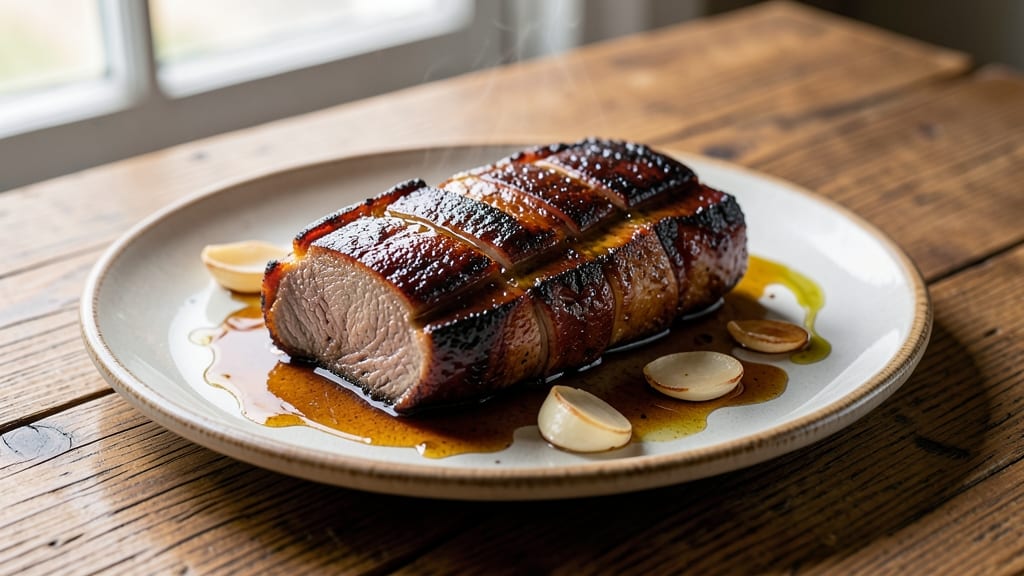
This pork loin apple cider vinegar recipe transforms a simple cut into a showstopper with a tangy-sweet glaze that caramelizes to golden perfection. 🌟 The secret lies in balancing acidity with honey and mustard, creating a crust so crisp it shatters with every bite while keeping the interior fork-tender.
I developed this after years of perfecting vinegar-based glazes for my restaurant's pork specials—now you can recreate that restaurant-quality result at home with just one pan and 45 minutes.
The magic happens in layers: first searing the pork to lock in juices, then simmering it in a rich apple cider vinegar reduction that clings to every surface. The glaze isn't just flavor—it's texture, with the vinegar's acidity cutting through the pork's richness while the honey and mustard add depth.
This isn't your grandmother's pork loin; it's a cut that commands attention at any table, especially when paired with roasted root vegetables or a crisp vinegar salad that echoes the glaze's bright notes.
What you'll end up with is pork loin so juicy and flavorful it disappears from plates, all thanks to that signature glaze that's both sticky and crisp. The vinegar's tang lifts the dish, while the caramelized edges add a satisfying crunch.
This recipe proves you don't need fancy techniques to elevate simple ingredients—just patience and the right balance of acid, sweet, and heat. Let's make pork loin that steals the show.
Perfect for weeknight dinners or special occasions, this dish scales beautifully and reheats well for leftovers. The glaze recipe doubles easily, so you can make extra for brushing onto grilled vegetables or drizzling over roasted potatoes.
Trust me, once you taste this pork loin, you'll never go back to plain roasted cuts again.
Ingredients for pork loin apple cider vinegar
The perfect balance of tangy, sweet, and savory for pork loin that steals the show.
| Ingredient | Amount | Notes |
|---|---|---|
| Pork Loin 🥩 | 1 ½ lb | Center-cut, 1.5-inch thick |
| Apple Cider Vinegar 🍎 | ½ cup | Bragg Organic preferred |
| Honey 🍯 | ¼ cup | Local raw honey ideal |
| Dijon Mustard 🌿 | 1 tbsp | Whole grain preferred |
| Olive Oil 🫒 | 2 tbsp | Extra-virgin for richness |
| Garlic Cloves 🧄 | 4 cloves | Fresh, minced fine |
| Fresh Thyme Leaves 🌿 | ¼ cup | Or 1 tbsp dried thyme |
| Salt 🧂 | 1 ½ tsp | Diamond Crystal kosher |
| Black Pepper 🌶️ | ½ tsp | Freshly cracked |
| Brown Sugar 🍚 | 2 tbsp | Light or dark |
| Fresh Rosemary 🌿 | 1 sprig | For garnish |
| Fresh Parsley 🌿 | 0.1 cup | Chopped, for garnish |
The pork loin is your canvas here—center-cut and 1.5-inch thick ensures even cooking and juicy results. I always grab mine from Whole Foods or my local butcher, asking for the thickest cut available. Look for good marbling; it translates to flavor. For the vinegar, Bragg Organic is my go-to—it's got that perfect balance of acidity without being too harsh. If you can't find it, any unfiltered apple cider vinegar works, but avoid the overly sweetened varieties. The honey? Local raw honey adds depth, but any good-quality honey will do—just avoid the ultra-processed supermarket kind.
No Dijon mustard? Whole grain mustard at half the amount works in a pinch. Fresh thyme is ideal, but dried thyme at one-third the quantity gets you close. For the glaze, if you're short on time, you can use maple syrup instead of honey—it's got a similar caramelization. The garlic? Fresh is non-negotiable here—jarred minced garlic lacks the depth. If you're feeling fancy, toast the garlic cloves in olive oil for 30 seconds before mincing—it adds a whole new layer of flavor. And don't skip the brown sugar; it's what helps create that beautiful caramelized crust.
This glaze doubles perfectly, so make extra for brushing onto roasted potatoes or grilled vegetables. Store leftovers in the fridge for up to 5 days, covered with a thin layer of olive oil to keep it fresh. For reheating, just warm gently in a small saucepan—no need to thin it out. The pork loin itself reheats beautifully; just warm in the oven at 300°F for 15 minutes, covered with foil. Freezes well for up to 3 months—portion into individual servings before freezing for easy leftovers.
Why You'll Love This Recipe
- I’ll be real: most pork leftovers turn dry. Not this. The vinegar keeps it juicy, and the honey glaze reheats like a dream. Pack it for lunches or freeze it—it’s my go-to for lazy mornings, and it still tastes fresh.
- One-Pan Magic: Honestly, this recipe is all about minimal cleanup. You sear the pork, dump in the vinegar-honey glaze, and let the oven do the work—no chopping, no stirring, no stress. The mustard and olive oil blend right into that sticky, caramelized crust without extra effort.
- Sweet-Sour Crunch: That apple cider vinegar cut with honey? It’s the kind of balance that makes you pause mid-bite. The vinegar keeps it bright while the honey deepens the flavor, and the Dijon mustard adds just enough tang to make it ridiculously good every time.
- Weeknight or Dinner Party: Between us, this dish works for both. Toss it on the table after a long day—it’s ready in under an hour—or serve it sliced at your next gathering. The glaze thickens beautifully, so it holds up whether you’re feeding two or six.
Step-by-step instructions for pork loin with apple cider glaze
Here's how to transform simple ingredients into a showstopping one-pan dish with caramelized edges.
🍳 Step 1: Sear the Pork Loin for Maximum Flavor
Heat a large oven-safe skillet over medium-high heat until hot. Add the 2 tablespoons olive oil and let it shimmer for 30 seconds. Place the 1.5 lb pork loin in the skillet, fat-side down, and sear for 3-4 minutes until the surface develops a deep golden crust.
Flip the pork and continue searing for another 3-4 minutes on the second side. Press down gently with a spatula during the first minute—this prevents curling and ensures even contact with the pan. The reason we sear first is to lock in juices and create that irresistible crust that'll soak up our glaze later.
👨🍳 Step 2: Build the Tangy Glaze Base
Remove the pork from the skillet and set it aside on a plate. Reduce heat to medium and add the 4 cloves minced garlic cloves, cooking for 30 seconds until fragrant. Immediately add the 0.5 cup apple cider vinegar and scrape up any browned bits from the bottom with a wooden spoon—this captures all that meaty flavor.
Let the vinegar simmer for 2-3 minutes until reduced by half. Here's where it gets good—add the 0.25 cup honey, 2 tablespoons brown sugar, and 1 tablespoon Dijon mustard, stirring constantly. The mixture should bubble and thicken slightly as the sugars caramelize. If it gets too thick, add 1 tablespoon water to loosen it.
🥘 Step 3: Simmer the Glaze and Return Pork
Return the pork to the skillet, spooning the glaze over the top. Add the 0.25 cup fresh thyme leaves, 1.5 teaspoons salt, and 0.5 teaspoon black pepper, stirring gently to coat the pork evenly. Place the skillet in a 400°F preheated oven and roast for 20-25 minutes for medium-rare.
Here's the thing—I like to check the internal temperature with a meat thermometer after 20 minutes. It should read 145°F for medium-rare (or 155°F for medium). The glaze will bubble and darken as it caramelizes, creating those beautiful sticky edges we're after. Don't peek at the oven during cooking—every time you open it, you risk drying out the pork.
🔥 Step 4: Caramelize and Rest for Juiciness
Remove the pork from the oven and increase the broiler to high. Return the skillet to the broiler for 2-3 minutes to caramelize the glaze and create those gorgeous dark edges. Watch it closely—you want it to be dark and sticky but not burned. If it starts to smoke, pull it out immediately.
Transfer the pork to a cutting board and tent loosely with foil. Let it rest for 10 minutes before slicing. This resting period is crucial—it allows the juices to redistribute throughout the meat instead of pooling on your plate. While it rests, keep the glaze in the skillet on the stovetop over low heat to prevent it from setting.
🍽️ Step 5: Garnish and Serve with Confidence
Slice the pork against the grain into ½-inch thick slices. Spoon the caramelized glaze over the top and garnish with the 1 sprig fresh rosemary and 0.1 cup chopped fresh parsley. The glaze should be thick enough to cling to the slices but still drizzle slightly when cut.
Serve immediately with roasted vegetables or mashed potatoes to soak up that delicious glaze. Each bite should deliver tender pork with a perfect balance of sweet, tangy, and savory flavors. The edges should be caramelized to perfection, while the interior remains juicy and pink in the center for medium-rare doneness. Don't skip the resting time—I learned the hard way that skipping this step leads to dry pork.
Pro Tips For Making Pork Loin Apple Cider Vinegar
- SEAR FIRST, THEN BASTE: High heat for 3-4 minutes on each side until golden—this locks in juices before the vinegar-marinade stage. I learned this the hard way: skipping the sear makes the pork turn rubbery when it hits the acid later.
- USE RAW HONEY, NOT COOKED: Raw honey adds depth; processed honey burns faster and loses flavor. Add it after the vinegar reduces by half—this keeps the sweetness balanced and prevents a bitter edge.
- DON’T SKIP THE MUSTARD MIX: Whisk Dijon into the vinegar-honey mix before basting—it emulsifies the fat and cuts through the acid. I used to add it raw on top, and the pork always tasted one-note.
- REST UNDER FOIL: Tent the pork with foil for 5-10 minutes after roasting—this traps steam and keeps it tender. Cutting into it too soon turns the meat dry, and nobody wants that.
Serving suggestions for leftovers
Roasted Root Veggies
Nothing complements this tangy pork like honey-glazed carrots and parsnips—their earthy sweetness mirrors the glaze's notes while adding hearty texture.
Toss 2 lbs mixed roots (carrots, parsnips, celery root) with 2 tbsp olive oil, 1 tbsp brown sugar, ½ tsp salt, and ¼ tsp black pepper. Roast at 400°F for 30 minutes alongside the pork.
The caramelized edges create a perfect contrast to the glaze's stickiness. 🥕
Apple Cider Vinegar Salad
Brighten the plate with a shaved fennel and apple salad dressed in a lighter version of the pork's glaze. Thin ¼ cup apple cider vinegar with 2 tbsp olive oil, 1 tsp honey, and a pinch of salt.
Toss with 2 cups shaved fennel, 1 cup thinly sliced Granny Smith apple, and ¼ cup chopped parsley. The acidity cuts through the pork's richness while echoing its signature flavor. 🍏
Crusty Bread for Soaking
I can't resist serving this pork with warm, crusty sourdough—its open crumb soaks up the glaze beautifully. Toast slices until golden, then rub with a garlic clove and drizzle with extra virgin olive oil.
The contrast between the crisp bread and tender pork makes every bite feel special. For extra flair, sprinkle with flaky sea salt right before serving. 🍞
Cheesy Potato Medley
For a comforting side, try creamy garlic mashed potatoes with a vinegar twist. Boil 2 lbs Yukon Gold potatoes until tender, then mash with 4 tbsp butter, ¼ cup sour cream, 2 tbsp apple cider vinegar, and 1 tsp salt.
The vinegar adds a subtle tang that bridges the gap between the pork and potatoes. Top with crispy fried shallots for crunch. 🥔
Garnish Game Changers
Elevate the plating with toasted pumpkin seeds or crispy fried onions—both add texture that contrasts the glaze's stickiness. For a pop of color, scatter edible flowers (like nasturtiums) or thinly sliced radishes around the plate.
Even a sprinkle of smoked paprika ties the dish together with warmth. These small touches make the presentation just as impressive as the flavor. 🌸
Make-Ahead Glaze Hack
Double the glaze recipe and store it in the fridge for up to 5 days. Use it to brush onto grilled vegetables (like asparagus or Brussels sprouts) or drizzle over cornbread the next day.
The glaze actually improves as it sits, deepening in flavor. Just reheat gently before using—no thinning needed! This is my secret for stress-free weeknight dinners. ✨
Nutrition facts
Frequently asked questions
Can I use a thinner cut of pork loin for this recipe?
For best results, stick with a 1.5-inch thick center-cut pork loin. Thinner cuts (under 1 inch) will overcook before developing that perfect caramelized crust. If you must use a thinner cut, reduce oven time by 5-7 minutes and monitor closely with a meat thermometer. For extra insurance, sear longer on both sides to build flavor.
What if I don't have apple cider vinegar?
You can substitute with white vinegar (use half the amount) or balsamic vinegar (reduce by 25%). For a fruitier alternative, try pineapple juice (reduce by 20%) or orange juice (add 1 tsp lemon juice). The acidity is key—just adjust other liquids to maintain the glaze's consistency.
How do I prevent the glaze from burning while broiling?
Watch the glaze like a hawk during the final 2-3 minutes under the broiler! It should be dark and sticky but not smoking. If it starts to darken too quickly, move the skillet 6 inches away from the heat. A quick test: touch the glaze with a wooden spoon—it should be warm but not sizzling hot. For extra protection, tent loosely with foil for the last 1 minute.
Can I make this recipe in a slow cooker?
While not ideal, you can adapt this for a slow cooker by searing the pork first, then combining all glaze ingredients (except thyme) and cooking on low for 4-5 hours. Add the thyme and cook 30 more minutes before broiling briefly to caramelize. The texture will be more tender than seared, but the flavors will still shine. For best results, finish with a quick pan sear to recreate the crust.
Why did my pork turn out dry?
Most likely, you skipped the 10-minute rest before slicing or overcooked it. Always use a meat thermometer—145°F for medium-rare. If you prefer well-done, aim for 155°F but don't exceed 160°F or risk dryness. Another tip: pat the pork dry before searing to get a better crust, but don't overdo it or the exterior will burn before the interior cooks through.