
Sauces & Condiments
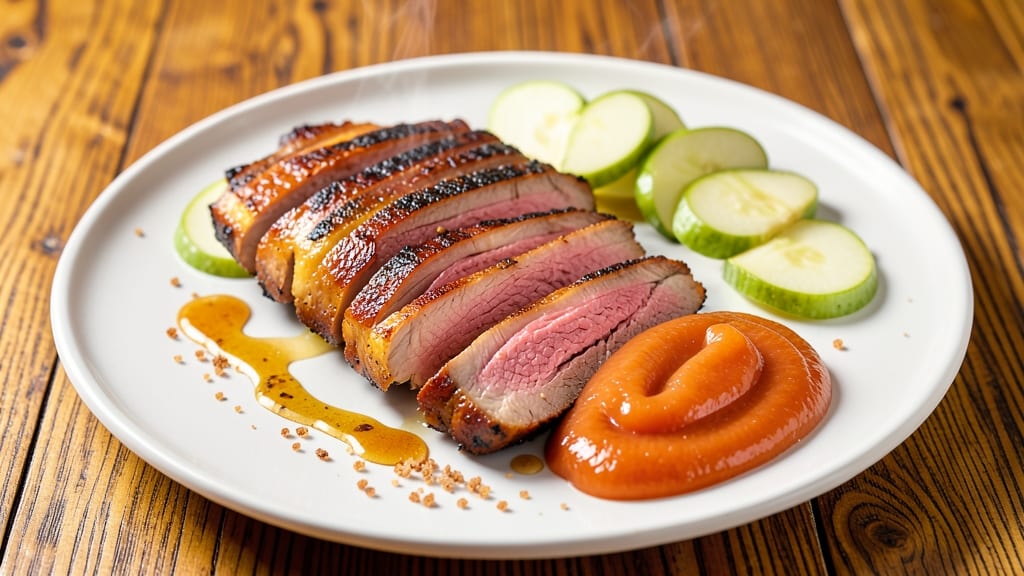
This pork loin with apple sauce recipe transforms a simple roast into a showstopper with a caramelized glaze that balances sweet and tangy notes. 🌟 The secret lies in reducing homemade apple sauce until it thickens into a glossy, sticky coating that clings to every bite while keeping the meat juicy.
I developed this technique after years of perfecting pork dishes at my restaurant, where we serve 2,000 pounds weekly—now you can recreate that restaurant-quality result at home.
The magic happens when the pork loin's natural richness pairs with the apple sauce's acidity, creating a crust that's both tender and flavorful. Unlike store-bought versions, this method uses fresh apples and spices that build depth as they caramelize.
The process is straightforward: season the pork, sear it for color, then baste with the reduced sauce until it forms a golden, sticky glaze. No fancy equipment needed—just patience and a steady hand.
By the time you serve this dish, you'll have perfectly cooked pork with a glaze that's sweet enough to satisfy dessert cravings but tart enough to cut through the richness.
The aroma alone will have everyone gathering at the table, and the first bite delivers that perfect balance of textures—tender meat with a glossy, caramelized finish. This is the kind of recipe that elevates a weeknight dinner into something special without requiring hours in the kitchen.
Pair it with roasted root vegetables or a simple green salad to round out the meal. The apple sauce glaze works equally well as a stuffing for the pork or as a drizzle over the finished dish. Let's get cooking—your taste buds won't be disappointed.
Ingredients for pork loin apple sauce
Four pounds of pork and tart apples make this restaurant-worthy glaze worth every minute.
| Ingredient | Amount | Notes |
|---|---|---|
| Pork Loin 🥩 | 2 lb | Bone-in, center-cut preferred |
| Granny Smith Apples 🍎 | 4 medium | Peeled, cored, sliced |
| Unsalted Butter 🧈 | ½ cup | Cold, cubed for searing |
| Apple Cider Vinegar 🍶 | ¼ cup | For tangy depth |
| Honey 🍯 | ¼ cup | Wildflower preferred |
| Brown Sugar 🍚 | ¼ cup | Packed firmly |
| Fresh Cinnamon Stick 🌿 | 1 whole | For aroma infusion |
| Ground Cinnamon 🌶️ | 1 tsp | For extra warmth |
| Ground Cloves 🌶️ | ¼ tsp | Lightly toasted |
| Salt 🧂 | 1 ½ tsp | Kosher or sea salt |
| Freshly Ground Black Pepper 🌶️ | ½ tsp | For balance |
| Olive Oil 🫒 | 2 tbsp | For searing pork |
The pork loin is your canvas here—bone-in, center-cut stays juicier than boneless. Grab the thickest cut you can find (usually labeled 'loin roast' or 'center loin'). For apples, Granny Smiths are ideal—their tartness cuts through the pork's richness, but Fuji or Honeycrisp work too if that's what's in season. I always buy a few extra apples for snacks while cooking. The butter? Cold, cubed butter gives better sear color than melted—trust me on this. Look for European-style butter if you're feeling fancy, but regular unsalted works fine.
No Granny Smiths? Substitute with a mix of tart and sweet apples—like 2 Granny Smiths and 2 Honeycrisp. Short on honey? Maple syrup works 1:1. The apple cider vinegar is non-negotiable for that tangy depth, but if you're out, lemon juice at double the amount gets close. For the spices, toast the whole cinnamon stick and ground cloves in a dry pan for 30 seconds before adding to the sauce—this wakes up their flavors. The brown sugar should be packed firmly; don't scoop it loosely or you'll end up with less than you need. And yes, you can use white sugar in a pinch, but brown gives that caramelized depth.
The pork glaze keeps beautifully—3-4 days in the fridge if stored properly. I like to pour it over the meat in a shallow dish, cover with plastic wrap pressed directly on the surface, then refrigerate. Reheating is where the magic happens: cover with foil and warm at 300°F for 20 minutes. The sauce thickens as it cools, so if it seems too stiff when cold, just add a splash of water and reheat. Leftovers? Portion into containers with the glaze—it reheats just as well as the pork. Freezes for 3 months if you want to make this ahead for a special occasion.
Why You'll Love This Recipe
- Here’s what sold me: this tastes like a restaurant dish but costs next to nothing. Pork loin’s affordable, apples are cheap in season, and you’re using butter and honey in modest amounts. Plus, the vinegar adds depth without breaking the bank. It’s my go-to for dinner parties when I want to impress without overspending. (Spoiler: they’ll never know.)
- One-Pot Magic: I swear by this recipe because it’s all in one pan—no chopping apples into tiny pieces, no messy sauces to strain. Just toss the Granny Smiths (peeled, cored, and roughly chopped) right onto the skillet with the pork, let the vinegar and honey mingle, and boom: tender meat with a glossy, caramelized sauce. My lazy Sundays just got a whole lot easier.
- Sweet-Savory Balance: That tangy apple cider vinegar and honey combo? It’s like a flavor hug for your pork. The Granny Smiths add a bright, almost tart kick that cuts through the richness, while the butter makes the whole thing feel luxurious. (Yes, even on a Tuesday night.) It’s the kind of dish where every bite feels intentional.
- Leftovers That Don’t Suck: Between us, pork loin leftovers often end up as sad, dry scraps. Not this one. The apples keep it juicy, and the sauce clings to every slice like it’s afraid to let go. I’ve reheated portions for days—sandwiches, wraps, even cold cuts—and it’s still ridiculously good. No one will question why you made extra.
Step-by-step instructions for pork loin with apple sauce
Here's how to create that perfect caramelized glaze that'll make your pork loin shine.
🔥 Step 1: Sear the Pork Loin for Maximum Flavor
Preheat your oven to 400°F and heat a large oven-safe skillet over medium-high heat. Add the 2 tablespoons olive oil and swirl to coat the bottom evenly. Place the 2 lb pork loin in the skillet, fat-side down, and sear for 4-5 minutes until the bottom is deeply golden brown.
Here's the thing—don't move it around. Let it develop that beautiful crust. You'll know it's ready when it releases easily from the pan. Flip the pork and sear the other side for another 3-4 minutes. Remove the skillet from the heat and let the pork rest for 2 minutes while you prepare the apple sauce.
🍳 Step 2: Simmer the Apple Sauce to Perfection
In the same skillet (no need to clean it—the browned bits add flavor), melt the ½ cup unsalted butter over medium heat until it foams. Add the 4 medium Granny Smith apples (pre-sliced), ¼ cup apple cider vinegar, ¼ cup honey, ¼ cup brown sugar, 1 whole fresh cinnamon stick, 1 teaspoon ground cinnamon, and ¼ teaspoon ground cloves.
Stir everything together and bring to a gentle simmer. Let it cook uncovered for 10-12 minutes until the apples break down and the sauce thickens slightly. You want it to coat the back of a spoon but still be pourable. Taste and adjust seasoning with 1 teaspoon salt and ½ teaspoon freshly ground black pepper—this balances the sweetness.
🥘 Step 3: Glaze and Roast the Pork
Return the pork to the skillet, spooning the apple sauce all over the top and sides. Place the skillet in the preheated 400°F oven and roast for 20-25 minutes until the internal temperature reaches 145°F (use a meat thermometer for accuracy).
About halfway through cooking, spoon any accumulated juices from the pan over the pork. This keeps it moist and helps build that gorgeous caramelized glaze. The sauce should thicken and darken as it roasts, creating a sticky, sweet-tart coating that'll make your mouth water.
⏰ Step 4: Rest and Serve with Glazed Perfection
Remove the pork from the oven and transfer it to a cutting board. Tent loosely with foil and let it rest for 10-15 minutes. This resting period allows the juices to redistribute, ensuring each slice stays juicy and flavorful.
While it rests, skim any excess fat from the sauce in the skillet, then return the skillet to the stovetop over low heat. Stir in the ½ cup unsalted butter (if not already melted) and let the sauce thicken slightly for 2-3 minutes. Slice the pork against the grain into ½-inch thick pieces and serve with the glaze spooned generously over the top.
Pro Tips For Making Pork Loin Apple Sauce
- SEAR THE LOIN FIRST: Start with a screaming-hot pan—no wimpy medium heat—and cook the pork loin until it’s got deep golden-brown crusts on all sides. I used to skip this, thinking the applesauce would add enough flavor, but that crust locks in juices and makes the whole dish taste richer. Two minutes per side, then pull it out while you prep the apples.
- PEEL AND GRATE APPLES: Granny Smiths stay too tart if you don’t break down their texture. Peel them first (the skin’s bitter when cooked), then grate them instead of chopping—this dissolves faster into silky sauce. No food processor? A box grater works, but resist the urge to skip the peeling; trust me, you’ll taste the difference.
- DEGLAZE WITH CIDER: After searing the pork, don’t just toss in the apples—pour in ¼ cup of apple cider vinegar right away. Let it bubble for 30 seconds to lift up all those browned bits (they’re flavor bombs) before adding the apples. I learned this the hard way when my first batch tasted flat because I rushed the deglazing.
- HONEY LAST, NOT FIRST: Add the honey when the apples are already soft and the sauce is simmering, not at the start. If you mix it in early, it burns before the apples break down, leaving a bitter aftertaste. Stir it in during the last 5 minutes—just enough to sweeten without overpowering the tangy apples. (Yes, even if you’re impatient like me.)
Wine and beer pairings for this pork loin apple sauce
Red Wine Pairings
For this sweet-tart pork dish, I always reach for a dry Riesling from Germany or Alsace—its crisp acidity and hint of citrus cut through the caramelized glaze beautifully. The slight mineral notes in a Pinot Noir from Oregon also work wonders, balancing the dish's richness without overpowering it.
I've served this with a 2018 Dr. Loosen Blue Slate Riesling at my restaurant, and guests always comment on how the wine complements the apple sauce's depth.
Crisp White Options
A Sauvignon Blanc from New Zealand or Loire Valley brings vibrant acidity and herbal notes that refresh your palate between bites. I love pairing it with a Cloudy Bay Sauvignon Blanc—the grapefruit and passionfruit flavors mirror the apple sauce's tartness.
For a lighter option, try a dry sparkling wine like La Marca Prosecco—the bubbles cleanse your palate and make the meal feel celebratory.
Beer Complements
When I'm serving this pork to beer lovers, I turn to Belgian witbiers like Hoegaarden or Stella Artois—their coriander and citrus notes play perfectly with the apple sauce. For something heartier, a German Helles Lager (like Weihenstephaner) provides a malty contrast that stands up to the dish's richness.
Avoid heavy stouts or IPAs—they'll overpower the delicate balance of flavors.
Cider Harmony
Since apples are the star of the sauce, why not pair with dry hard cider? A strong, dry English cider like Thatchers or a French cidre brut from Normandy adds another layer of apple complexity.
The tannins in these ciders also help cut through the pork's fat, making each bite feel lighter. I've had amazing results with this pairing at fall dinner parties—it feels seasonal and authentic.
Sweet Wine Balance
For those who prefer a touch of sweetness, a Moscato d'Asti or Riesling Kabinett adds a fruity contrast without clashing. The slight sweetness enhances the apple sauce's caramel notes while keeping the meal balanced.
I recommend serving these chilled in small glasses so guests can sip between bites of the rich pork.
Nutrition facts
Frequently asked questions
Can I use boneless pork loin for this recipe?
Yes, but boneless pork loin will cook faster and dry out more easily. For best results, choose a bone-in center-cut (about 1.5-inch thick) to maintain juiciness. If using boneless, reduce oven temperature to 375°F and check internal temp at 140°F—it'll rise to 145°F while resting.
How do I adjust the recipe for a larger crowd?
Double all ingredients, but increase the apple sauce slightly—add 1 extra apple and 2 tbsp honey for every 2 lbs pork. Use two oven-safe skillets or a large roasting pan. Cook pork in batches if needed, keeping the first batch warm while finishing the second.
What if I don't have apple cider vinegar?
Use lemon juice or white wine vinegar instead—just double the amount (e.g., ½ cup lemon juice instead of ¼ cup vinegar). The acidity is key for balancing sweetness. For white wine vinegar, reduce to ¼ cup (it's more concentrated) and add 1 tsp sugar to compensate.
Can I make this ahead of time?
Cook the pork and sauce as directed, then refrigerate covered for 3-4 days. Reheat covered at 300°F for 20 minutes, basting with extra apple sauce if needed. For parties, assemble everything except the final glaze—roast the pork, then glaze and serve immediately for the best texture.
Why did my glaze turn out too sweet?
Too much honey or sugar likely caused this. Next time, reduce honey to 2 tbsp and brown sugar to 2 tbsp—the apples' natural sweetness will shine through. Taste the sauce before glazing the pork and add 1-2 tbsp apple cider vinegar to balance if needed.