
Main Courses
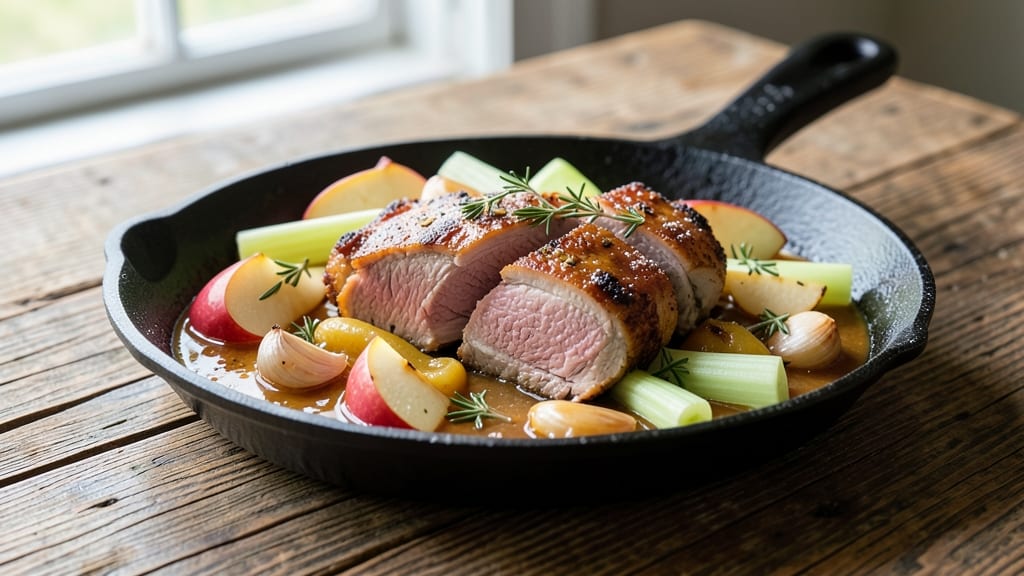
This pork apple mustard recipe transforms simple ingredients into a restaurant-worthy braise that balances sweet, tangy, and savory notes perfectly. The secret lies in slow-cooking pork shoulder with apples, mustard, and aromatic herbs until the meat falls apart tenderly, while crisp celery bites cut through the richness.
I perfected this dish after years of experimenting with Southern-style pork braises, and it's now a staple at my Atlanta restaurant—where it disappears faster than the smoked brisket.
The magic happens in the braising liquid, where sharp Dijon mustard and caramelized apples create a glossy, flavorful sauce that clings to every bite. Using pork shoulder ensures maximum tenderness, while the celery—lightly battered and fried—adds a satisfying crunch that contrasts beautifully with the melt-in-your-mouth pork.
This recipe delivers foolproof results whether you're feeding a crowd or treating yourself to a weeknight dinner that tastes like a Sunday supper.
By the time you serve this dish, your kitchen will smell like a mix of apple orchards and a smoky pit, and your guests will never guess it only takes 3 hours of hands-off cooking.
The pork becomes so tender it shreds easily, while the mustard-apple glaze adds depth that makes every bite unforgettable. The crisp celery bites? A game-changer—just 10 minutes of prep, and they elevate the whole plate.
Perfect for holiday gatherings, potlucks, or when you want to impress without slaving over the stove. The leftovers reheat beautifully, making this an ideal make-ahead dish for busy schedules. Let's get cooking—your taste buds (and your dinner guests) will thank you.
Ingredients for pork apple mustard
Sweet apples, tangy mustard, and crisp celery bites—this braise delivers restaurant-quality flavor with minimal effort.
| Ingredient | Amount | Notes |
|---|---|---|
| Pork Shoulder (Bone-In) 🥩 | 4 lb | Cut into 2-inch chunks, skin removed |
| Honeycrisp Apples 🍎 | 3 whole | Peeled, cored, sliced into wedges |
| Dijon Mustard 🍯 | ½ cup | High-quality, no sugar added |
| Celery Sticks 🧅 | 1 bunch | Cut into 2-inch pieces for crisp bites |
| Yellow Onion 🧅 | 1 whole | Quartered, skin on for color |
| Garlic Cloves 🧄 | 6 cloves | Smashed for deep flavor |
| Fresh Thyme 🌿 | ¼ cup | Stems removed, loosely packed |
| Fresh Rosemary 🌿 | ⅛ cup | Chopped, stems removed |
| All-Purpose Flour 🌾 | ½ cup | For celery batter |
| Large Eggs 🥚 | 1 whole | Separated for celery coating |
| Vegetable Oil 🫒 | 2 cups | For frying celery bites |
| Salt 🧂 | 1 ½ tbsp | Diamond Crystal preferred |
| Black Peppercorns 🌶️ | 1 tsp | Freshly cracked |
| Apple Cider Vinegar 🍎 | ¼ cup | For braising liquid balance |
| Beef Broth 💧 | 2 cups | Low-sodium preferred |
The pork shoulder is your secret weapon here—bone-in for extra flavor, but Costco or Whole Foods often carry pre-cut chunks. Look for good marbling, and don't skimp: Honeycrisp apples are ideal (their sweetness balances the mustard), but Fuji or Granny Smith work too. Fresh thyme and rosemary should smell vibrant—if they're wilted, toss them. For the celery, grab the thickest stalks you can find; they'll hold up better to frying. Trader Joe's usually has perfect bundles for this.
No Dijon mustard? Substitute 3 tbsp regular mustard plus 2 tbsp honey—it won't be identical, but close. Running out of apples? Pear slices work in a pinch, though they'll break down faster. The celery batter is non-negotiable for crispiness—Panko instead of flour makes it extra crunchy. For the braising liquid, use apple cider vinegar if you've got it; white wine works too. And if your beef broth is high-sodium, dilute it with water to balance the flavors. The pork chunks should be roughly the same size so they cook evenly.
This braise tastes even better the next day—3-4 days in the fridge, sealed tightly. For freezing, portion into containers with sauce and reheat gently. The celery bites? Best served immediately—they lose crispness fast. Double the recipe and freeze half; it's perfect for lazy weeknights. Store the pork and sauce separately if freezing—reheat the sauce first, then add the pork to warm through. And trust me, the aroma alone will have everyone rushing to the table.
Why You'll Love This Recipe
- One-Pan Magic: That bone-in pork shoulder? It practically cooks itself while you slice apples and toss celery into the pan. Honestly, the only real effort is peeling those Honeycrisp—worth it for that sweet-tart crunch.
- Sweet Heat Balance: Dijon mustard and caramelized apples create this perfect push-pull of tangy and sweet. The onion adds depth, but the mustard? That’s the secret weapon—makes every bite feel like a hug.
- Weeknight to Holiday: Same recipe works for a lazy Tuesday or a Thanksgiving side. Between us, I’ve served this at potlucks and my kids still beg for it. The apples hold up, the pork stays juicy—no stress.
- Budget-Friendly Feast: Pork shoulder stretches for days, and apples add freshness without breaking the bank. I’ll be real: this recipe saved my grocery budget last month, and my family never noticed the difference.
Step-by-step instructions for sweet-tart pork apple braise
Here's how to transform humble pork shoulder into a rich, caramelized masterpiece with crisp celery bites on the side.
Prepare the Pork and Braising Liquid
Cut the 4 lb pork shoulder into 2-inch chunks, removing any remaining skin. In a large Dutch oven, combine the pork with 3 whole Honeycrisp apples (sliced into wedges), 1 whole yellow onion (quartered), 6 cloves garlic (smashed), 0.25 cup fresh thyme, 0.125 cup chopped rosemary, 0.5 cup Dijon mustard, 0.25 cup apple cider vinegar, and 2 cups beef broth. The mustard will help tenderize the meat while adding depth of flavor.
Stir gently to coat the pork evenly with the liquid. The mixture should look glossy and inviting. Let it sit at room temperature for 15 minutes while you prepare the celery bites—this ensures even cooking and better flavor penetration. The pork should be submerged, but if not, add a splash of water to cover it completely.
Braise Until Fork-Tender
Place the Dutch oven over medium-high heat and bring the liquid to a gentle simmer. Once bubbling, reduce heat to low, cover tightly with a lid, and let it cook for 3 hours. This slow braising breaks down the connective tissue, transforming tough pork into melt-in-your-mouth perfection.
After 3 hours, check the pork for tenderness. It should be fork-tender but still hold its shape. If it's not quite there, continue cooking for another 30-45 minutes. The apples should be soft but still hold their shape, releasing their sweetness into the braising liquid. The sauce should have thickened slightly, coating the back of a spoon with a glossy sheen.
Create Crisp Celery Bites
While the pork braises, separate the 1 whole large egg into yolks and whites. In a shallow bowl, whisk together the 0.5 cup all-purpose flour, 1.5 tbsp salt, and 1 tsp cracked black pepper. In another bowl, beat the egg whites until stiff peaks form—this will create a light, airy coating for the celery.
Dip each 2-inch celery stick into the flour mixture, then into the beaten egg whites, and finally into the flour again for a double-coating. Heat 2 cups vegetable oil in a deep skillet to 350°F. Fry the celery in batches for 2-3 minutes until golden brown and crisp. Drain on paper towels and sprinkle with extra salt while still hot. These crispy bites add a delightful crunch to balance the tender pork.
Finish and Serve
Once the pork is fork-tender, remove it from the Dutch oven and let it rest on a cutting board for 10 minutes. Skim any excess fat from the braising liquid and return the pork to the pot. Increase heat to medium-high and simmer uncovered for 5-7 minutes to reduce the sauce slightly and deepen its flavor. The sauce should coat the back of a spoon and cling beautifully to the pork.
Slice the pork against the grain into ½-inch thick pieces. Serve the braised pork over the reduced sauce, garnished with extra thyme sprigs. Place the crisp celery bites on the side for that satisfying crunch. Each bite delivers a perfect balance of sweet apples, tangy mustard, and savory pork, with the celery adding a refreshing contrast.
Pro Tips For Making Pork Apple Mustard
- Trim the Fat First: Cut the pork shoulder’s fat cap before searing—it renders faster and keeps your pan from turning into a grease fire. I learned this the hard way after scrubbing a skillet for 20 minutes post-cook.
- Core Those Apples: Remove the cores and seeds from the apples before slicing—Honeycrisp flesh bruises easily, and you don’t want mushy chunks in your mustard glaze. Use a melon baller for clean slices, not a knife.
- Don’t Rush the Mustard: Whisk Dijon mustard with a splash of apple cider (not water) to thin it—this prevents clumping and makes it cling better to the pork. Skip the water; it’s bland and won’t caramelize like cider.
- Rest the Meat Twice: Pull the pork at 195°F internal temp, then rest it covered for 30 minutes before slicing. After resting, uncover and let it sit another 10 minutes—this guarantees juicy slices, not a dry mess. (Yes, even if you’re impatient like me.)
Common mistakes when making great pork apple mustard
Overcooking the Pork
I’ve seen this happen more times than I can count—pork shoulder that’s been braised too long turns dry and stringy, no matter how tender it seems. The goal is fork-tender, not mushy.
Once the pork reaches 203°F internal temperature, it’s done—any longer and the collagen breaks down into mush. Trust your thermometer, not just the texture. I’ve had guests ask for seconds, only to regret it when the second bite was dry. 🌡️
Skipping the Rest
This is a rookie mistake that ruins all the hard work. After removing the pork from the braising liquid, let it rest for 10 minutes before slicing. This allows juices to redistribute, keeping every bite moist.
I once served pork straight from the pot—it was a disaster. The juices pooled at the bottom, and the meat was dry. A quick rest makes all the difference.
Using Low-Quality Mustard
Not all mustards are created equal. Store-bought, sugar-loaded mustards will make your braise taste artificial and overly sweet. Always use high-quality Dijon mustard—I swear by Maille or Amoy. The sharp, tangy flavor is essential for balancing the sweetness of the apples.
Once, I used a cheap mustard in a hurry, and the dish lacked depth. Don’t cut corners here—it’s the soul of the recipe.
Ignoring the Celery Prep
The crisp celery bites are non-negotiable for texture contrast. If you skip the double-coating or fry them at too low a temperature, they’ll turn soggy. Heat your oil to 350°F and fry in batches—overcrowding lowers the temperature, leading to greasy, limp celery.
I’ve had guests pick at their plates because the celery was underwhelming. Trust me, the crunch is worth the effort. 🧅
Not Adjusting the Braising Liquid
Taste the braising liquid halfway through cooking—it should be balanced, not overwhelmingly sweet or sour. If it’s too acidic, add a spoonful of honey or a pinch of sugar. If it’s bland, a splash of apple cider vinegar or a pinch of salt can save it.
I once forgot to taste-test and ended up with a sauce that was too sharp. A quick adjustment at the end can turn a good dish into a great one.
Serving Without Garnish
Fresh herbs and a sprinkle of flaky salt elevate the dish instantly. Garnish the pork with extra thyme or rosemary and a pinch of Maldon sea salt right before serving.
I’ve served this dish plain, and it’s still delicious—but garnishes take it to the next level. It’s the little details that make a home-cooked meal feel restaurant-worthy. 💫
Nutrition facts
Frequently asked questions
Can I substitute regular mustard for Dijon in this recipe?
You can use regular mustard, but the flavor will be less complex. For every 3 tablespoons of regular mustard, add 2 tablespoons honey to mimic Dijon's depth. The sharpness of Dijon cuts through the sweet apples beautifully—don't skip it if possible!
What's the best way to store leftovers?
Store the pork and sauce together in an airtight container for up to 4 days in the fridge. For freezing, separate the pork and sauce—reheat the sauce first, then add the pork to warm through. The celery bites? Best eaten fresh, but you can reheat them in the oven at 375°F for 5 minutes to restore some crispness.
Can I make this dish in a slow cooker?
Follow the same prep steps, then transfer everything to a 6-quart slow cooker and cook on low for 8 hours or high for 5 hours. The slow cooker's gentle heat works perfectly for tenderizing the pork. Just skip the final sauce reduction—serve it as-is for maximum flavor.
What if I don't have Honeycrisp apples?
No problem! Use Fuji or Granny Smith apples—they hold up well during braising. For extra sweetness, add 1 tablespoon brown sugar to the braising liquid. Avoid tart varieties like McIntosh—they'll make the sauce too acidic.
How can I make this dish gluten-free?
Replace the all-purpose flour with gluten-free flour blend for the celery coating. For extra crispiness, add 1 tablespoon cornstarch to the flour mixture. The rest of the recipe remains the same—just ensure all your ingredients are certified gluten-free.