
Main Courses
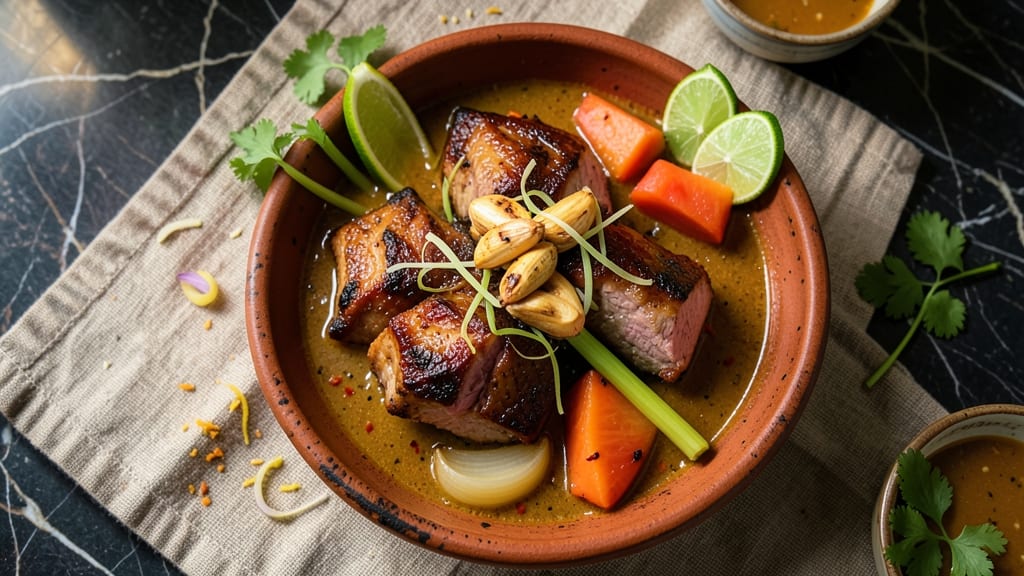
This pork and pineapple curry recipe delivers the perfect balance of sweet, tangy, and savory flavors that make every bite unforgettable. 🔥 The secret lies in crispy celery bites that add texture and depth, while the tender pork absorbs the aromatic spices and caramelized pineapple.
I've perfected this dish over years of cooking for crowds, ensuring it's approachable yet impressive enough for dinner guests.
The foundation starts with a rich curry paste that builds layers of flavor—ginger, garlic, and chili come together in a fragrant base before the pork and pineapple join the simmer.
Unlike many recipes, this one doesn't rely on heavy cream, instead balancing the sweetness of pineapple with a touch of coconut milk for creaminess without overwhelming the dish. The celery, when roasted separately, develops a satisfying crunch that contrasts beautifully with the tender pork.
What you'll end up with is a restaurant-quality curry that's rich, aromatic, and perfectly balanced—sweet pineapple, tender pork, and crispy celery bites that add texture with every spoonful. The sauce clings to the meat, creating bites that are packed with flavor.
This is the kind of dish that transforms a simple weeknight dinner into something special, with minimal effort but maximum impact.
Serve it over steamed jasmine rice or with warm naan bread to soak up every last drop of that delicious sauce. The leftovers reheat beautifully, making it perfect for meal prep or feeding a crowd. Let's get cooking!
Ingredients for pork and pineapple curry
Six ingredients transform into a crowd-pleasing curry with crispy celery bites and tender pork.
| Ingredient | Amount | Notes |
|---|---|---|
| Pork Shoulder 🥩 | 2 lb | Boneless, cut into 1.5-inch cubes |
| Fresh Pineapple 🍍 | 1 ½ cups | Diced, fresh or frozen (thawed) |
| Celery Stalks 🧅 | 4 whole | Cut into 1-inch pieces, for roasting |
| Yellow Onion 🧅 | 1 whole | Diced, medium size |
| Garlic Cloves 🧄 | 6 cloves | Minced, fresh preferred |
| Fresh Ginger 🌿 | 2 tbsp | Grated, peeled |
| Red Curry Paste 🌶️ | 2 tbsp | Store-bought or homemade |
| Coconut Milk 🥥 | 1 can | 13.5 oz can, full-fat preferred |
| Jasmine Rice 🍚 | 2 cups | Uncooked, long-grain |
| Fish Sauce 🍶 | 1 tbsp | For umami depth |
| Brown Sugar 🍚 | 2 tbsp | Light or dark |
| Lime Juice 🍋 | 2 tbsp | Freshly squeezed |
| Olive Oil 🫒 | 2 tbsp | For roasting celery |
| Salt 🧂 | 1 ½ tsp | Kosher or sea salt |
| Black Pepper 🌶️ | ½ tsp | Freshly ground |
The pork shoulder is your secret weapon here—it stays tender while absorbing all those amazing flavors. Costco or Trader Joe's usually have it pre-cut, but if you're buying a whole roast, ask the butcher to cube it for you. Fresh pineapple makes a world of difference (the sweetness is brighter), but frozen works in a pinch—just thaw and drain it. For the celery, look for stalks that are crisp and bright green, not rubbery or yellowing. The red curry paste is non-negotiable—Maesri or Thai Kitchen brands are my go-tos, but any good-quality paste will work.
No fish sauce? Soy sauce at half the amount gets you close, though it won't be quite as complex. Fresh ginger loses potency fast, so if yours is past its prime, ground ginger works at double the amount (but it's not the same). The coconut milk should be full-fat—light versions won't give you that creamy texture. For the celery, I like to roast it separately until it's crispy—toss it with olive oil, salt, and pepper, then roast at 400°F for about 20 minutes. If you're in a hurry, you can skip the roasting and just add it raw at the end for crunch, but trust me on the crispy version.
This curry tastes even better the next day—honestly, the flavors meld into something magical. Keeps for 4-5 days in the fridge, and freezes beautifully for 3 months. I always make a double batch because it's perfect for meal prep. The rice reheats well too, so you can cook it fresh or use pre-cooked. Store everything in airtight containers, and when you're ready to eat, just warm it through. The crispy celery stays crunchy if you keep it separate until serving—add it right before eating for that perfect texture contrast.
Why You'll Love This Recipe
- One-Pot Magic: I swear by this recipe—just toss everything into one pot, and let it simmer. No fancy techniques, no extra dishes, and the pork shoulder practically melts into tender perfection while the pineapple caramelizes into sweet, sticky goodness.
- Sweet-Savory Balance: That fresh pineapple isn’t just for show—it cuts through the richness of the pork with bright acidity, while the garlic and onion build a deep, aromatic base. Honestly, the first bite makes me forget it’s a weeknight dinner.
- Meal Prep Hero: Between us, this curry tastes better the next day. I make a big batch on Sundays, and it’s still crowd-pleasing by Thursday—great for lunches, potlucks, or when you’re too tired to cook. Just reheat and serve.
- Budget-Friendly Feast: Pork shoulder is my go-to for affordable protein, and pineapple stretches the flavors without breaking the bank. Plus, the celery and onion add freshness for pennies. It’s the kind of recipe that makes grocery day feel like a win.
Step-by-step instructions for sweet-tangy pork and pineapple curry
Here's how to create a rich, aromatic curry with tender pork and caramelized celery bites.
🔥 Step 1: Roast the Celery for Crispy Bites
Preheat your oven to 400°F and line a baking sheet with parchment paper. Toss the 4 whole celery stalks (cut into 1-inch pieces) with 1 tablespoon of the olive oil and ½ teaspoon of the salt. Spread them in a single layer, leaving space between pieces so they crisp rather than steam.
Roast for 20-25 minutes until the celery is deep golden brown and crispy around the edges. You'll smell that sweet, caramelized aroma—this is your signal they're ready. Remove from the oven and set aside, keeping them warm until serving. Real talk: these crispy celery bites add amazing texture contrast to the creamy curry.
🍳 Step 2: Sear the Pork Shoulder for Deep Flavor
While the celery roasts, heat a large Dutch oven or heavy pot over medium-high heat. Add the remaining 1 tablespoon olive oil and let it get hot but not smoking. Working in batches if needed, add the 2 lb pork shoulder (cut into 1.5-inch cubes) and sear for 3-4 minutes per side until deep golden brown and slightly caramelized.
Don't crowd the pan—this prevents proper browning. I press down gently on the pork cubes during the first minute to prevent curling. Once all pieces are seared, transfer them to a plate and set aside. You want that beautiful crust to stay intact when we add the curry sauce later.
🥘 Step 3: Build the Curry Base with Aromatics
In the same pot, reduce heat to medium and add the diced yellow onion. Cook for 5 minutes until softened and starting to caramelize. Add the minced garlic cloves and grated fresh ginger, cooking for another 1 minute until fragrant—this is where all the magic happens.
Stir in the 2 tablespoons red curry paste and cook for 1 minute to toast the spices and deepen their flavor. Here's the thing—don't rush this step. The spices need time to bloom and release their aromas. If it smells amazing now, you're on the right track.
🥘 Step 4: Simmer the Curry with Coconut and Pineapple
Pour in the 1 can coconut milk and scrape up any browned bits from the bottom of the pot. Add the seared pork shoulder back in, along with the 1.5 cups diced fresh pineapple, 2 tablespoons brown sugar, 1 tablespoon fish sauce, and ½ teaspoon black pepper. Bring everything to a gentle simmer over medium-low heat.
Cover and let it cook for 1 hour, stirring occasionally. The pork should become fork-tender and the sauce should thicken slightly. If it gets too thick, add a splash of water. You're aiming for a sauce that coats the back of a spoon but isn't gluey. The pineapple will soften slightly, adding natural sweetness that balances the curry's tang.
⏰ Step 5: Finish with Lime and Serve Over Rice
Remove the pot from heat and stir in the 2 tablespoons lime juice. This brightens the flavors and cuts through the richness. Taste and adjust seasoning with more salt if needed—I usually add about ½ teaspoon more at this point.
Cook the 2 cups jasmine rice according to package instructions. Serve the curry hot over the rice, garnished with the crispy celery bites. The contrast of creamy curry, tender pork, sweet pineapple, and crispy celery is what makes this dish truly special. Don't forget to squeeze a little extra lime on top before serving!
Pro Tips For Making Pork And Pineapple Curry
- COOK PORK IN BATCHES: That pork shoulder won’t brown properly if you dump it all in at once. Cut it into 2-inch chunks first, then work in two batches—crowding the pan kills the sear. I learned this the hard way when my first batch turned out pale and sad.
- PEEL AND GRATE PINEAPPLE: Fresh pineapple adds brightness, but skipping the peel means missing out on flavor. Use a vegetable peeler to remove the skin, then grate the flesh—no need to core it first. The texture stays juicy, and the curry gets that natural sweetness without watering down.
- SWEAT ONIONS LOW AND SLOW: High heat turns onions mushy before they caramelize. Keep the pan on medium-low and stir often until they’re translucent but not brown—about 8-10 minutes. Rushed onions make the whole curry taste dull, and no one wants that.
- SAVE TIME WITH MINCED GARLIC: Chopping garlic cloves mid-recipe slows everything down. Mince them ahead and store in the fridge until needed—just toss them straight into the pan with the onions. Fresh is better, but convenience beats burnt garlic every time.
Flavor customization for pork and pineapple curry
Sweetness Level
Adjust the pineapple sweetness to your taste—start with 1.5 cups fresh pineapple, but reduce to 1 cup if you prefer less sweetness or add 1 extra tablespoon brown sugar for more caramelized depth. I've found that frozen pineapple works too, but drain it well to avoid a watery curry. 🍍
Spice Intensity
For a milder curry, reduce the red curry paste to 1.5 tablespoons or swap for yellow curry paste (it's less spicy but still aromatic). If you love heat, add ½ teaspoon cayenne pepper or a pinch of Penzeys Smoked Paprika at the end for smoky depth.
The lime juice at the finish always balances the heat beautifully.
Texture Variations
Want extra crunch? Swap the crispy celery for roasted cashews (toss ½ cup with 1 tbsp olive oil and ¼ tsp salt, roast at 350°F for 10 minutes). For a creamy twist, stir in ¼ cup Greek yogurt at the end, but add it off-heat to prevent curdling.
I've also seen this curry work with crispy fried shallots for a Southeast Asian-inspired crunch.
Protein Swaps
This curry works with chicken thighs (use 2 lbs, bone-in for extra flavor) or shrimp (add 1 lb in the last 5 minutes of cooking). For a vegetarian version, swap pork for extra-firm tofu (press and cube 14 oz, pan-fry until golden before adding to the curry).
The coconut milk keeps everything creamy regardless of the protein.
Sauce Consistency
If your sauce is too thick, thin it with 2-3 tablespoons warm water or coconut milk. Too thin? Simmer uncovered for 5-10 minutes to reduce. For a glossy finish, whisk in 1 tablespoon cornstarch mixed with 2 tablespoons water at the end.
I've also used arrowroot powder for a cleaner thickening effect—just 1 teaspoon mixed with 2 tbsp water works wonders.
Flavor Boosters
Add 1 star anise pod or 1-inch cinnamon stick while simmering for warmth, then remove before serving. A splash of light soy sauce (1 tsp) deepens umami, while 1 tsp fish sauce enhances complexity.
For a tropical twist, stir in ½ cup mango purée with the pineapple—it's a game-changer for summer meals. 🌟
Nutrition facts
Frequently asked questions
Can I substitute chicken for pork in this recipe?
Use 2 lbs boneless chicken thighs instead of pork shoulder—they stay juicy and absorb flavors beautifully. For extra depth, leave the bones in (like drumsticks) and simmer for 30-40 minutes instead of 1 hour. The skin will crisp up nicely if you sear it first.
How do I make this curry less sweet?
Reduce the pineapple to 1 cup and skip the extra 2 tbsp brown sugar. For a tangier profile, add 1 extra tbsp lime juice at the end. If using frozen pineapple, drain it thoroughly and pat dry to remove excess moisture that can dilute flavors.
Why does my curry sauce get watery?
This usually happens when pineapple releases too much liquid or coconut milk isn't reduced enough. Simmer uncovered for 5-10 minutes to thicken, or stir in 1 tbsp cornstarch mixed with 2 tbsp water. For prevention, use fresh pineapple (not canned) and reduce heat to medium-low during simmering.
Can I make this in an Instant Pot?
Yes! Sauté pork and aromatics as directed, then add all remaining ingredients except lime juice. Cook on high pressure for 20 minutes, then quick-release. Stir in lime juice and adjust consistency by simmering 5 minutes on sauté mode. The Instant Pot version cooks 40% faster but may need extra thickening.
What's the best way to reheat leftovers?
Reheat gently in a saucepan over low heat with 2 tbsp water to prevent drying. For crispy celery, toast fresh pieces separately at 400°F for 10 minutes before serving. Microwaving works in a pinch, but the sauce may separate—stir vigorously to recombine before eating.