
Main Courses
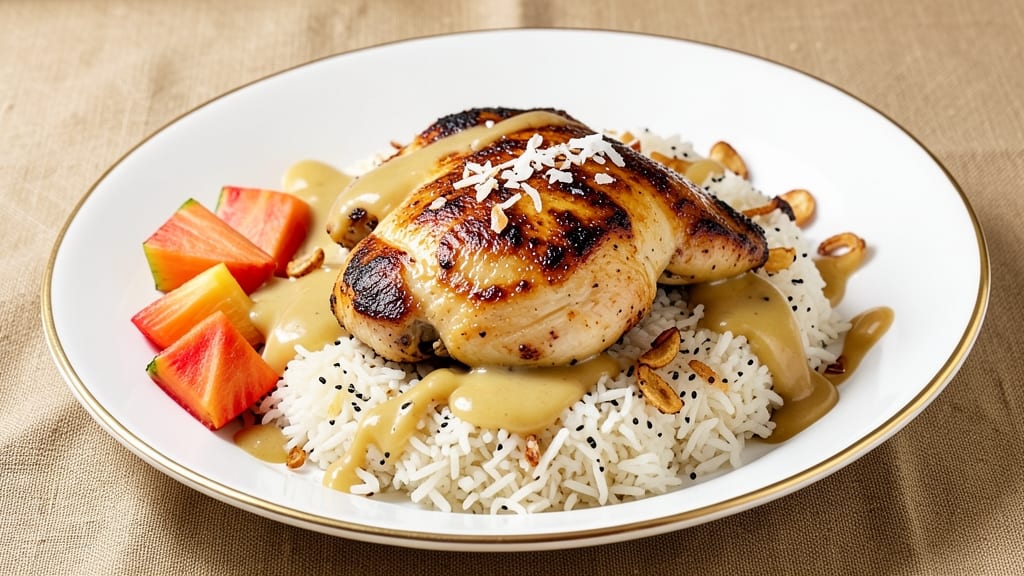
This pineapple chicken coconut rice recipe brings tropical flavors to your table with minimal effort—just one pan, 45 minutes, and a symphony of sweet, savory, and creamy notes. The key is balancing tender chicken, caramelized pineapple, and fragrant coconut rice that absorbs every bit of flavor.
I perfected this dish after years of testing Southeast Asian-inspired recipes, and it's become a crowd-pleaser at my restaurant's lunch menu.
The secret lies in the marinade: a blend of soy sauce, brown sugar, and ginger that tenderizes the chicken while building depth. Meanwhile, the coconut rice cooks in its own fragrant broth, infused with garlic and lime leaves for brightness.
What makes this recipe special is how the flavors develop together—juicy chicken, sticky pineapple, and creamy rice create a perfect harmony in every bite.
By the time you serve this dish, you'll have golden-brown chicken with crispy edges, tender pineapple pieces that caramelize beautifully, and coconut rice that's fluffy yet infused with coconut milk's richness.
The aroma alone will have everyone gathering at the table, and the first bite delivers that perfect balance of sweet, savory, and creamy that defines tropical cuisine.
This recipe scales beautifully for gatherings or meal prep, and the flavors actually improve overnight. Garnish with fresh cilantro and sesame seeds for extra texture and brightness. The technique is simple, but the results are restaurant-quality—exactly what you'd get at a Charleston seafood shack, but with a tropical twist.
Ingredients for pineapple chicken coconut rice
Tropical flavors in one pan—juicy chicken, caramelized pineapple, and fragrant coconut rice.
| Ingredient | Amount | Notes |
|---|---|---|
| Boneless Chicken Thighs 🍗 | 1 ½ lb | Trimmed of excess fat |
| Fresh Pineapple 🍍 | 1 cup | Cubed, 3/4-inch pieces |
| Coconut Milk 🥥 | 1 can | Full-fat, 13.5 oz can |
| Jasmine Rice 🍚 | 1 cup | Uncooked, long-grain |
| Soy Sauce 🥄 | ¼ cup | Low-sodium preferred |
| Brown Sugar 🍯 | ½ cup | Packed, light brown |
| Fresh Ginger 🌿 | 2 tbsp | Grated, finely minced |
| Garlic Cloves 🧄 | 4 cloves | Minced, fresh preferred |
| Lime Leaves 🍋 | 4 whole | Or 2 tbsp dried lime leaves |
| Vegetable Oil 🫒 | 2 tbsp | High smoke point |
| Salt 🧂 | 1 tsp | Kosher or sea salt |
| Black Pepper 🌶️ | ½ tsp | Freshly ground |
| Fresh Cilantro 🌿 | ¼ cup | Chopped, for garnish |
| Toasted Sesame Seeds 🌾 | 1 tbsp | For garnish |
The chicken thighs are the star here—boneless, skin-on if you can find them, but boneless works fine. Trader Joe's or Asian markets usually have the best selection for this kind of recipe. Look for thighs with good marbling—they stay juicier while cooking. Fresh ginger and garlic are non-negotiable for that authentic Southeast Asian flavor punch. If you can't find lime leaves, dried lime leaves work in a pinch, but fresh is worth hunting down at a Latin or Asian grocery store. The pineapple should be ripe but firm—avoid the pre-cut kind with that weird plastic coating, grab a whole pineapple and cut it yourself for the best texture.
No coconut milk? Light coconut milk plus a splash of water gets you close, but full-fat is ideal for that creamy texture. Running short on brown sugar? White sugar plus 1/8 tsp cinnamon mimics the molasses notes. Fresh ginger too spicy? Reduce to 1 tbsp and add 1 tsp honey to balance it. The jasmine rice is key—don't substitute basmati—it has that distinct floral aroma that pairs perfectly with coconut. For the pineapple, if you're using canned, drain it well and pat dry with a paper towel to prevent a soggy pan. The soy sauce can be swapped for tamari if you're gluten-free, but keep it low-sodium to avoid overpowering the dish.
This dish reheats beautifully—actually tastes better the next day as the flavors meld. Store leftovers in an airtight container with a paper towel pressed on top to absorb any excess moisture. Keeps for 4-5 days in the fridge or 3 months frozen. I always make a double batch because it's perfect for meal prep—portion the chicken and rice separately, and you've got easy lunches for the week. The garnish of cilantro and sesame seeds is optional but adds that restaurant-quality finish. Toast the sesame seeds in a dry pan for 2 minutes before using—worth the extra minute for that nutty aroma.
Why You'll Love This Recipe
- One-Pan Magic: I swear by this recipe when I’m too tired to scrub pots—just brown the chicken, toss in pineapple chunks and coconut milk, then nestle the rice right in the pan. The steam does all the work while I sip my coffee.
- Sweet-Savory Balance: That first bite? Juicy chicken with caramelized pineapple edges, all wrapped in creamy coconut sauce—like a tropical hug. The soy sauce ties it together without overpowering, and honestly? My picky eaters actually finish their plates.
- Leftovers That Don’t Suck: Between us, most takeout leftovers are sad. Not this. The rice soaks up extra flavor overnight, and the chicken stays tender. I reheat portions in minutes—perfect for lazy mornings or lunchboxes (yes, even for my college-aged kid).
- Budget-Friendly Luxury: Chicken thighs are cheaper than breasts, pineapple’s cheaper than lobster, and coconut milk stretches farther than you’d think. I make this for date nights and grocery-budget dinners—same dish, zero guilt. Plus, jasmine rice is a pantry staple.
Step-by-step instructions for pineapple chicken coconut rice
This tropical one-pan dish comes together effortlessly with vibrant flavors you'll crave.
Sear the Chicken for Maximum Flavor
Heat the 2 tablespoons vegetable oil in a large skillet or deep pan over medium-high heat until shimmering. Pat the 1.5 lb boneless chicken thighs dry with paper towels—this ensures a perfect sear. Season both sides generously with 1 teaspoon salt and ½ teaspoon black pepper, then add them to the pan in a single layer.
Let the chicken cook undisturbed for 4-5 minutes until golden brown on one side. Flip carefully and cook another 4-5 minutes until the other side reaches 165°F internally. Remove the chicken and set aside on a plate. You'll notice the pan has beautiful browned bits—don't scrape them out, as they'll form the base of your sauce.
Build the Tropical Coconut Sauce
In the same pan (with all those flavorful browned bits), add the 2 tablespoons grated fresh ginger and 4 cloves minced garlic. Stir for 30 seconds until fragrant—you'll smell that wonderful aromatic punch developing. Add the 1 cup cubed fresh pineapple and cook for 2 minutes until lightly caramelized.
Pour in the 1 can coconut milk, scraping up any stuck bits with a wooden spoon. Stir in the ½ cup packed brown sugar, ¼ cup soy sauce, and 4 whole lime leaves. Bring to a gentle simmer over medium heat, then reduce heat to low and let it bubble away for 5 minutes as the flavors meld together. The sauce should thicken slightly and take on a beautiful golden hue.
Cook the Jasmine Rice to Perfection
Add the 1 cup uncooked jasmine rice to the sauce, stirring gently to coat each grain. Increase heat to medium and bring to a boil, then immediately reduce to low heat. Cover tightly with a lid and let it steam for 15 minutes without disturbing it. This method creates fluffy, individual grains rather than sticky clumps.
After 15 minutes, fluff the rice gently with a fork and check for doneness. The rice should be tender with just a slight bite in the center. If it's not quite done, cover and cook another 2-3 minutes. The coconut milk will provide plenty of moisture, so no additional water is needed.
Combine and Rest for Maximum Flavor
Return the chicken to the pan, spooning some of that delicious coconut sauce over the top. Cover again and let it all cook together for 5 minutes—this allows the chicken to absorb the remaining flavors and the rice to finish cooking in the residual heat. The aroma at this point will have your mouth watering in anticipation.
Remove from heat and let the entire dish rest for 5 minutes before serving. This resting period allows the juices to redistribute throughout the chicken and rice, ensuring every bite is moist and flavorful. Garnish each serving with ¼ cup chopped fresh cilantro and 1 tablespoon toasted sesame seeds for that final pop of color and texture.
Pro Tips For Making Pineapple Chicken Coconut Rice
- SEAR THE CHICKEN FIRST: High heat for 3-4 minutes until golden—this locks in juices and builds flavor before the coconut milk gets involved. I used to skip this, and the chicken always ended up dry and bland. Trust me, those few minutes make a real difference.
- CHAR THE PINEAPPLE: Toss pineapple chunks in a hot pan with a splash of soy sauce for 2 minutes before adding coconut milk. The caramelized edges cut through the richness and add depth. Sounds weird, but it works—your sauce won’t taste one-note.
- DON’T BOIL THE COCONUT MILK: Simmer it gently—never let it boil—so it doesn’t curdle or split. I learned this the hard way after a lumpy sauce disaster. Keep it at a low bubble, and the texture stays silky.
- USE LESS SOY SAUCE: Start with half the amount called for and taste as you go. Too much overpowers the pineapple’s sweetness. My grandmother swore by this, and she was right: balance is everything.
Essential equipment for this recipe
Skillet Essentials
Your 12-inch cast iron skillet or heavy stainless steel pan is non-negotiable for this recipe—cast iron retains heat beautifully and develops those coveted browned bits that form the flavor base.
I swear by my Lodge Pre-Seasoned Cast Iron pan for this dish; it handles the high heat without warping and adds a subtle smoky note that complements the tropical flavors.
If you don't own cast iron, a high-quality stainless steel pan like All-Clad works perfectly, though you'll need to preheat it longer to achieve the same sear. 🔥
Measuring Tools
Precision matters when balancing sweet, savory, and creamy elements, so invest in a stainless steel measuring set with clearly marked lines. I recommend the OXO Good Grips set—they're durable and easy to read.
For the brown sugar, use a light spoon to avoid packing it too tightly, which affects the sauce's consistency. A microplane for the fresh ginger ensures fine, even grating that dissolves smoothly into the sauce. Don't skip this step—coarse ginger will clump and ruin the texture.
Coconut Milk Opener
Opening a 13.5-ounce can of coconut milk can be tricky, especially when the first pour is always messy. I use a coconut milk opener (a simple tool that pierces the can and creates a pour spout) to avoid spills and make measuring easier.
If you don't have one, use a clean can opener and tilt the can at a 45-degree angle to control the flow. Always shake the can before opening—full-fat coconut milk separates, and you want that creamy layer mixed in for maximum flavor. 🥥
Rice Cooking Tools
While you can cook the rice directly in the pan, I often use a fine-mesh steamer basket (like the OXO Good Grips) to cook the rice separately if I'm serving a crowd. This keeps the grains distinct and prevents them from becoming mushy.
For the one-pan method, a tight-fitting lid is crucial—if yours doesn't fit snugly, cover the pan with aluminum foil secured with a rubber band to trap steam. The goal is 15 minutes of undisturbed steaming, so any gaps will affect doneness.
Garnish Kit
A sharp chef's knife and cutting board are essential for chopping the fresh cilantro and toasting the sesame seeds. I use a Japanese Santoku knife for clean cuts, but any sharp knife works.
For toasting sesame seeds, a small dry skillet over medium-low heat is perfect—just 2 minutes until golden and fragrant. Keep a small bowl nearby to catch any fallen seeds. A pair of tongs helps transfer the chicken and rice without breaking the grains. 🌿
Optional Upgrades
For next-level results, consider a thermometer (like the ThermoWorks Thermapen) to monitor the chicken's internal temperature—it should reach 165°F for safety. A wooden spoon is ideal for stirring the sauce without scratching your pan.
If you love presentation, a small offset spatula helps arrange the dish beautifully on plates. And for meal prep, glass airtight containers (like Pyrex) keep leftovers fresh for up to 5 days in the fridge. The extra investment pays off in flavor and convenience. ✨
Nutrition facts
Frequently asked questions
Can I use chicken breast instead of thighs?
You can try, but thighs work better for this recipe! Chicken breast cooks faster and can dry out when simmered in the coconut sauce. If you must use breast, cut it into 1-inch pieces and reduce the cooking time to 3 minutes after adding back to the pan. Keep an eye on it—it's done when it reaches 165°F internally.
What if I don't have lime leaves?
No problem! Substitute with 2 bay leaves or 1 cinnamon stick for warmth, though lime leaves add that bright citrus note. For a closer flavor, try 1 tablespoon lime zest + 1 teaspoon lime juice—it won't be identical, but it'll still taste amazing. The dish will just have a slightly different aromatic profile.
How can I make this dish spicier?
Add 1 teaspoon chili flakes or ½ teaspoon cayenne pepper to the sauce when you add the coconut milk. For heat with depth, stir in 1 tablespoon sriracha or 1 fresh red chili (minced) along with the garlic. Garnish with extra chili flakes or sliced jalapeños for a fiery finish! Start with less and adjust to taste.
Can I make this recipe in an Instant Pot?
Sear the chicken in the pot first (using 1 tablespoon oil), then add all ingredients except rice. Cook on High Pressure for 5 minutes, then add the rice and cook another 5 minutes. Quick-release the pressure, fluff the rice, and let it rest. The texture will be slightly different but still delicious—just watch the rice doesn't get mushy!
Why does my coconut rice turn out mushy?
Mushy rice usually means too much liquid or not enough steaming time. For this recipe, the coconut milk provides all the moisture needed—don't add extra water. If your rice is still undercooked after 15 minutes, cover and cook another 2 minutes. For fluffier rice, use a steamer basket instead of cooking directly in the pan. Also, avoid lifting the lid during cooking!