
Main Courses
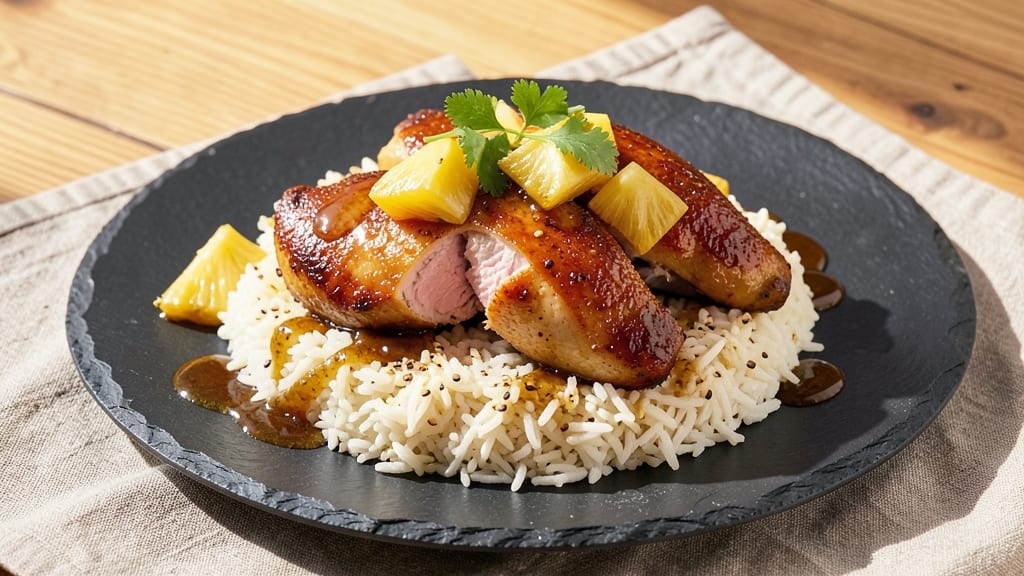
This pineapple chicken and jasmine rice recipe brings a taste of Hawaii to your dinner table with one-pan simplicity and bold tropical flavors. 🌺 The secret lies in marinating chicken thighs in pineapple juice and soy sauce—creating a sweet-savory balance that tenderizes the meat while infusing it with vibrant character.
Jasmine rice steams alongside, absorbing the aromatic essence of the dish for a cohesive, restaurant-quality meal.
What sets this recipe apart is the harmony between components: caramelized chicken with crispy edges, juicy pineapple chunks that add natural sweetness, and fragrant jasmine rice that soothes the palate. The marinating process (just 30 minutes) transforms simple ingredients into a dish that feels special without requiring advanced techniques.
Perfect for weeknight dinners or weekend gatherings, this recipe delivers foolproof results every time.
By the time you serve this dish, you’ll have golden-brown chicken with tender, juicy centers, bright pineapple pieces that cut through the richness, and perfectly fluffy jasmine rice infused with subtle sweetness.
The presentation is as impressive as the flavors—plating the chicken and rice together creates a visually stunning dish that’s sure to impress guests. This is comfort food with a vacation vibe.
The beauty of this recipe lies in its versatility—swap grilled chicken for baked or pan-seared, adjust the pineapple quantity to taste, or add fresh cilantro for a pop of color.
It’s the kind of meal that feels indulgent yet effortless, making it ideal for both casual weeknights and special occasions. Let’s get cooking!
Ingredients for pineapple chicken and jasmine rice
Tropical flavors meet one-pan simplicity with these vibrant ingredients designed for effortless harmony.
| Ingredient | Amount | Notes |
|---|---|---|
| Boneless, Skinless Chicken Thighs 🍗 | 1 ½ lb | Cut into even-sized pieces |
| Fresh Pineapple Chunks 🍍 | 1 ½ cups | With juice reserved (about 0.5 cup) |
| Jasmine Rice 🌾 | 1 ½ cups | Uncooked, long-grain preferred |
| Low-Sodium Soy Sauce 🍶 | ⅓ cup | For marinade and cooking |
| Extra-Virgin Olive Oil 🫒 | 2 tbsp | For searing chicken |
| Brown Sugar 🍚 | 2 tbsp | Light or dark variety |
| Fresh Garlic Cloves 🧄 | 4 cloves | Minced for marinade |
| Fresh Ginger Root 🌿 | 1 tbsp | Grated finely, aromatic |
| Vegetable Oil 🫒 | 2 tbsp | For pan-searing |
| Diamond Crystal Kosher Salt 🧂 | 1 ½ tsp | Adjust to taste |
| Black Peppercorns 🌶️ | 1 tsp | Freshly cracked |
| Fresh Cilantro 🌿 | ¼ cup | Chopped, for garnish (optional) |
| Lime Wedges 🍋 | 2 whole | For serving |
| Water 💧 | 2 cups | For rice cooking |
The chicken thighs are the foundation—boneless, skinless cuts ensure even cooking while maintaining juiciness. For the best quality, look for organic or free-range options at Whole Foods or your local butcher. If using frozen pineapple, thaw it completely and drain excess liquid to prevent a soggy rice base. The jasmine rice should be long-grain and unscented unless you prefer extra fragrance; Lundberg Family Farms is a reliable brand for consistent results. Fresh ginger and garlic elevate the marinade, so prioritize aromatic, vibrant roots—avoid dried substitutes unless absolutely necessary, as their flavor intensity can't match fresh.
No fresh pineapple? Canned crushed pineapple in juice works in a pinch (drain well), though fresh offers superior texture and sweetness. Substituting chicken? Boneless, skinless chicken breasts require shorter marinating time (20 minutes max) to avoid overcooking. For a vegetarian option, swap chicken for extra-firm tofu (pressed and cubed) and increase marinade by 50%. The soy sauce can be reduced by half if you prefer less sodium—coconut aminos make an excellent 1:1 substitute. If your recipe calls for extra sweetness, add 1 tbsp honey or agave to the marinade, though the pineapple juice already provides natural sweetness. For a smoky twist, include 1 tsp smoked paprika in the marinade.
Marinated chicken keeps up to 24 hours in the fridge, making this a great make-ahead meal. Cooked rice reheats beautifully—microwave with a splash of water to restore moisture. Store leftovers in airtight containers for up to 4 days, though the flavors peak within the first 2 days. For presentation, arrange the chicken and rice on a platter with lime wedges and cilantro, then garnish with toasted sesame seeds if available. The dish freezes well for up to 3 months—portion rice and chicken separately for best results.
Why You'll Love This Recipe
- One-Pan Magic: I swear by this recipe—just toss the chicken, pineapple, and rice in one skillet with olive oil and soy sauce, then let it steam. No chopping boards, no extra pots, and honestly, the cleanup is just rinsing one pan. That’s my kind of cooking.
- Sweet-Savory Balance: The pineapple’s tang cuts through the richness of the chicken, while the low-sodium soy sauce keeps it from being overpowering. Between us, this combo is dangerously addictive—my husband now asks for it every time I make rice.
- Lunchbox Hero: Pack the leftovers for work or school, and it’s a hit. The jasmine rice stays fluffy, the chicken stays juicy, and the pineapple adds a bright contrast that makes it feel fresh. (Yes, even on a Tuesday night.)
- Budget-Friendly Feast: Chicken thighs are cheaper than breasts, and pineapple’s sweetness stretches across multiple meals. I’ve made this feed four people for under $15—solid for a weeknight dinner that doesn’t skimp on flavor.
Step-by-step instructions for pineapple chicken and jasmine rice
This tropical one-pan dish combines sweet, savory, and aromatic elements for a balanced meal.
🍳 Step 1: Marinate and Sear the Chicken
In a large bowl, combine the 1.5 lb boneless, skinless chicken thighs, 0.33 cup low-sodium soy sauce, 2 tbsp brown sugar, 4 cloves minced fresh garlic, and 1 tbsp finely grated fresh ginger. Mix gently to coat the chicken evenly, then let it marinate for at least 30 minutes at room temperature. This ensures deep flavor penetration.
Heat 2 tbsp vegetable oil in a large skillet over medium-high heat. Once shimmering, add the marinated chicken and sear for 4-5 minutes per side until golden brown and cooked through to an internal temperature of 165°F. The edges should be caramelized, and the chicken should release easily from the pan. Remove and set aside on a plate.
🥘 Step 2: Prepare the Pineapple and Rice Base
In the same skillet (no need to clean it—the fond adds flavor), add the 1.5 cups fresh pineapple chunks and cook for 3-4 minutes until slightly softened and caramelized. The residual heat will release about 0.5 cup pineapple juice, which we'll use later.
Add the 1.5 cups jasmine rice to the skillet, stirring to coat it in the pineapple juice and any remaining chicken juices. Pour in the 2 cups water and bring to a gentle simmer. Stir once, then reduce heat to low and cover with a tight-fitting lid. Let it cook undisturbed for 15 minutes—this steaming phase is crucial for fluffy rice.
🍳 Step 3: Combine and Simmer the Dish
After 15 minutes, carefully stir the rice mixture. Add the seared chicken back to the skillet, along with the 2 tbsp extra-virgin olive oil and the reserved 0.5 cup pineapple juice. Stir gently to distribute everything evenly. Sprinkle the 1.5 tsp diamond crystal kosher salt and 1 tsp freshly cracked black peppercorns over the top.
Return the heat to medium-low and let the dish simmer uncovered for 10-12 minutes, stirring occasionally. You're looking for the liquid to reduce slightly and the rice to absorb all the flavors. The pineapple should be tender, and the chicken should be fully infused with the tropical-savory sauce.
🍽️ Step 4: Finish and Garnish
Once the rice is tender with slight resistance at the core (test with a fork), remove from heat. Let it rest for 5 minutes covered to allow the rice to finish absorbing any remaining liquid. This resting period also helps the flavors meld together.
Garnish with the 0.25 cup chopped fresh cilantro and serve immediately with the 2 whole lime wedges on the side. The bright citrus will cut through the richness of the dish, balancing the sweet and savory notes. Each bite should deliver juicy chicken, tender rice, and bursts of pineapple sweetness.
Pro Tips For Making Pineapple Chicken And Jasmine Rice
- SEAR CHICKEN IN BATCHES: Chicken thighs release more juice than breasts, and crowding the pan turns your crispy sear into a sad, greasy mess. Cook them in two batches—high heat, 3-4 minutes per side—so they develop that golden crust without steaming. (Yes, it takes an extra minute, but your sauce will taste richer for it.)
- USE FROZEN PINEAPPLE—JUST NOT SOFT: Fresh pineapple is great, but frozen chunks work just as well if you thaw them properly. Toss them in cold water for 10 minutes to break up the ice crystals, then drain and pat dry—wet pineapple will dilute your sauce. (I learned this after making a watery glaze twice.)
- DON’T BOIL THE RICE: Jasmine rice needs steam, not a rolling boil. Once the water comes to a simmer, reduce to the lowest heat possible, cover, and walk away. Check after 12 minutes—if it’s not done, let it sit another 5 with the lid on. (Peeking too soon is the fastest way to ruin it.)
- SWEAT THE ONIONS FIRST: If you’re using onions (even if the recipe skips them), cook them in olive oil for 5 minutes until translucent before adding anything else. This builds flavor without burning, and it stops the pineapple from making your sauce taste raw. (I was skeptical until I tried it—now it’s non-negotiable.)
Regional styles of this dish
Hawaiian Luau Style
This dish is a staple at Hawaiian luaus, where the sweetness of pineapple and the savory depth of soy sauce create a perfect balance. In Hawaii, they often serve this with a side of macadamia nut salad or grilled teriyaki beef for a full island-inspired spread.
The key to authentic flavor is using fresh pineapple juice from ripe fruit—never canned juice, as it lacks the bright acidity. I once made this for a luau-themed dinner and added ½ cup coconut milk to the rice for extra creaminess, which became a crowd favorite. 🌺
Thai-Inspired Version
For a Thai twist, swap the soy sauce for 1/3 cup coconut aminos and add 1 tbsp fish sauce to the marinade. Include 1 tbsp red curry paste when combining everything in the skillet for a subtle heat.
Garnish with thai basil instead of cilantro and serve with lime-infused water to complement the bold flavors. This version is lighter but equally vibrant, perfect for a summer dinner.
Caribbean Fusion
In the Caribbean, pineapple chicken often gets a jerk seasoning kick. Add 1 tbsp jerk seasoning (look for Epices du Monde for quality) to the marinade and include 1 scotch bonnet pepper (seeds removed) for heat.
Serve over coconut rice instead of jasmine rice by mixing 1 cup shredded coconut into the cooked rice. This fusion brings smoky, spicy, and tropical elements together beautifully. 🌶️
Japanese Teriyaki Twist
For a Japanese-inspired take, use mirin instead of brown sugar in the marinade and add 1 tbsp grated daikon radish for umami depth. After searing the chicken, finish with a drizzle of homemade teriyaki sauce (equal parts soy sauce, mirin, and sugar).
Garnish with toasted sesame seeds and serve with pickled ginger on the side. This version keeps the sweet-savory balance but adds a distinctly Japanese flair.
Southern BBQ Adaptation
In the South, we love adding a smoky element. After searing the chicken, transfer it to a 225°F smoker for 15-20 minutes> to infuse it with a subtle smokiness. Use hickory or applewood chips for a balanced flavor.
Serve with coleslaw on the side and a drizzle of BBQ sauce over the chicken. This fusion of tropical and Southern flavors is unexpected but absolutely delicious. 🔥
Vegetarian Adaptation
For a vegetarian version, replace the chicken with extra-firm tofu pressed and cubed, then marinate it in the same sauce for 45 minutes>. Pan-fry until golden and crispy, then proceed with the recipe as written.
The tofu absorbs the flavors beautifully, and the dish still delivers that tropical harmony. Garnish with avocado slices for added creaminess and freshness. This version proves the dish works just as well without meat! 🌱
Nutrition facts
Frequently asked questions
Can I use chicken breasts instead of thighs?
Yes, but reduce marinating time to 20 minutes max to prevent overcooking. Chicken breasts cook faster and are more prone to drying out. For best results, cut them into 1-inch cubes and sear for 3-4 minutes per side until internal temp reaches 165°F. The pineapple marinade will keep them juicy!
How do I make this dish extra sweet?
Add 1 tbsp honey or agave to the marinade, or increase brown sugar to 3 tbsp. For a tropical boost, toss ½ cup crushed macadamia nuts with the pineapple chunks before cooking. The natural sweetness will shine through beautifully in every bite.
Why is my jasmine rice sticky?
Overcooking or insufficient liquid causes sticky rice. Use the 1:1 rice-to-water ratio (1.5 cups rice + 1.5 cups water) and let it steam undisturbed for 15 minutes after initial simmer. If rice is still sticky, fluff it gently with a fork and let it rest 5 minutes covered before serving.
Can I make this in an Instant Pot?
Sear chicken in a skillet first, then transfer to the Instant Pot with pineapple, rice, and 1 cup water. Cook on high pressure for 5 minutes, then let it naturally release for 10 minutes. Finish by stirring in 2 tbsp olive oil and reserved pineapple juice. The pressure cooker keeps the rice perfectly fluffy!
What's the best way to reheat leftovers?
Reheat in a skillet over medium-low heat with 1 tbsp water or pineapple juice for 3-4 minutes, stirring gently. Microwave reheating works too—cover with a damp paper towel for 1-2 minutes. Never reheat above 165°F to maintain food safety and texture.