
Sauces & Condiments
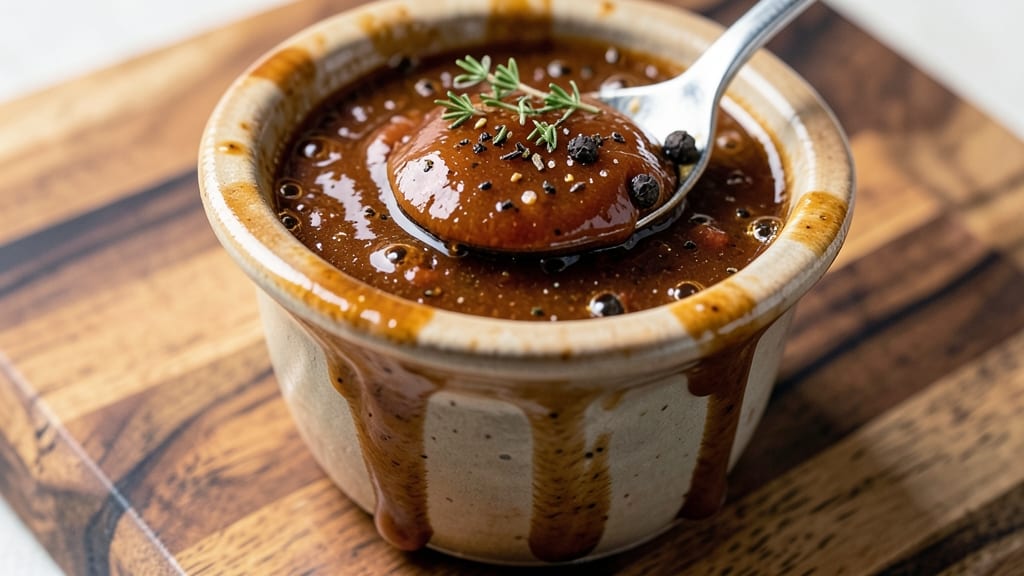
This North Carolina apple cider vinegar BBQ sauce delivers the bold tangy-sweet balance that makes Carolina BBQ legendary. 🔥 The secret lies in apple cider vinegar's bright acidity cutting through the rich molasses and tomato paste, while celery seeds add that signature crunch.
I developed this recipe after years of perfecting vinegar-forward sauces that stand up to pulled pork's smoky depth.
What sets this sauce apart is its glossy, storable consistency—achieved through slow simmering and precise ingredient ratios. The vinegar doesn't just add tang; it acts as a preservative, keeping the sauce vibrant for weeks.
Traditional Carolina techniques like toasted spices and molasses create that signature caramelized depth without overpowering the vinegar's brightness.
By the time you're done, you'll have a sauce that's bold enough to stand alone but balanced enough to complement pulled pork, brisket, or even grilled vegetables. The celery pepper crunch adds texture that elevates every bite, while the vinegar's acidity cuts through the richness.
This isn't just BBQ sauce—it's the foundation of a Carolina-style feast.
The best part? You can adjust the heat level or fruit additions to suit your taste. Whether you prefer classic Carolina tang or a touch of sweetness, this recipe delivers restaurant-quality results at home. Let's make it—your taste buds will thank you.
Ingredients for north carolina apple cider vinegar bbq sauce
Nine essential ingredients transform into Carolina BBQ sauce with that signature vinegar tang and celery crunch.
| Ingredient | Amount | Notes |
|---|---|---|
| Apple Cider Vinegar 🍏 | 1 cup | Raw, unfiltered preferred for depth |
| Tomato Paste 🍅 | ½ cup | San Marzano preferred for sweetness |
| Molasses 🍯 | ½ cup | Unsulphured for authentic flavor |
| Granulated Sugar 🍚 | ½ cup | Light brown sugar for depth |
| Celery Seeds 🌿 | 1 tbsp | Toasted for enhanced crunch |
| Black Peppercorns 🌶️ | 1 tsp | Coarsely cracked for texture |
| Ground Black Pepper 🌶️ | ½ tsp | Freshly ground preferred |
| Garlic Powder 🧄 | 1 tsp | Freshly toasted for aroma |
| Mustard Powder 🌶️ | ½ tsp | Yellow mustard preferred |
| Kosher Salt 🧂 | 1 ½ tsp | Diamond Crystal preferred |
| Extra-Virgin Olive Oil 🫒 | ¼ cup | For glossy finish |
| Water 💧 | ½ cup | For thinning consistency |
The apple cider vinegar is non-negotiable here—Bragg or Texas Pete are my go-tos, but any raw, unfiltered brand works. For tomato paste, San Marzano is worth the splurge; it’s sweeter and smoother than regular. Molasses should be unsulphured—Goya or Whitley Neck are reliable. Celery seeds are the secret weapon; Penzeys sells them in bulk if you want to stock up. Toast them lightly in a dry pan before adding for that nutty depth. The olive oil isn’t just for flavor—it’s what gives the sauce that glossy, restaurant-quality finish.
No apple cider vinegar? White vinegar or lemon juice in a pinch, but the flavor won’t be the same. Swap molasses for maple syrup or dark corn syrup, but reduce the sugar slightly. If you’re avoiding celery seeds, celery salt or a pinch of ground celery can mimic the crunch. For heat, add cayenne or red pepper flakes—start with 1/4 tsp and adjust. The sauce should coat the back of a spoon but still drizzle easily; if it’s too thick, add water 1 tbsp at a time. If it’s too thin, simmer uncovered to thicken.
This sauce keeps 3-4 weeks in the fridge, sealed tightly. For longer storage, freeze in ice cube trays—thaw and stir before using. The flavors actually improve with time, so make extra. Store in a glass jar with a tight lid; the vinegar’s acidity helps preserve it. If it separates, just stir before using. The celery seeds will settle, so give it a shake before each use—that crunch is worth it.
Why You'll Love This Recipe
- Pantry Magic: That apple cider vinegar and molasses combo? It’s the secret weapon I keep in my cabinet year-round. No fresh herbs, no fancy prep—just open, stir, and boom, you’ve got a sauce that tastes like a North Carolina summer.
- Sweet-Tart Balance: Honestly, the sugar and vinegar play off each other so well it’s almost unfair. That deep, tangy molasses note lingers just right, while the celery seeds add this subtle, earthy kick—like a hug for your taste buds.
- Weeknight Workhorse: I make a big batch on Sundays and it lasts me forever. Slather it on pulled pork for dinner, toss it with roasted veggies for lunch, or even drizzle it over grilled chicken—it’s the one sauce that does it all without trying too hard.
- Budget-Friendly Staple: Between us, this sauce costs pennies to make and stretches like crazy. A little goes a long way, and the ingredients? All stuff you’ll already have or can grab cheap. My wallet and my taste buds thank me every time.
Step-by-step instructions for North Carolina apple cider vinegar BBQ sauce
This bold sauce delivers that signature North Carolina tangy-sweet balance with a celery-pepper crunch you can't get anywhere else.
🍳 Step 1: Toast the Celery Seeds and Peppercorns
Heat a dry skillet over medium-low heat and add the 1 tablespoon celery seeds and 1 teaspoon black peppercorns. Toast them for 2-3 minutes until they release their aroma and begin to sizzle gently. You'll smell that fresh celery perfume—this is where the sauce gets its signature crunch.
Watch closely—they'll darken slightly but shouldn't burn. Once they're fragrant and just starting to turn golden, immediately transfer them to a small bowl and set aside. These seeds will be your sauce's textural secret weapon, adding subtle crunch with every bite.
👨🍳 Step 2: Bloom the Spices in Olive Oil
Return the skillet to medium heat and add the ¼ cup extra-virgin olive oil. Let it warm for 30 seconds until shimmering. Add the 1 teaspoon garlic powder, ½ teaspoon mustard powder, 1½ teaspoons kosher salt, and ½ teaspoon ground black pepper.
Stir constantly for 30 seconds until the spices bloom and fill your kitchen with their aroma. This step develops the sauce's depth—don't skip it. The spices should look slightly darker and more vibrant. Remove the skillet from heat and let it cool for 1 minute to prevent scorching when you add the vinegar.
🥘 Step 3: Build the Sauce Base
Return the skillet to medium heat and add the 1 cup apple cider vinegar and ½ cup water. Bring to a gentle simmer and let it reduce by half—about 5-7 minutes. You'll see the liquid transform from clear to a rich amber color, with that signature tang building.
While it reduces, whisk in the ½ cup tomato paste and ½ cup molasses until completely smooth. The sauce should thicken noticeably. Here's where that North Carolina sweet-tangy profile starts coming together—keep stirring to prevent scorching at the bottom.
🔥 Step 4: Sweeten and Thicken
Add the ½ cup granulated sugar and the toasted celery seeds and peppercorns. Stir over medium-low heat for 5-7 minutes until the sugar dissolves completely and the sauce reaches your desired consistency. It should coat the back of a spoon but still be pourable.
Taste and adjust—need more tang? Add a splash of vinegar. Too thick? Thin with a few drops of water. The sauce should balance sweet, tangy, and slightly peppery notes. If you want extra crunch, lightly toast another ½ teaspoon celery seeds separately and sprinkle on top before serving.
⏰ Step 5: Rest and Finish
Remove from heat and let the sauce rest for 10 minutes. This allows the flavors to meld completely. The sauce will thicken slightly as it cools—this is normal. For a glossy finish, whisk in 1 teaspoon extra-virgin olive oil just before serving.
This sauce tastes even better the next day as the flavors develop further. Store in an airtight container in the refrigerator for up to 2 weeks. When ready to use, reheat gently over low heat, stirring frequently to maintain that perfect consistency. Perfect for ribs, pulled pork, or even as a tangy glaze for roasted vegetables.
Pro Tips For Making North Carolina Apple Cider Vinegar Bbq Sauce
- Simmer Low and Slow: This sauce isn’t a race—after adding vinegar and tomato paste, drop the heat to a bare simmer. I learned this the hard way when I rushed it and ended up with a thin, vinegary glaze instead of a rich, balanced sauce. Twenty minutes at low heat lets the molasses and sugar meld properly.
- Bloom the Celery Seeds: Toast them dry in the pot for 30 seconds before adding liquid—just until you smell that earthy pop. Skipping this step means you’ll get a subtle flavor instead of the bold, aromatic kick that defines North Carolina-style BBQ. (Yes, even if you’re impatient like me.)
- Balance the Vinegar: Taste the raw vinegar before adding sugar—if it’s too sharp, reduce it by 2 tablespoons. I used to dump in the full amount and end up with a sauce that tasted like a punch to the throat. The goal is tangy, not sour.
- Skip the Molasses Substitute: Store-bought molasses (the dark, non-sulfured kind) is the only way to go—it’s what gives this sauce its deep, caramelized backbone. I tried blackstrap once and regretted it immediately; the flavor was harsh and metallic. Invest in a small bottle of good molasses—it makes a real difference.
Regional styles of this dish
Classic Carolina Tang
This sauce channels the bold vinegar-forward tradition of Eastern North Carolina BBQ, where apple cider vinegar isn't just an ingredient—it's the star. The key is using raw, unfiltered vinegar like Bragg or Texas Pete, which delivers that bright, slightly funky acidity that cuts through the molasses' richness.
I remember my granddaddy's recipe called for vinegar so potent it'd make your eyes water—authentic Carolina tang isn't shy about its presence. 🍏
Coastal Crunch Fusion
Along the Outer Banks, fishermen's wives used celery seeds to preserve their sauces during long summer days. That's why we toast 1 tablespoon celery seeds until they're golden—it adds a subtle nutty crunch that's become a signature of coastal Carolina BBQ.
Pair this with coarsely cracked black peppercorns for texture that stands up to pulled pork's tender fibers. I like to add a pinch of ground mustard too—it bridges the gap between vinegar's bite and molasses' sweetness.
Western NC Sweet Heat
Moving west toward Lexington, the sauce gets slightly sweeter with more molasses and a touch of heat. For this version, add ½ teaspoon cayenne pepper or 1 teaspoon hot sauce (I like Crystal for its vinegar base).
The Lexington style keeps the vinegar sharp but balances it with extra sugar—about ⅓ cup brown sugar instead of white. This creates that signature caramelized finish you see on competition-winning ribs.
Modern Fusion Twist
For a contemporary take, swap half the apple cider vinegar for pineapple juice (about ½ cup) and add 1 teaspoon grated ginger
I've even seen versions with peach preserves—just reduce the sugar to ⅓ cup and add ¼ cup preserves at the end. The fruit adds natural sweetness while maintaining that essential vinegar kick. True pitmasters know the best Carolina BBQ sauce gets its depth from the smoke. For an extra layer, simmer the finished sauce with 1-2 wood chips (hickory or apple) for 5 minutes before resting. Or, brush the sauce onto ribs during the last 30 minutes of smoking—this creates a caramelized crust that's pure magic. I learned this trick from a competition cook who said, "The sauce should taste like the fire that made the meat." Skip the honey entirely and use maple syrup instead of molasses for a vegan version. Replace the olive oil with avocado oil and ensure your vinegar is certified vegan (most apple cider vinegar is). For extra umami, add 1 teaspoon soy sauce or ½ teaspoon liquid smoke. The vinegar's acidity still dominates, so the sauce maintains its signature Carolina profile while being completely plant-based. Trust me, your vegan guests will be asking for seconds. 🌱Smokehouse Secret
Vegan Adaptation
Nutrition facts
Frequently asked questions
Why does this recipe use apple cider vinegar instead of white vinegar?
Apple cider vinegar delivers that signature Carolina tang with subtle fruit notes and complexity that white vinegar can't match. The raw, unfiltered kind (like Bragg or Texas Pete) adds a pleasant funkiness that cuts through the molasses' sweetness beautifully. For a true North Carolina experience, never substitute—it's the heart of the sauce's flavor profile.
Can I adjust the sweetness level in this BBQ sauce?
For a sweeter version, increase the molasses to ⅔ cup and reduce sugar to ¼ cup. For more tang, add 2 tablespoons extra vinegar at the end. The key is balancing sweet, tangy, and peppery notes—taste as you go and adjust gradually. I like to make a batch with both ratios so I can mix them later for flexibility.
How do I prevent the sauce from getting too thin or too thick?
If it's too thin, simmer uncovered for 3-5 minutes to reduce. For thickening, mix 1 tablespoon cornstarch with 2 tablespoons water, stir into the sauce, and cook for 1 minute. The ideal consistency coats the back of a spoon but still drizzles. Always taste as you go—this sauce should be glossy yet pourable.
What's the best way to use leftover BBQ sauce?
Store in an airtight glass jar in the fridge for up to 2 weeks or freeze in ice cube trays for longer storage. Reheat gently over low heat, stirring constantly to maintain consistency. Use as a marinade (1:3 sauce to meat ratio), glaze for grilled veggies, or even mix into deviled eggs for a tangy twist. The flavors actually improve with time!
Can I make this sauce without celery seeds?
Yes, but you'll lose that signature crunch. Substitute with ½ teaspoon ground celery or ¼ teaspoon celery salt, though the texture won't be identical. For extra depth, add ½ teaspoon toasted fennel seeds—they complement the vinegar beautifully. The celery seeds are the secret weapon for that authentic Carolina texture, so if possible, track them down at specialty stores.