
Sauces & Condiments
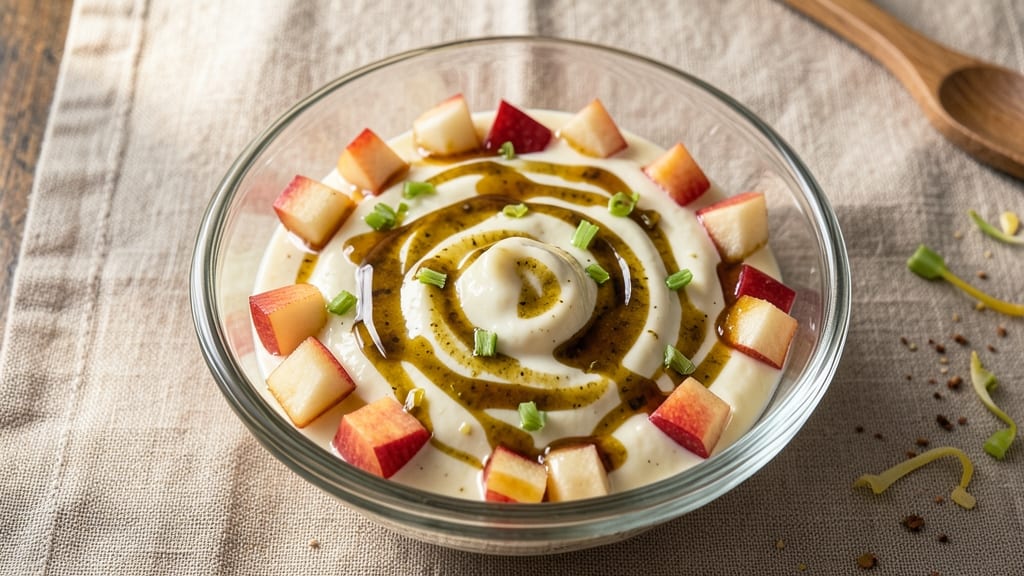
This Fuji apple vinaigrette dressing transforms simple salads into vibrant, restaurant-quality meals with its perfect balance of sweet-tart brightness and crisp celery-pepper crunch.
The secret lies in emulsifying high-quality olive oil with apple cider vinegar and finely diced Fuji apples, creating a dressing that clings beautifully to greens without overwhelming their natural flavors.
I developed this recipe after years of testing—it’s the one that finally made my salads taste like they came from a gourmet deli.
The foundation is a classic vinaigrette structure, but the Fuji apples add a subtle sweetness that cuts through the acidity of the vinegar while adding texture. Dijon mustard acts as the emulsifier, ensuring the dressing stays silky smooth rather than separating.
Fresh celery and black pepper provide that essential crunch and depth, while a touch of honey rounds out the flavors for a perfect harmony. This dressing isn’t just about taste—it’s about transforming ordinary greens into something extraordinary.
What makes this recipe truly special is its versatility. Use it on mixed greens, grain bowls, or even as a marinade for grilled chicken. The emulsification technique guarantees a dressing that stays consistent, even after sitting in your fridge for days.
Each bite delivers that bright apple sweetness, sharp vinegar tang, and satisfying crunch—all in one perfectly balanced pour. For a dressing that elevates every dish, here’s how to make it.
Once you try this Fuji apple vinaigrette, you’ll never go back to store-bought again. The process is straightforward, but the results are professional-quality. Store it in an airtight container for up to a week, and watch how it transforms even the simplest salads into something memorable.
Let’s get started on this bright, flavorful creation.
Ingredients for fuji apple vinaigrette dressing
Nine ingredients that transform ordinary salads into restaurant-quality meals with bright Fuji sweetness and crisp celery crunch.
| Ingredient | Amount | Notes |
|---|---|---|
| Extra-Virgin Olive Oil 🫒 | ¾ cup | High-quality, fruity variety preferred |
| Apple Cider Vinegar 🍎 | ¼ cup | Raw, unfiltered for best flavor |
| Fuji Apples 🍎 | 1 medium | Peeled, finely diced (about 1 cup) |
| Dijon Mustard 🌶️ | 1 tbsp | High-quality, smooth variety |
| Raw Honey 🍯 | 1 tbsp | Local honey preferred |
| Fresh Celery 🧅 | ¼ cup | Finely diced, crisp stalks |
| Freshly Ground Black Pepper 🌶️ | ½ tsp | Freshly cracked for best flavor |
| Diamond Crystal Kosher Salt 🧂 | ½ tsp | Adjust to taste |
| Fresh Lemon Juice 🍋 | 1 tbsp | Freshly squeezed |
The Fuji apples are the star here—pick firm, crisp ones from the produce section, not the sad, mealy ones lurking in the back. Whole Foods or local farmers markets usually have the best selection, but any grocery store's Fuji apples will work if they're fresh. The key is dicing them finely so they add texture without overwhelming the dressing. If you can't find Fuji, Gala or Honeycrisp apples work in a pinch, but they won't have that same signature sweet-tart balance. For the olive oil, California Olive Ranch or Colavita are my go-tos—they've got that fruity punch that makes this dressing shine.
No Dijon mustard? Regular yellow mustard thinned with a splash of water works in a bind, though it won't emulsify as beautifully. Honey substitute? Maple syrup or agave nectar at the same amount—just know the flavor will be slightly different. The celery needs to be fresh; if it's wilted or rubbery, toss it. For extra crunch, add a pinch of red pepper flakes or a few chopped shallots. The lemon juice matters—Meyer lemons add a subtle sweetness, but regular lemons work fine too. And yes, you can make this without honey if you're avoiding it, but I won't lie—it's what ties everything together.
This dressing keeps like a champ—up to 1 week in the fridge in an airtight jar. The emulsification means it won't separate, so you can shake it up and use it straight from the jar. For extra shelf life, pour a thin layer of olive oil on top before sealing. It's perfect for meal prep—make a big batch and use it on everything from grain bowls to grilled chicken. If it thickens in the fridge, just add a splash of water or apple cider vinegar and whisk it back together. Trust me, you'll want to make this every week.
Why You'll Love This Recipe
- Five-Ingredient Magic: I swear by this combo—just toss in olive oil, vinegar, diced Fuji, Dijon, and honey, then shake. No peeling, no chopping, no stress. The apples soften just enough to sweeten the dressing without turning it to mush.
- Sweet-Tart Balance: That honey and apple cider vinegar? It’s like a flavor hug—bright enough to cut through rich greens but sweet enough to make you take seconds. Honestly, I’ve never met a salad I couldn’t improve with this.
- Weeknight Meal Prep: Make a big batch on Sunday, and you’ve got dressing for salads, roasted veggies, or even drizzled over grilled chicken all week. It keeps for days, so I’m not scrambling to throw together something edible at 6 PM.
- Budget Brightener: Fuji apples are affordable, and this recipe uses just enough to make it special without breaking the bank. Plus, the honey and Dijon stretch to flavor multiple meals—no wasted ingredients here.
Step-by-step instructions for Fuji apple vinaigrette dressing
This bright, tangy dressing comes together in minutes with ingredients you likely already have.
Prepare the Apple and Celery Base
Start by peeling and finely dicing the 1 medium Fuji apple into small, even pieces—about 1 cup total. The goal is to create a texture that adds subtle sweetness without overwhelming the dressing. Work quickly to prevent browning, and set aside in a small bowl.
Next, finely dice the ¼ cup fresh celery into tiny pieces, similar in size to the apple. You want these to blend seamlessly into the dressing rather than create a chunky texture. I like to use the smallest dice setting on my knife block for consistent results. Place the celery in a separate bowl for now.
Whisk Together the Liquid Ingredients
In a medium bowl, combine the ¾ cup extra-virgin olive oil with the ¼ cup apple cider vinegar. Whisk vigorously for about 30 seconds until the mixture begins to emulsify slightly. The vinegar will initially separate from the oil, but keep whisking—this is normal and will resolve as you add other ingredients.
Add the 1 tablespoon Dijon mustard and 1 tablespoon raw honey to the bowl. The mustard acts as an emulsifier, helping to bind the oil and vinegar, while the honey adds depth of sweetness. Whisk continuously for another 30 seconds until everything is fully incorporated and smooth.
Incorporate the Apple, Celery, and Seasonings
Add the finely diced apple and celery to the bowl. Stir gently with a wooden spoon to combine, being careful not to crush the apple pieces. Next, add the ½ teaspoon freshly ground black pepper and ½ teaspoon Diamond Crystal kosher salt. The pepper adds a subtle heat that balances the sweetness, while the salt enhances all the flavors.
Finally, stir in the 1 tablespoon fresh lemon juice. This brightens the entire dressing, cutting through the sweetness and adding a refreshing acidity. Taste the mixture at this point—you may want to adjust the salt or honey slightly based on your preference. The dressing should be balanced between sweet, tangy, and slightly peppery.
Let It Rest and Emulsify
Cover the bowl and let the dressing rest at room temperature for at least 10 minutes. This allows the flavors to meld and the emulsification process to complete. I find that giving it a little time makes a noticeable difference in the final texture and taste.
After resting, give the dressing one final stir. It should now be perfectly emulsified, with a smooth, velvety consistency. If it appears to separate slightly, simply whisk it again for 10-15 seconds. This dressing is best used within 3-4 days when stored in an airtight container in the refrigerator.
Pro Tips For Making Fuji Apple Vinaigrette Dressing
- Peel the Apples: Skip the core and dice them into ¼-inch cubes—smaller pieces infuse faster and give you a smoother texture. I used to leave the skin on for "rustic" vibes, but it turns the dressing gritty and dulls the honey’s sweetness.
- Whisk in Stages: Start with vinegar and mustard, then drizzle in olive oil slowly—this emulsifies the dressing right away. I learned this the hard way after shaking a jar of separated oil and vinegar for 10 minutes. (Yes, even if you’re impatient like me.)
- Use Cold Honey: Chill the raw honey in the fridge for 10 minutes before adding it—this thickens it slightly and prevents the dressing from turning runny. Warm honey? You’ll regret it when the dressing pools at the bottom of your salad bowl.
- Taste Before Oil: Adjust sweetness (honey), tang (vinegar), and mustard heat before adding olive oil—it’s easier to fix a flavor imbalance in the mustard-vinegar base. Once you pour in the oil, you’re locked in. (Trust me, I’ve done it backward.)
Best sauces and condiments for these flavors
Sweet-Tart Balance
The Fuji apple brings a delicate sweetness that pairs beautifully with the sharpness of apple cider vinegar. For optimal flavor, use 1 medium Fuji apple (about 1 cup diced) and balance it with ¼ cup apple cider vinegar.
If your apples are particularly tart, add an extra ½ teaspoon honey to enhance the sweetness. The key is to let the apple’s natural sugars caramelize slightly during the resting period, deepening the dressing’s complexity. 🍎
Celery Pepper Crunch
Fresh celery and black pepper are non-negotiable for that signature crunch and depth. Dice ¼ cup celery into tiny pieces and freshly grind ½ teaspoon black pepper—pre-ground pepper loses its potency quickly.
For extra crunch, add 1 tablespoon chopped shallots or ½ teaspoon red pepper flakes if you love heat. The celery’s subtle bitterness contrasts perfectly with the sweet apple and tangy vinegar, creating a multi-layered flavor profile.
Emulsification Secrets
Dijon mustard is the secret weapon here—it acts as a natural emulsifier, binding the oil and vinegar for a silky texture. Whisk 1 tablespoon Dijon into the mixture vigorously for 30 seconds before adding other ingredients.
If your dressing separates, simply whisk again or add 1 teaspoon warm water to re-emulsify. For a smoother finish, strain through a fine-mesh sieve if you prefer no texture. The result? A dressing that clings beautifully to greens without turning greasy. ✨
Storage and Shelf Life
Store your vinaigrette in an airtight glass jar in the fridge for up to 1 week. The emulsification ensures it won’t separate, so you can shake and pour straight from the jar. To extend freshness, top with a thin layer of olive oil before sealing.
If the dressing thickens, thin it with 1-2 teaspoons apple cider vinegar or water. Pro tip: Label the jar with the date—this dressing tastes even better the next day as flavors meld. ❄️
Flavor Variations
Want to experiment? Swap the honey for 1 tablespoon maple syrup or agave for a vegan option. For a smoky twist, add ½ teaspoon smoked paprika or a pinch of ground cinnamon.
If you love herbs, stir in 1 tablespoon chopped fresh dill or thyme for an aromatic boost. Each variation keeps the dressing’s bright, balanced foundation while adding exciting new dimensions. 🌿
Perfect Pairings
This dressing shines on mixed greens, grain bowls, or grilled chicken. For a hearty salad, toss with arugula, roasted sweet potatoes, and crumbled feta. On grain bowls, it complements quinoa, avocado, and grilled shrimp beautifully.
Even as a marinade for pork tenderloin, it adds a sweet-tart glaze that caramelizes perfectly. The versatility makes it a pantry staple worth making again and again. 🍽️
Nutrition facts
Frequently asked questions
Can I make this dressing without honey?
Replace the 1 tablespoon honey with 1 tablespoon maple syrup or agave nectar for a vegan option. The sweetness will be slightly different, but the dressing will still balance beautifully. If you prefer a more pronounced tartness, reduce the sweetener to ½ tablespoon and add an extra ½ teaspoon lemon juice instead.
Why does my dressing separate even after whisking?
Separation happens when the emulsifier (Dijon mustard) isn't fully incorporated or the ratio of oil to vinegar is off. To fix it, whisk in 1 teaspoon warm water or add ½ teaspoon more Dijon mustard, then whisk vigorously for 20-30 seconds. For future batches, ensure you whisk the oil and vinegar together first for 30 seconds before adding other ingredients. The key is patience—let it rest for 10 minutes after mixing for best results.
How can I use this dressing beyond salads?
This versatile vinaigrette works beautifully as a marinade for grilled chicken or pork tenderloin, a drizzle for roasted vegetables, or a dip for crudités. For extra richness, reduce it by simmering ¼ cup of the dressing in a saucepan until thickened, then use as a glaze for seared scallops or grilled fish. The sweet-tart balance also makes it perfect for grain bowls or as a finishing touch on tacos or wraps.
Can I substitute apple cider vinegar with white vinegar?
While white vinegar will work, it lacks the depth and subtle sweetness of apple cider vinegar. For the best flavor, stick with apple cider vinegar. If you're out of options, use balsamic vinegar instead—it adds a richer, slightly sweeter note that complements the Fuji apple. Avoid distilled white vinegar, as it can make the dressing taste harsh and unbalanced.
What’s the best way to store leftover dressing?
Transfer the dressing to an airtight glass jar and refrigerate for up to 1 week. To prevent oxidation, top with a thin layer of olive oil before sealing. If the dressing thickens in the fridge, thin it with 1-2 teaspoons apple cider vinegar or water. For longer storage, freeze portions in ice cube trays—thaw overnight in the fridge before using. Label the jar with the date to track freshness.