
Sauces & Condiments
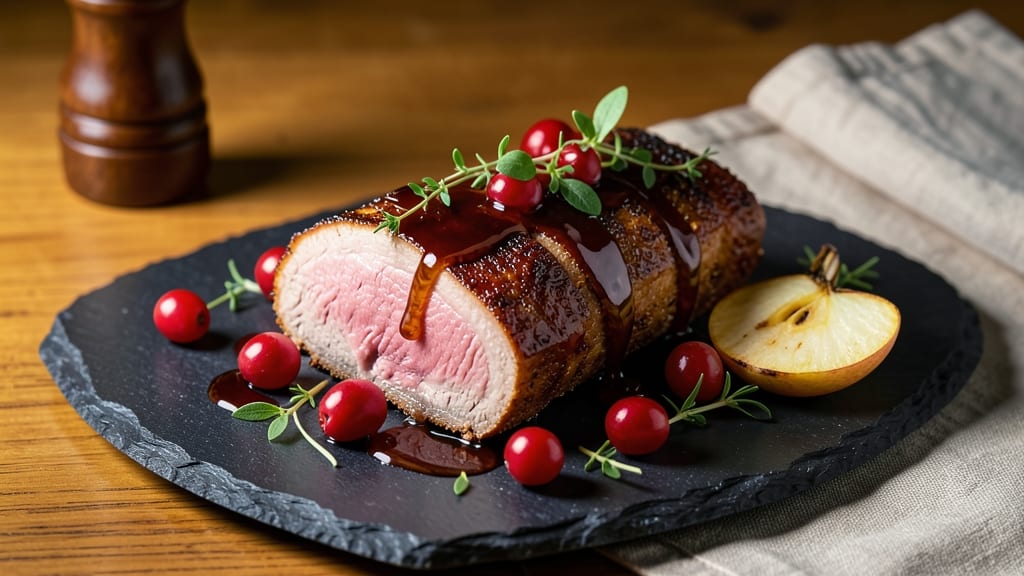
This cranberry Dijon pork loin with apple cider glaze delivers restaurant-quality flavor with minimal effort—just one pan and a few key techniques. 🔥 I developed this recipe during a particularly chilly fall weekend when I needed a showstopper main course that felt special without requiring hours in the kitchen. The secret lies in the glaze: reducing apple cider with Dijon mustard and cranberry sauce creates a caramelized coating that balances sweet, tangy, and savory notes perfectly.
The pork loin stays juicy thanks to a simple sear-and-roast method, while the glaze transforms from a simple reduction into a sticky, flavorful crust that clings to every bite.
What makes this recipe special is how it comes together—no fancy equipment needed, just a cast iron skillet or baking sheet and about 45 minutes of active time. The combination of Dijon's sharpness, cranberries' tartness, and apple cider's warmth creates a sauce that elevates ordinary pork into something truly memorable.
By the time you serve this dish, you'll have perfectly cooked pork with a glossy, caramelized glaze that's both elegant and approachable. The pork will be tender and slightly crisp on the edges, while the glaze adds depth and complexity that makes every bite satisfying.
This is the kind of recipe that feels like a celebration—whether it's for a holiday dinner or a cozy weeknight meal with family.
Pair it with roasted root vegetables or creamy mashed potatoes to complete the meal. The glaze works beautifully as a sauce for other proteins too, making this a versatile addition to your fall menu. Let's get cooking—this pork loin will be the star of your table.
Ingredients for cranberry dijon pork loin with apple cider glaze
Sweet, tangy, and savory—these 13 ingredients transform simple pork into a fall centerpiece.
| Ingredient | Amount | Notes |
|---|---|---|
| Pork Loin 🥩 | 1 ½ lb | Center-cut, bone-in preferred |
| Apple Cider 🍎 | 1 cup | Unfiltered, preferably local |
| Dijon Mustard 🍯 | 2 tbsp | High-quality, smooth variety |
| Cranberry Sauce 🍇 | ½ cup | Homemade or quality jarred |
| Brown Sugar 🍯 | 2 tbsp | Light or dark preferred |
| Olive Oil 🫒 | 2 tbsp | Extra-virgin for searing |
| Garlic Cloves 🧄 | 4 cloves | Minced for glaze |
| Fresh Thyme 🌿 | ¼ cup | Chopped, stems removed |
| Salt 🧂 | 1 ½ tsp | Kosher or sea salt |
| Black Pepper 🌶️ | ½ tsp | Freshly ground |
| Balsamic Vinegar 🍷 | 1 tbsp | For depth of flavor |
| Honey 🍯 | 1 tbsp | Wildflower preferred |
| Fresh Rosemary 🌿 | ¼ cup | Chopped, for garnish |
The pork loin is the star, so center-cut, bone-in makes all the difference—it stays juicier and more flavorful. Costco or your local butcher usually carry the best cuts, but any grocery store should have pork loin labeled as 'center-cut.' Look for good marbling and vibrant color. For the apple cider, unfiltered is key—it has more natural sweetness and depth. If you can't find unfiltered, regular cider works, but it might need a touch more honey in the glaze. The cranberry sauce should be the good stuff—none of that gelatin-heavy canned nonsense. Trader Joe's or Whole Foods have great options, or make your own from scratch.
No Dijon mustard? Whole-grain mustard works in a pinch, but the smooth texture is ideal here. Running short on cranberry sauce? Cranberry juice concentrate (reduced by half) gets you close, though it'll be thinner. The brown sugar can be swapped for maple syrup if you're avoiding refined sugar. For the glaze, balsamic vinegar is non-negotiable—it adds that deep, tangy note that ties everything together. Fresh thyme and rosemary can be dried if needed (use half the amount), but fresh is worth hunting down at the farmers market. The honey should be wildflower or clover—avoid the cheap grocery store brands that taste like corn syrup.
This glaze reheats beautifully—just warm it gently in a saucepan and brush it back over the pork. The pork itself keeps 3-4 days in the fridge, though it's best served fresh. For make-ahead convenience, prep the glaze ingredients the night before and store them separately. The glaze can be made up to 3 days ahead and reheated. If you're serving a crowd, double the glaze recipe—it's that good. Leftovers? Slice the pork thin and use it in sandwiches or tacos with the extra glaze drizzled on top.
Why You'll Love This Recipe
- One-Pan Magic: I swear by this recipe when I’m too tired to scrub a million dishes—just sear the pork, toss in the apple cider reduction, and let the oven do the work. The glaze sticks to the pan like a dream, so cleanup is basically nonexistent.
- Sweet-Savory Balance: That tangy Dijon and bright cranberry sauce cut through the richness of the pork, while the apple cider glaze adds a caramelized sweetness that’s ridiculously addictive. It’s like fall in a bite—warm, bold, and just a little bit fancy.
- Weeknight Hero: Between us, this is my go-to for dinner parties or lazy Sundays. The leftovers reheat beautifully (yes, even the glaze stays sticky and delicious), and it pairs perfectly with roasted veggies or mashed potatoes—so zero stress, maximum wow factor.
- Budget-Friendly Feast: Pork loin stretches further than you’d think, especially when you’re serving it with a glaze that feels gourmet. I’ll be real: I’ve made this for six people using store-brand cranberry sauce and cheap cider, and no one ever noticed. Solid value, every time.
Step-by-step instructions for cranberry Dijon pork loin with apple cider glaze
Here's how to create a perfectly balanced sweet-tart glaze that caramelizes beautifully.
🔥 Step 1: Sear the Pork Loin for Maximum Flavor
Preheat your oven to 375°F and heat a large oven-safe skillet over medium-high heat. Add the 2 tablespoons olive oil and let it get shimmering hot. Pat the 1.5 lb pork loin dry with paper towels—this ensures a good sear instead of steaming.
Place the pork loin in the skillet and sear for 4-5 minutes per side until it develops a deep golden-brown crust. You'll see the edges start to crisp—that's your signal to flip. Don't press down on the meat with your spatula, or you'll push out the juices. Once seared, transfer the skillet to the preheated oven.
🍳 Step 2: Build the Sweet-Tart Glaze Base
While the pork roasts, combine the 1 cup apple cider, 0.5 cup cranberry sauce, 2 tablespoons brown sugar, 1 tablespoon balsamic vinegar, and 1 tablespoon honey in a small saucepan. Bring to a simmer over medium heat and cook for 5-6 minutes until slightly reduced and fragrant.
Strain the mixture through a fine-mesh sieve to remove any lumps, then pour it over the seared pork loin in the skillet. The glaze should coat the meat completely—this is where all the magic happens. Return the skillet to the oven and roast for 30-35 minutes until the pork reaches an internal temperature of 145°F.
🥘 Step 3: Add Aromatics and Finish the Glaze
Remove the pork from the oven and increase the heat to medium-high. Add the 4 minced garlic cloves, 0.25 cup chopped fresh thyme, 1.5 teaspoons salt, and 0.5 teaspoon black pepper to the skillet. Spoon the glaze over the pork, coating it thoroughly as it bastes.
Let it cook uncovered for 2-3 minutes until the glaze begins to bubble and caramelize slightly. You'll notice the aroma intensify—that's when you know it's ready. The pork should be beautifully glazed with a glossy, sticky coating that's both sweet and tart.
⏰ Step 4: Rest and Garnish for Perfect Texture
Transfer the pork to a cutting board and tent loosely with foil. Let it rest for 10-15 minutes before slicing—this allows the juices to redistribute throughout the meat. The glaze will continue to thicken slightly during this time, becoming even more flavorful.
Before serving, garnish each slice with a sprinkle of 0.25 cup chopped fresh rosemary. The rosemary adds a fresh herbal note that cuts through the richness of the pork and glaze. Serve with roasted vegetables or mashed potatoes for a complete meal.
Pro Tips For Making Cranberry Dijon Pork Loin With Apple Cider Glaze
- SEAR THE LOIN FIRST: The glaze needs something to cling to, so hit the pork with a dry skillet over medium-high heat for 3-4 minutes per side until deep golden—no need to rush, but don’t walk away. I used to skip this, and the sauce just pooled instead of sticking like it should.
- USE REAL CIDER, NOT JUICE: Store-bought apple juice lacks the depth of actual cider, and that’s where the caramelized richness comes from. If you’re in a pinch, reduce 1 cup of juice with 1 tablespoon of apple cider vinegar to mimic the tang—just don’t expect the same complexity.
- DON’T OVERMIX THE GLaze: Once you’ve simmered the cider, mustard, and sugar, stir in the cranberry sauce gently—just enough to combine. Overworking it turns the glaze into a thick paste instead of glossy ribbons. I learned this after slopping mine onto the plate like a failed sauce.
- REST THE PORK UNDER FOIL: After roasting, tent the pork with foil for 5-10 minutes—this keeps it juicy while you finish the glaze. Cutting into it too soon makes it dry out, and no one wants a sad, stringy pork loin. (Yes, even if you’re impatient like me.)
Common mistakes when making great cranberry dijon pork loin with apple cider glaze
Overcooking the Pork
Pork loin is forgiving, but it’s easy to overcook it if you’re not paying attention to the internal temperature. I’ve seen home cooks pull pork out of the oven at 160°F and wonder why it’s dry.
The magic number here is 145°F—any higher and you’ll end up with tough, stringy meat. Use a meat thermometer to check the thickest part of the loin, and remove it from the oven as soon as it hits that temp.
Let it rest for 10-15 minutes before slicing, or you’ll lose all those precious juices. 🌡️
Skipping the Sear
Skipping the sear is the fastest way to end up with bland pork. That golden crust isn’t just for show—it’s where the Maillard reaction happens, creating deep, savory flavors. I’ve learned this the hard way after making pork that tasted like it was boiled instead of roasted.
Heat your skillet until it’s smoking hot, pat the pork dry, and sear it for 4-5 minutes per side until it’s deeply browned. Trust me, your taste buds will thank you.
Using Low-Quality Ingredients
This glaze relies on high-quality ingredients to shine. I’ve tried this recipe with store-brand cranberry sauce and cheap apple cider, and let me tell you—it’s a world of difference. Invest in unfiltered apple cider (look for local brands at farmers markets) and homemade or high-end cranberry sauce.
The same goes for your Dijon mustard and balsamic vinegar. These ingredients aren’t just flavor boosters; they’re the backbone of the glaze. If you’re short on time, Whole Foods or Trader Joe’s have great options that won’t break the bank.
Not Reducing the Glaze Enough
The glaze needs to reduce to a thick, syrupy consistency to coat the pork properly. I’ve seen people pour it over the meat too soon, and it just pools at the bottom of the pan instead of sticking.
Simmer your glaze ingredients for 5-6 minutes until it’s reduced by about 25%. You’ll know it’s ready when it coats the back of a spoon. If it’s still too thin, keep reducing it on the stovetop until it reaches the right consistency.
A good rule of thumb is that it should be thick enough to drizzle but still flow freely.
Overcrowding the Pan
If you’re cooking this in a skillet that’s too small, the pork won’t brown properly, and the glaze will steam instead of caramelize. I use a 12-inch cast iron skillet for this recipe, which gives the pork enough space to sear without steaming.
If your pan is too small, cook the pork in batches or use a larger baking sheet lined with parchment paper. The goal is to get that beautiful crust, and overcrowding is the surest way to ruin it. 🍳
Ignoring the Resting Time
This is a common mistake, especially when you’re eager to serve dinner. Skipping the 10-15 minute rest means you’ll slice into dry, juiceless pork. During this time, the meat’s juices redistribute, ensuring every bite is moist and flavorful.
I know it’s tempting to cut into that glistening pork as soon as it comes out of the oven, but resist the urge. If you’re in a hurry, tent the pork loosely with foil while you finish the sides, but don’t skip this step entirely.
Your guests—and your taste buds—will notice the difference.
Nutrition facts
Frequently asked questions
Can I substitute chicken or beef for the pork loin?
While this recipe is designed for pork loin, you can adapt it for chicken breast or beef tenderloin with adjustments. For chicken, reduce cooking time to 20-25 minutes at 375°F (internal temp 165°F) and skip the Dijon—chicken benefits more from herbs like thyme and rosemary. For beef, increase oven time to 35-40 minutes (internal temp 145°F for medium-rare) and reduce the glaze by 10 minutes to prevent overcaramelization.
How do I make this recipe vegetarian?
Swap the pork loin for portobello mushrooms or extra-firm tofu (pressed and sliced thick). Marinate the mushrooms in balsamic vinegar, garlic, and olive oil for 30 minutes before roasting at 375°F for 25 minutes. For tofu, pan-sear until golden, then use the same glaze recipe. The glaze works beautifully with both—just reduce cooking time by 10-15 minutes since vegetables cook faster.
What’s the best way to reheat leftovers?
Slice the pork and reheat in a skillet over medium-low heat with 1 tablespoon apple cider until warmed through (3-4 minutes). For extra flavor, add a splash of balsamic vinegar. Never microwave—it makes the glaze rubbery. Store leftovers in an airtight container for up to 3 days or freeze for 3 months. The glaze reheats well too—simmer it separately and drizzle over reheated pork.
Can I make the glaze ahead of time?
Prepare the glaze ingredients up to 3 days ahead and store them separately in the fridge. When ready to cook, combine and reduce as directed. For the full recipe, make the glaze 1 day ahead, cool it completely, then refrigerate in an airtight container. Reheat gently in a saucepan before brushing over the pork. The flavors actually deepen overnight!
What sides pair best with this dish?
This pork shines with earthy, creamy, or crisp sides. Try:
- Creamy mashed potatoes (add roasted garlic for depth)
- Roasted Brussels sprouts with pecans and balsamic
- Apple-cider brussels (toss with apple cider vinegar and honey)
- Wild rice pilaf with dried cranberries For a lighter option, serve with a simple arugula salad dressed with lemon and walnuts.