
Main Courses
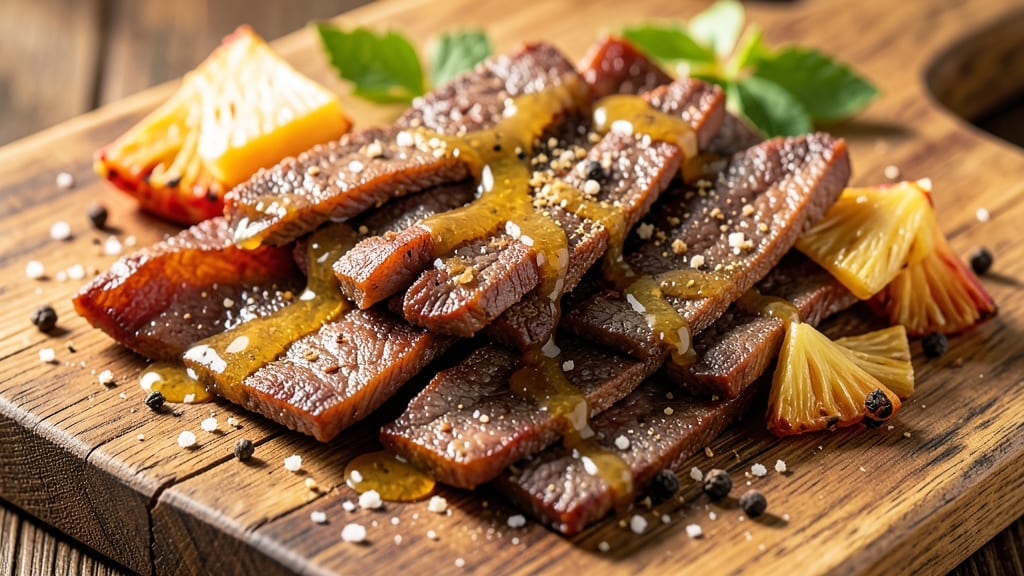
This beef jerky recipe with pineapple juice transforms traditional jerky into something unexpectedly tropical and tender. The pineapple juice isn't just a marinade—it tenderizes the beef while adding a bright sweetness that balances the savory spices perfectly.
I first discovered this technique while experimenting with leftover pineapple rinds, and it completely changed how I approach jerky making.
The process combines classic curing methods with tropical flavors, using a blend of salt, sugar, and spices to preserve the meat while letting the pineapple juice work its magic.
Unlike traditional jerky that can be overly salty or dry, this version stays moist and develops a beautiful caramelized crust from the natural sugars in the pineapple. Food safety remains critical—proper curing times and temperature control ensure your jerky is both delicious and safe to eat.
By the time you're done, you'll have jerky with a perfect balance of sweet and savory flavors, where each bite delivers that tropical brightness alongside the rich beefy depth.
The pineapple juice creates a subtle tang that cuts through the richness, making this jerky ideal for snacking, camping trips, or as a protein-packed addition to salads. The texture is chewy yet tender, with just the right amount of snap.
This recipe works equally well with lean cuts like flank steak or top round, and you can adjust the sweetness level by using more or less pineapple juice in the marinade.
The key is patience—letting the beef soak and cure properly ensures the best results. Let's get started on making jerky that tastes like a vacation in every bite.
Ingredients for beef jerky recipe pineapple juice
Lean beef, tropical juice, and classic curing spices—this combo creates jerky with a vacation-worthy bite.
| Ingredient | Amount | Notes |
|---|---|---|
| Top Round Beef 🥩 | 2 lb | Lean cut, thinly sliced against grain |
| Pineapple Juice 🍍 | 1 ½ cups | Fresh or canned, no sugar added |
| Light Brown Sugar 🍚 | ½ cup | Packed, for sweetness and curing |
| Kosher Salt 🧂 | ¼ cup | Non-iodized, for curing |
| Black Peppercorns 🌶️ | 2 tbsp | Freshly cracked, coarse grind |
| Garlic Powder 🧄 | 2 tsp | For subtle depth |
| Ground Ginger 🌿 | 1 tsp | Freshly ground preferred |
| Smoked Paprika 🌶️ | 1 tbsp | For subtle smokiness |
| Liquid Smoke 💨 | ½ tsp | Optional, for extra smokiness |
| Lemon Juice 🍋 | 1 tbsp | Freshly squeezed, for tang |
| Worcestershire Sauce 🍶 | 1 tbsp | Vegetarian version if needed |
| Vegetable Oil 🫒 | 1 tbsp | For slicking slicer |
The beef is everything here. Top round or flank steak gives you that perfect lean-to-chewy texture, but avoid anything with too much fat—it won't cure properly. Costco or butcher shops usually have pre-sliced beef jerky cuts, but if you're slicing yourself, get a sharp knife and slice against the grain for that signature chew. Look for meat that's bright red and firm to the touch—anything grayish or slimy is a no-go. Fresh pineapple juice is ideal, but canned unsweetened pineapple juice works just as well. Just skip the brands with added sugar or preservatives.
No pineapple juice? Mango nectar or orange juice can work in a pinch, though the flavor won't be quite the same. Running low on brown sugar? White sugar plus a pinch of molasses mimics the depth. The Worcestershire sauce adds umami—if you're avoiding it, soy sauce or liquid aminos are good swaps. For the spices, Penzeys or bulk bins give you the freshest options, but the regular grocery store stuff is fine if it's not ancient. The lemon juice keeps things bright, so don't skip it—frozen lemon juice works if you're prepping ahead. And if you're feeling adventurous, add a dash of vanilla extract for a tropical twist.
This marinade keeps for 5 days in the fridge, but the jerky itself? 3 months in the freezer or 1 month in the pantry once fully dried. I like to portion it into resealable bags with a silica packet to keep it fresh. For the curing process, use a meat thermometer—160°F internal temp guarantees safety. The pineapple juice makes this jerky extra moist, so it's perfect for trail mix or snacking straight from the bag. Just let it sit at room temp for 10 minutes before diving in—trust me, it's worth the wait.
Why You'll Love This Recipe
- No-Fuss Marinade: Just toss the beef in pineapple juice, sugar, and pepper—no fancy techniques needed. Honestly, the marinade does all the work while you’re scrolling through your phone or watching a movie.
- Sweet-Savory Magic: That caramelized sugar from the brown sugar meets the tangy pineapple—it’s like a tropical twist on classic jerky. Between us, the peppercorns add a little kick that makes it impossible to eat just one strip.
- Snack Attack Ready: Perfect for road trips, lunchboxes, or when you’re starving but don’t want to cook. I keep a batch in the fridge for when the kids come home hungry—no reheating, no mess.
- Budget-Friendly Protein: Top round beef is affordable, and the pineapple juice stretches the flavor without breaking the bank. Plus, it lasts for days, so you’re not scrambling for last-minute meals. (Yes, even on a Tuesday night.)
Step-by-step instructions for tropical beef jerky
Here's how to make tender, sweet-savory jerky with a perfect balance of tropical and smoky flavors.
Prep and Slice the Beef
Start by slicing the 2 lb Top Round Beef against the grain into strips about ¼-inch thick. I like to use a sharp slicer and coat the blade with 1 tablespoon vegetable oil to prevent sticking. The slices should be uniform in thickness—this ensures even cooking and prevents some pieces from drying out while others remain chewy.
Arrange the slices on a clean cutting board and pat them completely dry with paper towels. Any moisture left on the beef will dilute your marinade and make the jerky tough. Once dry, lay them out in a single layer on a baking sheet lined with parchment paper. This makes it easier to apply the marinade evenly later.
Mix the Marinade
In a large bowl, combine 1.5 cups pineapple juice, 0.5 cup light brown sugar, 0.25 cup kosher salt, 2 tablespoons freshly cracked black peppercorns, 2 teaspoons garlic powder, 1 teaspoon ground ginger, 1 tablespoon smoked paprika, 0.5 teaspoon liquid smoke, 1 tablespoon lemon juice, and 1 tablespoon Worcestershire sauce. Stir until the sugar and salt dissolve completely—this ensures your marinade coats the beef evenly.
Here's the thing—pineapple juice isn't just for sweetness. Its natural enzymes help tenderize the beef while cutting through the richness of the meat. The brown sugar adds caramelization during drying, and the ginger and smoked paprika give it that warm, tropical-spiced kick. Don't skip the Worcestershire—it adds depth that rounds out all the flavors.
Marinate the Beef
Pour the marinade over the beef slices, making sure each piece is fully submerged. Use your hands or a spatula to flip the slices and coat all sides. Transfer everything to a resealable plastic bag, seal tightly, and refrigerate for at least 12 hours—I usually do 24 hours for maximum flavor penetration. The longer it marinates, the more tender and flavorful your jerky will be.
After marinating, remove the beef from the bag and drain it well. Discard the used marinade—it's not safe to reuse. Pat the slices dry again with paper towels. This step is crucial because any excess liquid will prevent the jerky from drying properly, leaving it sticky or even slightly raw in the middle.
Dry the Jerky
Preheat your dehydrator to 160°F—this low temperature ensures even drying without cooking the jerky. Arrange the beef slices on the dehydrator trays, leaving about ½-inch between each piece for proper airflow. If you don't have a dehydrator, you can use an oven set to 175°F with the door slightly ajar for ventilation.
Dry the jerky for 4-6 hours, checking periodically. It's done when the slices are no longer sticky to the touch and can be easily bent without breaking. The edges should be slightly leathery, and the center should still be flexible but not moist. Over-drying makes jerky brittle, while under-drying leaves it chewy and potentially unsafe to eat.
Rest and Store
Once fully dried, turn off the dehydrator and let the jerky cool completely inside. This resting period allows the flavors to meld and the texture to set properly. Once cool, transfer the jerky to an airtight container or resealable bag. Store it in a cool, dry place—it should keep for up to 2 weeks at room temperature or 3 months in the refrigerator.
Enjoy your tropical beef jerky with a crispy, slightly chewy texture and a perfect balance of sweet, smoky, and tangy flavors. The pineapple juice gives it a unique twist that pairs beautifully with the rich, savory beef. Cut into strips and pack it for hiking, snack on it straight from the bag, or use it as a topping for salads and tacos.
Pro Tips For Making Beef Jerky Recipe Pineapple Juice
- FREEZE THE MEAT FIRST: I learned this the hard way—skipping the freeze makes slicing top round beef a messy fight. Pop it in the freezer for 30 minutes before slicing against the grain; the meat will hold its shape better and yield thinner, more even strips (aim for ¼-inch thickness). Trust me, your jerky will dry more evenly when you do this.
- USE FRESH PINEAPPLE JUICE: Canned juice works in a pinch, but fresh pineapple juice makes a real difference—it’s brighter, less syrupy, and actually tenderizes the beef better. If you’re using canned, pick brands without added sugar or preservatives, and reduce the sugar in the marinade by half. Your jerky will taste like summer, not syrup.
- SALT THE MEAT 24 HOURS EARLY: Don’t just toss salt on right before marinating. Sprinkle kosher salt over the beef and let it sit uncovered in the fridge for a full day. This draws out moisture, helps the marinade penetrate deeper, and guarantees a more concentrated flavor. (Yes, even if you’re impatient like me.)
- MARINATE AT 40°F OR LOWER: The sweet-and-tangy pineapple mix is perfect for jerky, but it’s also a bacteria party waiting to happen. Keep your beef in the marinade in the coldest part of the fridge (not the door) for at least 12 hours—no exceptions. I’ve seen jerky turn rubbery when people rush this; slow and cold is the only way.
Storing and reheating this recipe
Room Temperature Storage
Your tropical beef jerky will last 2 weeks at room temperature if stored properly in an airtight container or resealable bag with a silica packet to absorb moisture. I like using vacuum-sealed bags from FoodSaver—they keep the jerky fresh longer and prevent that dreaded "stale jerky" taste.
Store it in a cool, dark pantry away from sunlight, which can degrade the pineapple flavors over time. 🌟
Before storing, let the jerky cool completely to room temperature—this prevents condensation inside the container, which can make it soggy. I always wait at least 30 minutes after drying before sealing it up. If you're in a humid climate like Portland, add an extra silica packet to keep things crisp.
Refrigerator Storage
For longer freshness, refrigerate your jerky in an airtight container where it'll keep for 3 months without losing its tropical brightness. The cold slows down flavor degradation, so the pineapple notes stay vibrant longer.
I divide mine into portion-sized bags—perfect for quick snacks or hiking trips. Just make sure your fridge stays at 40°F or below to maintain safety. ❄️
When you're ready to eat, let the jerky sit at room temperature for 10-15 minutes before opening the bag. This prevents moisture buildup from condensation, which can make it sticky. If you notice any pieces getting soft, they've absorbed too much moisture—just toss them and eat the rest.
Freezer Storage
For maximum shelf life, freeze your pineapple jerky in resealable freezer bags or glass airtight containers for up to 6 months. The freezer preserves both texture and flavor beautifully, making it perfect for meal prep.
I like to portion it into single-serving bags so I can grab just what I need without thawing the whole batch. 🧊
To thaw, transfer the bag to the refrigerator overnight. For quick use, you can eat it straight from the freezer—it's still safe and delicious, though slightly firmer. Avoid reheating jerky, as it can dry out the texture.
The pineapple flavors actually intensify after freezing, giving you that extra tropical punch when you're ready to enjoy it.
Reheating (No, Really)
Jerky isn't meant to be reheated—it's designed to be eaten cold for maximum texture and flavor. But if you're using it in a dish like tacos or salads, you can warm it gently for 10-15 seconds in the microwave or 30 seconds in a dry skillet over medium heat.
Just don't overdo it—the pineapple juice makes it more prone to drying out. 🔥
If your jerky loses its chew after storage, it's likely absorbed moisture. To revive it, place the strips on a baking sheet and dehydrate at 160°F for 15-20 minutes—just until they're dry to the touch again.
This works wonders for jerky that's gotten too soft from humidity. The pineapple flavors will come back stronger after this quick refresh.
Nutrition facts
Frequently asked questions
Why does pineapple juice make jerky more tender?
Pineapple juice contains natural enzymes called bromelain that break down proteins in the beef, making it more tender. The acidity also helps tenderize while adding a bright sweetness that balances the savory spices. This tropical twist keeps jerky moist and chewy without needing extra fat.
Can I use frozen beef for this recipe?
Yes, but thaw it completely in the refrigerator first—never use partially frozen beef. The cold temperature can create ice crystals that make the jerky unevenly dry. For 2 lb of beef, plan for 24 hours of thawing time. Pat it completely dry before marinating to ensure proper flavor absorption.
How do I know when the jerky is fully dried?
Jerky is done when it's no longer sticky to the touch and can be easily bent without breaking. The edges should be slightly leathery, and the center should still be flexible but not moist. Use a meat thermometer if unsure—jerky should reach an internal temperature of 160°F during drying. Over-drying makes it brittle, while under-drying leaves it chewy and potentially unsafe.
Can I make this jerky without a dehydrator?
Use an oven set to 175°F with the door slightly ajar for ventilation. Place slices on a wire rack over a baking sheet to allow airflow. Check every 2 hours—it may take 6-8 hours total. For even drying, rotate trays halfway through. A fan can help speed up the process safely.
What's the best way to store homemade jerky?
Store in an airtight container or vacuum-sealed bag with a silica packet to absorb moisture. At room temperature, it lasts 2 weeks; refrigerated, up to 3 months. For longer storage, freeze for 6 months. Keep away from sunlight to preserve the pineapple flavors. Let it sit at room temp for 10 minutes before opening to prevent condensation.