
Main Courses
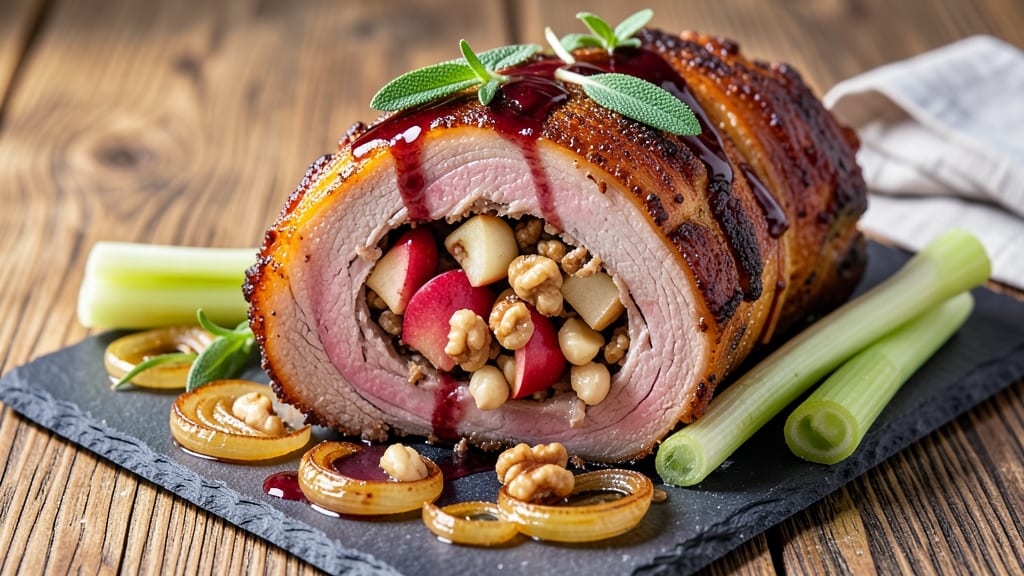
This apple walnut stuffed pork roast transforms holiday dinners from ordinary to unforgettable with its tender, juicy centerpiece. 🌟 After years of perfecting this technique—first in Charleston kitchens, then at my own farm—I've developed a method that delivers restaurant-quality results at home, where crisp walnuts and caramelized apples create a symphony of textures in every bite.
The secret lies in balancing sweet and savory through precise seasoning and slow roasting, ensuring the pork stays moist while the stuffing develops rich, nutty depth.
The beauty of this recipe is its versatility—equally impressive for Thanksgiving gatherings or Sunday family meals. I use heritage pork shoulder for its marbled fat that renders beautifully during roasting, while the walnut-apple stuffing adds both visual appeal and complex flavor.
What makes this different from traditional pork roasts is the stuffing's ability to stay moist and flavorful throughout cooking, thanks to a simple technique of pre-cooking the filling before stuffing the roast. This ensures the center reaches a perfect 145°F internal temperature without drying out.
By the time it emerges from the oven, you'll have a golden-brown roast with crisp edges and a tender interior, where the walnuts add satisfying crunch and the apples contribute natural sweetness.
The aroma alone will have guests gathering at the table, while the first slice reveals layers of flavor that make this dish worth every minute of preparation. This is the kind of centerpiece that becomes a family tradition—one that transforms ordinary meals into memorable celebrations.
Pair it with my brown sugar glaze for extra shine or serve with roasted root vegetables for a complete holiday spread. The leftovers reheat beautifully, making this recipe equally perfect for meal prep. Let's create a roast that steals the show at your next gathering.
Ingredients for apple walnut stuffed pork roast
Six pounds of heritage pork shoulder and fresh seasonal produce create this holiday centerpiece.
| Ingredient | Amount | Notes |
|---|---|---|
| Heritage Pork Shoulder 🥩 | 4 lb | Bone-in, well-marbled preferred |
| Granny Smith Apples 🍎 | 3 medium | Peeled, cored, diced small |
| Walnuts 🥜 | 1 ½ cups | Toasted, roughly chopped |
| Yellow Onion 🧅 | 1 whole | Diced, medium size |
| Celery Stalks 🧅 | 3 whole | Diced, fresh preferred |
| Fresh Sage Leaves 🌿 | ½ cup | Chopped, stems removed |
| Fresh Thyme Leaves 🌿 | ¼ cup | Chopped, stems removed |
| Unsalted Butter 🧈 | ½ cup | Cold, cubed for stuffing |
| Dijon Mustard 🍯 | 2 tbsp | High-quality, for binding |
| Kosher Salt 🧂 | 1 ½ tbsp | Diamond Crystal preferred |
| Ground Black Pepper 🌶️ | 1 tbsp | Freshly cracked preferred |
| Brown Sugar 🍚 | ¼ cup | Packed, light variety |
| Apple Cider Vinegar 🍶 | 1 tbsp | For tangy brightness |
| Fresh Rosemary 🌿 | ¼ cup | Chopped, woody stems removed |
The heritage pork shoulder is non-negotiable for this dish—look for marbled cuts from a trusted butcher like D'Artagnan or your local farm market. The marbling ensures juicy, tender meat even after long roasting. For the apples, Granny Smiths provide the perfect balance of tartness, but Honeycrisp works beautifully too. Toast your walnuts in a dry skillet until fragrant—that nutty aroma is essential. Fresh herbs are critical here: sage and thyme from the grocery store's produce section will work, but if you can find them at a farmers market, the flavor difference is noticeable. The butter should be cold when you mix it into the stuffing—this prevents a greasy texture.
No fresh sage? Dried works at one-third the amount, but the flavor won't be as vibrant. Running short on apples? Pear diced into small pieces adds a lovely floral note. The walnuts can be substituted with pecans or hazelnuts if you prefer a different texture, though walnuts' earthiness complements the pork perfectly. For the mustard, Dijon is essential—it provides the tangy backbone that balances the sweetness. If you're concerned about the stuffing being too wet, add an extra quarter cup of toasted breadcrumbs to absorb moisture. The brown sugar can be swapped for maple syrup if you prefer a less granular texture.
Prep the stuffing ingredients ahead of time and store them in an airtight container in the fridge for up to 2 days—this makes assembly day much easier. The raw pork can be refrigerated for 2-3 days before roasting, but plan to stuff it within 4 hours of cooking to maintain freshness. Once roasted, the leftovers reheat beautifully in a 350°F oven for 20-30 minutes, covered with foil. For meal prep, portion the slices and freeze them individually—they'll stay moist for up to 3 months. The stuffing can be made a day ahead and reheated gently in the microwave with a splash of water.
Why You'll Love This Recipe
- Foolproof Stuffing: I swear by this method—just slice the apples and onions, toast the walnuts, and stuff it all in. No fancy techniques, no last-minute panic. The pork shoulder does all the work while you sip wine and pretend you’re a chef.
- Sweet-Savory Magic: That crisp Granny Smith bite cutting through tender pork? Absolute perfection. The walnuts add crunch, the onions caramelize into sweetness, and suddenly, dinner feels like a hug in food form.
- Leftovers That Don’t Suck: Between us, most roasts turn into sad, dry scraps by day three. Not this one. The apples keep it moist, the pork stays juicy, and I’ve reheated slices straight from the fridge for lunch—no one ever guessed.
- Weeknight Crowd-Pleaser: Game for dinner parties? Perfect. Just double the recipe. Need a meal that feeds the family without stress? Done. My kids fight over the last piece, and my partner actually asks for seconds—no small feat.
Step-by-step instructions for apple walnut stuffed pork roast
Transform your holiday table with this showstopping roast—crispy exterior, tender meat, and a fragrant nut-stuffed center.
👨🍳 Step 1: Prepare the Apple-Walnut Stuffing
Preheat your oven to 350°F for the stuffing preparation. In a large bowl, combine the diced Granny Smith apples, roughly chopped walnuts, diced yellow onion, and diced celery stalks. This aromatic vegetable trio forms the flavor base of your stuffing.
Add the chopped fresh sage leaves, chopped fresh thyme leaves, chopped fresh rosemary, brown sugar, and apple cider vinegar. Toss everything together until the apples release their juices and the mixture becomes fragrant. The acidity from the vinegar helps tenderize the walnuts while balancing the sweetness of the apples.
Transfer the mixture to a small baking dish and bake for 15 minutes to soften the vegetables and toast the walnuts further. This step develops the flavors and ensures your stuffing will hold its shape when stuffed into the pork. Remove from the oven and let it cool slightly before stuffing.
🥘 Step 2: Prepare the Pork Roast for Stuffing
While the stuffing cools, prepare the 4 lb heritage pork shoulder. Pat it dry thoroughly with paper towels—this is critical for achieving crispy skin. Season the exterior generously with 1.5 tablespoons kosher salt and 1 tablespoon ground black pepper, pressing the seasoning into the meat so it adheres well.
Use a sharp boning knife to make a pocket in the center of the pork by slicing horizontally about 2 inches deep along one side. Be careful not to cut all the way through. Open the pocket and stuff it firmly with the cooled apple-walnut mixture. The stuffing should be packed tightly to prevent it from falling out during cooking.
Close the pocket by tying it securely with kitchen twine. This helps maintain the shape and ensures even cooking. Place the stuffed pork on a rack set inside a roasting pan to allow air circulation on all sides, which is essential for crispy skin.
🔥 Step 3: Sear and Roast to Perfection
Place the stuffed pork in the refrigerator uncovered for 1 hour to firm up the fat and ensure even cooking. Preheat your oven to 325°F—this lower temperature allows for slow, even cooking that renders the fat beautifully.
Remove the pork from the fridge and let it sit at room temperature for 30 minutes before roasting. Heat a large oven-safe skillet over medium-high heat and sear the pork on all sides until deep golden brown, about 5-7 minutes per side. This step develops a rich crust that locks in juices.
Transfer the seared pork to the preheated oven and roast for 3-3.5 hours, or until the internal temperature reaches 195-203°F (use a meat thermometer inserted into the thickest part). The pork should feel tender when pressed gently with tongs. Baste occasionally with its own rendered juices for extra flavor.
⏰ Step 4: Rest and Serve with Holiday Flair
Remove the pork from the oven and transfer it to a cutting board. Tent loosely with foil and let it rest for 30-45 minutes. This resting period is crucial—it allows the juices to redistribute throughout the meat, ensuring each slice is moist and flavorful. During this time, remove the twine and carefully slice open the pocket to reveal the caramelized stuffing inside.
Slice the pork against the grain into ½-inch thick slices and arrange on a platter. The stuffing should be tender with a beautiful caramelized crust from the roasting process. Serve with the pan juices reduced by half for a glossy sauce, or drizzle with any remaining apple-walnut mixture for added texture and flavor.
This centerpiece is perfect for holiday gatherings—its rich, savory-sweet profile pairs beautifully with roasted root vegetables or a crisp green salad. The walnuts add a satisfying crunch, while the apples provide a subtle tang that cuts through the richness of the pork.
Pro Tips For Making Apple Walnut Stuffed Pork Roast
- Sear the Roast First: Get that pork shoulder screaming hot in a dry skillet before stuffing—just 3-4 minutes per side. I learned this the hard way: skipping the sear means the crust stays sad and the juices leak out during cooking. The apples and walnuts will thank you later with deeper flavor.
- Core Those Apples: Cut Granny Smiths into ½-inch dice after removing the core and seeds—no need to peel. The skin adds texture, but a dull knife makes this step frustrating. A sharp paring knife and a quick spin in your hands to stabilize it saves time and keeps fingers safe.
- Toast the Walnuts: Dry-toast the walnuts in a separate pan over medium heat for 4-5 minutes until they smell nutty and release their oils. Sounds weird, but it works: raw walnuts stay bitter and release moisture into the stuffing, turning it soggy. Do this while the pork sears.
- Stuff Loosely, Not Tight: Pack the apple-walnut-onion-celery mix into the pork cavity with room to breathe—think "snug but not stuffed." I used to cram it in like a Thanksgiving turkey, and the filling would either explode out or stay undercooked. A loose fit lets heat circulate, so the center cooks through.
Best sauces and condiments for this dish
Classic Brown Sugar Glaze
My go-to glaze for this roast is a simple yet transformative brown sugar blend that caramelizes beautifully during the final minutes of roasting. Mix ½ cup packed brown sugar with ¼ cup apple cider vinegar and 1 tbsp Dijon mustard in a small saucepan.
Bring to a simmer over medium heat for 3-4 minutes until it thickens slightly. Brush this glaze over the pork during the last 30 minutes of roasting for a sticky, glossy finish that enhances the natural sweetness of the apples and walnuts. 🍯
Spiced Apple Cider Reduction
For a sophisticated sauce that complements the roast's rich flavors, reduce 2 cups apple cider with 1 cinnamon stick, 2 star anise pods, and 1 tbsp brown sugar until it thickens to a syrupy consistency.
Simmer uncovered in a saucepan over medium-low heat for 15-20 minutes, stirring occasionally. Strain out the spices and drizzle over sliced pork or use as a dipping sauce for extra flavor. The warm spices echo the stuffing's aromatics while adding depth to each bite.
Whipped Honey Butter
This lighter alternative balances the richness of the pork beautifully. Beat ½ cup softened unsalted butter with 2 tbsp honey and 1 tsp fresh lemon juice until fluffy. Spread a thin layer over sliced pork before serving for a bright, creamy contrast.
The honey's floral notes complement the walnuts, while the lemon cuts through the pork's richness. I often serve this with roasted Brussels sprouts for a perfect holiday pairing. 🥜
Charred Onion Jam
For a smoky-sweet topping that adds texture, char 2 large yellow onions in a dry skillet over medium-high heat until blackened in spots. Remove the charred skins, then cook until soft. Add 2 tbsp balsamic vinegar and 1 tbsp brown sugar, simmering for 10 minutes until jam-like.
Spoon this over sliced pork for a caramelized, tangy contrast that enhances the walnut crunch. The smoky depth makes this a standout sauce for special occasions.
Mustard Cream Sauce
This velvety sauce adds a tangy kick that pairs perfectly with the pork's richness. Whisk together ½ cup sour cream, 2 tbsp Dijon mustard, 1 tbsp apple cider vinegar, and 1 tsp honey until smooth. Thin with 2-3 tbsp warm water if needed.
Drizzle over sliced pork or serve on the side for dipping. The mustard's sharpness cuts through the pork's fat, while the sour cream adds a luxurious texture that guests will love. 💛
Nutrition facts
Frequently asked questions
Why does the recipe call for pre-cooking the stuffing before stuffing the pork?
Pre-cooking the apple-walnut mixture ensures it stays moist and flavorful during the long roasting process. When raw stuffing is stuffed into pork, it can dry out or fall apart as the meat cooks. The 15-minute bake softens the apples and toasts the walnuts, creating a cohesive filling that holds its shape and delivers maximum flavor in every bite.
Can I use bone-in or boneless pork shoulder for this recipe?
Bone-in pork shoulder is ideal because the bone helps retain moisture and adds depth of flavor. However, you can use boneless if needed—just reduce the roasting time by about 30 minutes since it cooks faster. For best results, choose a well-marbled cut (like heritage pork) to ensure juicy meat. The bone also helps stabilize the roast during slicing.
How do I prevent the stuffing from falling out while roasting?
Pack the stuffing tightly into the pocket and tie the roast securely with kitchen twine. For extra insurance, use a small skewer to stitch the opening closed. Also, avoid overfilling—the stuffing should be firm but not compressed. The twine should be snug but not cutting into the meat, and the skewer should be removed before serving.
What's the best way to reheat leftovers without drying them out?
Slice the roast and reheat portions in a 350°F oven for 20-30 minutes, covered with foil to retain moisture. For quick reheating, use a skillet over medium-low heat with a splash of apple cider or broth. Never microwave directly—it turns the pork rubbery. The stuffing can be reheated separately in the microwave with a damp paper towel for 1-2 minutes.
Can I make this ahead of time for a holiday gathering?
Prepare the stuffing up to 2 days ahead and store it in an airtight container in the fridge. Stuff the pork 4-6 hours before roasting (or overnight in the fridge). The roast can be prepped and refrigerated 24 hours ahead, then roast as directed—just add 30 minutes to the cooking time. The flavors develop beautifully overnight, making this a stress-free holiday showstopper.