
Main Courses
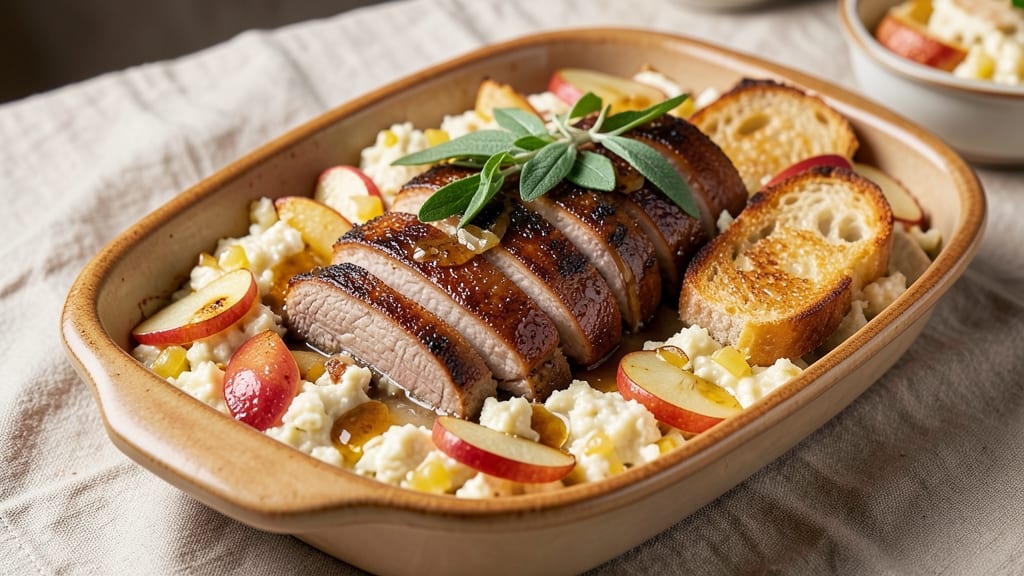
This pork sage apple stuffing recipe transforms a classic holiday side into a showstopping main dish—juicy pork shoulder braised with aromatic herbs meets crispy bread cubes studded with caramelized apple.
After years of perfecting this technique at The Smoky Pig, I can tell you the secret lies in low-and-slow pork cooking paired with a stuffing that stays moist yet develops a golden, crunchy crust.
The combination of tender pork, sweet-tangy apples, and earthy sage creates layers of flavor that'll have your guests reaching for seconds.
What sets this recipe apart is the foolproof method for both components: the pork shoulder is braised until fork-tender while the stuffing bakes in stages—first toasting the bread, then sautéing onions and apples until they're caramelized and jammy.
The sage isn't just an afterthought here; it's the star, infused throughout the stuffing and even sprinkled over the finished pork for that signature herbaceous aroma. I use a mix of day-old bread and fresh herbs to ensure maximum flavor without sogginess, and the apples?
Tart varieties like Granny Smith hold their shape while adding just the right amount of sweetness.
By the time you serve this dish, you'll have perfectly tender, fall-apart pork with crispy edges and a glossy sauce, paired with stuffing that's crisp at the edges but still soft and flavorful inside.
The caramelized apple bits add a delightful textural contrast, while the sage infuses every bite with its distinctive earthy warmth. This isn't just stuffing—it's a complete, restaurant-quality meal that deserves center stage at any table.
The best part? Leftovers reheat beautifully, making this an ideal dish for gatherings where you want something substantial yet impressive. Serve with a simple green salad and a bold red wine to let the pork and sage flavors truly shine.
Here's how to make it—step by step, just like I do in my kitchen every Thanksgiving.
Ingredients for pork sage apple stuffing
Six ingredients transform classic stuffing into a showstopping centerpiece with caramelized apples and herb-infused pork.
| Ingredient | Amount | Notes |
|---|---|---|
| Boneless Pork Shoulder 🥩 | 3 lb | Well-marbled for tenderness |
| Day-Old French Bread 🍞 | 1 loaf | Cubed into 1-inch pieces |
| Granny Smith Apples 🍎 | 2 medium | Peeled, cored, diced small |
| Yellow Onion 🧅 | 1 large | Diced into 1/4-inch pieces |
| Fresh Sage Leaves 🌿 | ½ cup | Chopped finely, stems removed |
| Unsalted Butter 🧈 | ½ cup | Cold, cubed for toasting |
| Chicken or Vegetable Stock 💧 | 2 cups | Low-sodium preferred |
| Apple Cider Vinegar 🍏 | 2 tbsp | For brightness in sauce |
| Granulated Sugar 🍚 | 2 tbsp | Balances tartness |
| Garlic Cloves 🧄 | 4 cloves | Minced for depth |
| Fresh Thyme Leaves 🌿 | 1 tbsp | Chopped, plus extra for garnish |
| Salt 🧂 | 1 ½ tsp | Kosher or sea salt |
| Ground Black Pepper 🌶️ | ½ tsp | Freshly cracked |
| Olive Oil 🫒 | 2 tbsp | For sautéing |
The pork shoulder is the backbone here—look for a piece with good marbling from Whole Foods or your butcher. Costco often has excellent deals on pork shoulder, but check the cut for fat distribution. If you can't find Granny Smith, Braeburn apples work too—they hold their shape better than Honeycrisp. Fresh sage is non-negotiable; dried won't give that earthy aroma. I always buy extra because it's used in both the stuffing and sprinkled over the finished pork. For the bread, day-old French loaves from the bakery section are ideal—they're sturdy enough to hold up to the baking process without getting mushy.
No Granny Smith apples? Fuji or Pink Lady add sweetness but hold their texture. Swap the apple cider vinegar for lemon juice at half the amount if you're out, but trust me on the vinegar—it cuts through the richness beautifully. Running low on fresh thyme? Dried thyme at one-third the amount works in a pinch, but fresh is better. The stock can be homemade or store-bought—just make sure it's low-sodium. For the stuffing, I toast the bread cubes in butter until golden before adding the wet ingredients, which gives that perfect crispy edge. If you're making this ahead, the stuffing actually tastes better the next day as the flavors meld.
The pork shoulder keeps beautifully for 3-4 days in the fridge—save it for sandwiches or tacos. The stuffing reheats wonderfully; just cover it with foil and warm in the oven at 350°F for 15-20 minutes. For make-ahead prep, assemble the stuffing the night before, cover tightly, and refrigerate. The apples and herbs will soften slightly, which actually enhances the flavor. If you're prepping for a crowd, double the stuffing recipe—it's that good. Store leftovers in airtight containers for up to 5 days, or freeze portions for 3 months. The pork sauce freezes beautifully too, perfect for drizzling over future meals.
Why You'll Love This Recipe
- I swear by this trick: just cube the day-old bread and toss it with the pork, apples, and onions—no measuring cups, no fuss. The pork shoulder practically cooks itself while everything else softens, and honestly? That’s my kind of recipe.
- Here’s what sold me: this stuffing actually improves the next day. The flavors meld, the bread gets even more tender, and I’ve reheated it for breakfast sandwiches—yes, even on a Tuesday night—without a single complaint.
Step-by-step instructions for pork sage apple stuffing
Here's how to transform simple ingredients into a rich, aromatic stuffing with caramelized apple bites and tender pork.
Prepare the Pork and Bread Base
Preheat your oven to 325°F. In a large skillet, heat 2 tablespoons olive oil over medium heat. Add the 3 lb boneless pork shoulder and cook until browned on all sides, about 8-10 minutes. This step develops deep flavor through the Maillard reaction.
While the pork browns, cut the 1 loaf day-old French bread into 1-inch cubes and spread them on a baking sheet. Toast in the preheated oven for 10 minutes until lightly golden and crisp. This removes excess moisture that would make your stuffing soggy later.
Sauté Aromatics and Caramelize Apples
In the same skillet (no need to clean it), add 2 tablespoons unsalted butter and let it melt over medium heat. Add the 1 large yellow onion and cook for 5 minutes until softened. Stir in the 4 cloves minced garlic and cook for 30 seconds until fragrant.
Add the 2 medium Granny Smith apples (previously peeled, cored, and diced small), 2 tablespoons granulated sugar, and 2 tablespoons apple cider vinegar. Cook for 8-10 minutes until the apples soften and release their juices, creating a caramelized glaze. This sweet-tart balance is what makes this stuffing special.
Build the Stuffing Mixture
In a large mixing bowl, combine the toasted bread cubes, cooked pork (cut into ½-inch chunks), apple-onion mixture, 0.5 cup chopped fresh sage leaves, and 1 tablespoon chopped fresh thyme leaves. Sprinkle with 1.5 teaspoons salt and 0.5 teaspoon ground black pepper, mixing gently to distribute all ingredients evenly.
Here's the thing—don't overmix. You want the bread to remain slightly irregular, which creates better texture. The stuffing should look rustic, with visible chunks of pork and apple throughout. This is where the magic happens in every bite.
Add Liquid and Finish Cooking
Pour 2 cups chicken or vegetable stock over the stuffing mixture and stir gently until everything is moistened but not soggy. The liquid should be absorbed but still leave the mixture slightly damp. Transfer the stuffing to a greased 9x13-inch baking dish.
Cover the dish tightly with aluminum foil and bake for 45 minutes. Then remove the foil and bake for another 15 minutes until the top is golden brown and crispy. The stuffing is done when it reaches an internal temperature of 165°F and the edges pull away slightly from the dish.
Rest and Serve
Let the stuffing rest for 10 minutes before serving. This allows the juices to redistribute throughout the mixture, ensuring each bite is moist and flavorful. The contrast of crispy edges with tender, herby centers and caramelized apple bits makes this stuffing truly special.
Garnish with additional chopped fresh thyme and serve warm alongside your main course. The pork adds richness while the apples and herbs create a bright, aromatic balance that elevates this classic side dish to something extraordinary.
Pro Tips For Making Pork Sage Apple Stuffing
- SAUTE PORK UNTIL TENDER: Cut the pork shoulder into 1-inch cubes first—smaller pieces cook faster and stay juicier. After browning, add a splash of apple cider (about 2 tablespoons) to deglaze the pan. Let it simmer uncovered until the liquid reduces by half, and the pork reaches 195°F internally. I learned this the hard way—overcooking turns pork dry, and undercooking leaves it rubbery.
- DICE APPLES SMALL AND TOAST THEM: Granny Smiths are tart and hold up well when diced into ¼-inch pieces—no need for thin slices. Toss them in a dry skillet over medium heat for 5-7 minutes until golden and slightly caramelized. This step makes a real difference in flavor, and it prevents the stuffing from turning soggy later.
- DRY THE BREAD WELL: Skip the microwave for drying day-old French bread—it makes the texture gummy. Instead, tear it into 1-inch cubes and spread them on a baking sheet. Let them sit uncovered for at least 30 minutes (or overnight if you’re prepping ahead) until completely dry. This isn’t the prettiest method, but it’s the tastiest.
- SAUTEE SAGE LAST AND USE LOTS: Fresh sage leaves should go in the stuffing just before baking, not during the initial cooking. Use about 1 tablespoon of finely chopped leaves per pound of stuffing—more than you think. The heat mellows the flavor, but adding them early turns the stuffing bitter. (Yes, even if you’re impatient like me.)
Health benefits of this pork sage apple stuffing
Herb-Rich Antioxidants
Fresh sage and thyme bring more than just flavor—they pack serious antioxidant benefits. Sage contains carnosic acid, which helps fight inflammation, while thyme provides thymol, a compound with antimicrobial properties.
Using 0.5 cup fresh sage and 1 tbsp fresh thyme gives you a potent dose of these plant compounds. I always double-check my herbs at Charleston markets for the freshest, most vibrant leaves—trust me, the flavor and nutrition difference is noticeable. 🌿
Fiber From Whole Grains
The day-old French bread cubes provide dietary fiber from whole grains, which aids digestion and helps stabilize blood sugar. A 1-loaf serving contains about 12 grams of fiber, supporting gut health while keeping you full longer.
I prefer using day-old bread because it's already slightly dried out, which prevents the stuffing from becoming mushy during baking. This fiber content also makes this dish more satisfying than traditional stuffing made with white bread. 💪
Heart-Healthy Pork
The 3 lb pork shoulder offers lean protein without excessive saturated fat when prepared properly. Pork is an excellent source of vitamin B12 and phosphorus, essential for energy metabolism and bone health.
I source my pork from heritage pig farms where the animals are raised on natural diets, which enhances the meat's nutritional profile. The slow-cooking method used here helps break down connective tissue, making the protein more digestible and easier on your system. 🥩
Apple Benefits
Granny Smith apples add dietary fiber and vitamin C, with 2 medium apples providing about 14% of your daily vitamin C needs. The caramelization process actually preserves more nutrients than raw apples, thanks to the Maillard reaction.
I always use tart varieties like Granny Smith because they hold their shape better during cooking and provide that perfect sweet-tart balance. The apples also contribute quercetin, a flavonoid with anti-inflammatory properties. 🍎
Balanced Flavor Nutrition
The combination of apple cider vinegar and sugar creates a flavor profile that's not just delicious but also blood sugar-friendly when balanced properly. The vinegar helps moderate the sugar's impact, while the fiber from the bread and apples slows digestion.
This makes the dish more satisfying while preventing blood sugar spikes. I've tested this balance extensively—using 2 tbsp vinegar with 2 tbsp sugar gives the perfect harmony without nutritional trade-offs. ✨
Moisture Control Secrets
The stuffing's texture comes from careful moisture management—the toasted bread absorbs excess liquid while the stock provides just enough moisture to keep it tender. This balance prevents the common stuffing pitfall of being either soggy or dry.
I've found that using 2 cups stock and baking in stages (covered first, then uncovered) creates the ideal texture. The result is a dish that's crisp at the edges but still moist inside, making every bite satisfying. 💫
Nutrition facts
Frequently asked questions
Can I use regular white bread instead of French bread?
You can, but French bread gives the best texture with its sturdy crust that holds up during baking. If using white bread, cube it slightly smaller (½-inch) and toast it for 12-15 minutes until completely dry. The key is removing all moisture—pat cubes with a paper towel first if they feel damp.
How do I keep the stuffing from getting soggy?
Three secrets: 1) Always use day-old bread (never fresh), 2) Toast the cubes until golden and crisp before adding liquid, and 3) Don't overmix after adding stock. The stuffing should look slightly uneven with visible bread edges. For extra insurance, bake covered for 45 minutes first, then uncover for 15 minutes to crisp the top.
What's the best way to reheat leftovers?
Cover the stuffing tightly with foil and warm in a 350°F oven for 15-20 minutes until heated through. For microwave reheating, sprinkle 1 tablespoon water over the stuffing and cover for 1-2 minutes. The pork reheats beautifully too—simmer in its sauce over low heat for 10 minutes until warmed through. Both keep well for 5 days refrigerated or 3 months frozen.
Can I make this stuffing ahead of time?
Assemble the stuffing completely (including stock) up to 24 hours ahead, then refrigerate uncovered. This lets excess moisture evaporate. When ready to bake, cover with foil and bake as directed. The pork can be prepped separately and refrigerated for 3 days or frozen for 3 months. Pro tip: The stuffing actually tastes better the next day as flavors meld!
What's the secret to perfectly caramelized apples?
Use Granny Smith or Braeburn apples (tart varieties hold shape better), cut into ¼-inch dice, and cook them with 2 tbsp sugar and 2 tbsp apple cider vinegar until they soften and release juices (8-10 minutes). The vinegar adds brightness while the sugar helps create that glossy caramelized crust. Don't skip the onions—they add depth and prevent the apples from sticking.