
Sauces & Condiments
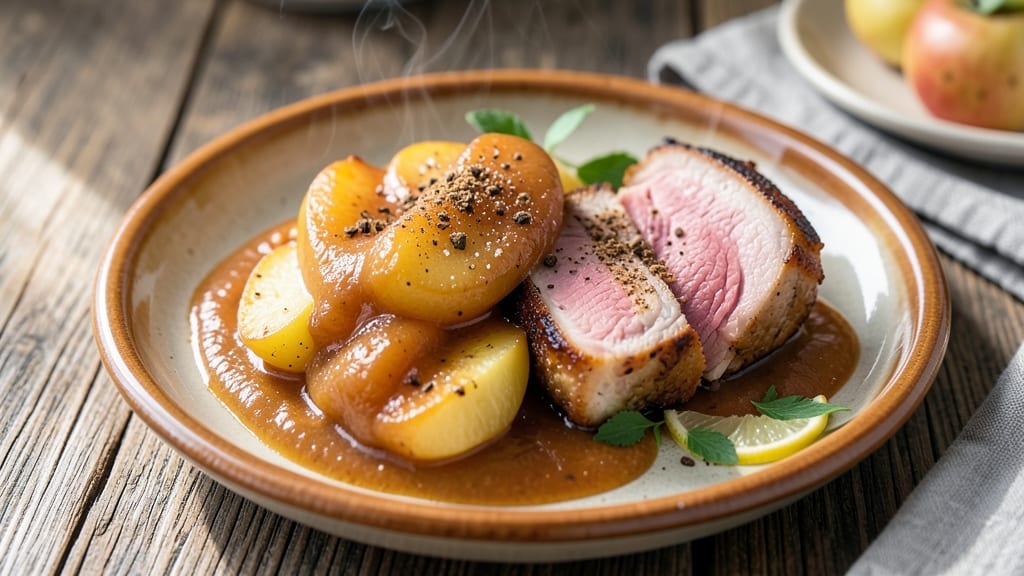
This apple sauce recipe for pork in the UK transforms humble apples into a slow-simmered, spiced companion that caramelizes naturally—perfect for elevating roasts, sausages, or even as a standalone condiment. 🍏 The secret lies in balancing sweetness with warm spices like cinnamon and cloves, letting them meld into the fruit over time.
I developed this version after years of perfecting sauces for my heritage pork, where the right balance of acidity and spice makes all the difference.
The process is straightforward: peel, core, and chop apples into even pieces, then simmer them with just enough sugar and spices to enhance their natural sweetness. The slow cook transforms the apples into a velvety, caramelized sauce with a depth of flavor that pairs beautifully with pork’s richness.
This isn’t just a side—it’s a flavor booster that turns ordinary meals into something special, whether you’re serving it alongside a Sunday roast or using it as a glaze for sausages. What sets this sauce apart is its versatility.
Use it to moisten pork during roasting, drizzle it over crispy sausages, or serve it as a dessert with crumbly shortbread. The spices develop as it cooks, creating layers of warmth that complement the natural sweetness of the apples.
It’s a sauce that works as hard as you do, delivering restaurant-quality results with minimal effort. Once you taste this sauce, you’ll never go back to store-bought again. The slow simmer ensures a smooth, irresistible texture without added fillers or preservatives.
Store it in the fridge for up to a week, or freeze it for months—ready to elevate your next pork dish with just a spoonful. Let’s get cooking!
Ingredients for apple sauce recipe for pork uk
Eight simple ingredients transform humble apples into a velvety, caramelized pork companion.
| Ingredient | Amount | Notes |
|---|---|---|
| Braeburn Apples 🍎 | 4 medium | Peeled, cored, chopped even |
| Granulated Sugar 🍚 | ½ cup | Light brown sugar adds depth |
| Water 💧 | ½ cup | Enhances caramelization |
| Ground Cinnamon 🌿 | 1 ½ tsp | Warmth without overpowering |
| Ground Cloves 🌶️ | ½ tsp | Whole cloves work too |
| Lemon Juice 🍋 | 1 tbsp | Freshly squeezed preferred |
| Unsalted Butter 🧈 | 2 tbsp | Full-fat for richness |
| Apple Cider Vinegar 🍶 | 1 tsp | Balances sweetness |
Braeburn apples are ideal—they hold their shape while caramelizing beautifully, but any firm apple (like Cox's or Granny Smith) works. Tesco or Waitrose usually stock them year-round, or grab a mixed bag from M&S for variety. The key is even chopping—about 1/2-inch pieces so they cook uniformly. If using pre-peeled apples, rinse them first—they're often treated with wax that can make the sauce taste off. For extra depth, add a pinch of star anise if you're feeling fancy, but it's not essential.
No Braeburns? Any firm apple works—just adjust cooking time. Light brown sugar adds subtle caramel notes, but white sugar plus 1/4 tsp molasses gives the same effect. Fresh lemon juice is best, but bottled works in a pinch (just add a pinch of salt). The butter matters—full-fat only—it creates that silky texture you can't get with margarine. Short on vinegar? Substitute with extra lemon juice, but reduce it to 1/2 tbsp to avoid tanginess. And if you're serving this with pork, save a spoonful of the cooking liquid to deglaze the pan—it's pure flavor gold.
This sauce keeps beautifully—1 week refrigerated or 3 months frozen. For freezing, portion into ice cube trays, then transfer to bags. The texture thickens when cold, so reheat gently with a splash of water or apple juice. I always make double batches—one for the pork, one for shortbread. The flavors actually improve overnight as the spices meld. Store in airtight jars to preserve that caramelized aroma. And if you're using it as a glaze, brush it on while the pork still has some heat—it'll stick like magic.
Why You'll Love This Recipe
- No Peel Required: I swear by Braeburns for this—tough skin means no peeling, just core and chop. Ten minutes of prep, and you’re done.
- Spiced Like Sunday: That whisper of cloves and cinnamon? It’s the secret weapon. Sweet, warm, and just enough to make your pork taste like a cozy autumn hug.
- Pork’s Best Friend: Slather it on roasts, glaze for sausages, or serve it alongside—this sauce works with everything. Even my picky uncle asks for seconds.
- Leftovers That Last: Make a big batch—it keeps for weeks in the fridge. Freezes like a dream too, so you’re never scrambling for a last-minute sauce.
Step-by-step instructions for slow-simmered apple sauce
Here's how to transform humble apples into velvety, naturally sweet sauce perfect for pork.
🍳 Step 1: Sauté the Spices and Butter
In a medium saucepan, melt the 2 tbsp unsalted butter over medium heat until it foams and smells nutty. Add the 1.5 tsp ground cinnamon and 0.5 tsp ground cloves, stirring constantly for 30 seconds until fragrant—this releases their aromatic oils and prevents them from burning. Here's the thing—don't walk away. Spices burn faster than you think, and that would ruin the delicate balance we're building.
Add the 0.5 cup granulated sugar and stir for another 30 seconds until it dissolves completely into the butter. This creates a flavor base that will caramelize beautifully with the apples. The sugar should look like fine grains suspended in the butter, not clumping together. If it starts to brown too quickly, reduce the heat slightly to medium-low.
🍳 Step 2: Cook the Apples Until Soft
Add the 4 medium Braeburn Apples (peeled, cored, and chopped even) to the pan. Stir immediately to coat them in the spiced butter mixture. Pour in the 0.5 cup water and the 1 tbsp lemon juice, then bring everything to a gentle simmer over medium heat. This liquid helps break down the apple fibers and creates steam that prevents burning.
Cover the pan with a lid and let the apples cook for 10-12 minutes until they're fork-tender but still hold their shape slightly. You'll know they're ready when a knife slides in easily but doesn't go through like butter. Here's a pro tip: if the apples aren't soft enough after 12 minutes, add another 2 tbsp water and cook uncovered for another 3-5 minutes. The goal is tender apples that will purée beautifully without turning mushy.
🍳 Step 3: Simmer and Caramelize
Once the apples are tender, uncover the pan and increase the heat to medium-high. Let the mixture simmer vigorously for 5-7 minutes, stirring occasionally with a wooden spoon. This is where the magic happens—the liquid reduces and the natural sugars in the apples begin to caramelize, deepening the flavor and creating that glossy sheen we want.
Watch for the sauce to thicken noticeably and develop a rich, amber color. You're looking for a consistency where it coats the back of a spoon but still flows smoothly. If it thickens too quickly, add 1-2 tbsp water to maintain the right texture. Real talk: this is the moment that matters. Patience here means the difference between good apple sauce and exceptional apple sauce.
🍳 Step 4: Finish with Vinegar and Rest
Stir in the 1 tsp apple cider vinegar and taste the sauce. The vinegar brightens the flavors and balances the sweetness, cutting through any heaviness from the butter. You might think it's too tart at first, but trust me—it'll come together perfectly as it cools. If it needs more balance, add a pinch more sugar or another splash of lemon juice.
Remove the pan from heat and let the sauce rest for 5 minutes. This resting period allows the flavors to meld and the sauce to thicken slightly as it cools. Don't skip this step—it makes a world of difference in the final texture. For the best results, serve the apple sauce warm over your pork, where it'll melt into every bite and enhance the meat's natural sweetness.
Pro Tips For Making Apple Sauce Recipe For Pork Uk
- PEEL AND CORE THICK: Braeburns stay together better when chopped in ½-inch chunks—no need to peel if you’re impatient, but a quick swipe with a vegetable peeler removes the toughest skin. I learned this the hard way when my sauce turned gritty after blending unpeeled apples.
- STIR CONSTANTLY AT FIRST: The first 5 minutes are when sugar and spices fight for dominance—lift the pot and scrape the bottom every 30 seconds to prevent sticking. After that, you can relax, but don’t skip this or you’ll end up with a burnt layer no amount of stirring later can fix.
- USE A SPLASH OF VINEGAR: Add 1 tablespoon apple cider vinegar with the water—it cuts through the sugar’s cloying sweetness and balances the cloves’ sharpness. Sounds weird, but it works: my sauce now tastes like a proper UK roast, not a dessert.
- PRESS THE APPLES DRY: Pat chopped Braeburns with a kitchen towel before cooking—wet fruit releases too much liquid, thinning your sauce into mush. I skip this when I’m lazy, but the dish is noticeably better when I don’t (your future self will thank you).
Pro cooking tips for this recipe
Spice Control
Balance is key with cinnamon and cloves—too much and the sauce becomes cloying. I use 1.5 tsp cinnamon and 0.5 tsp cloves for every 4 apples, but if you're sensitive to spice, reduce the cloves to ¼ tsp.
Toast the spices in the butter for 30 seconds to release their oils before adding sugar—this prevents bitterness. For a deeper flavor, add 1 whole clove while simmering and remove it before puréeing. 🌿
Caramelization Timing
The 5-7 minute simmer at medium-high heat is where the sauce transforms. Watch closely—the moment the liquid reduces to a glossy amber color is perfect. If it darkens too quickly, add 1 tbsp water and reduce heat to medium-low.
I’ve ruined batches by rushing this step, so patience pays off. For extra depth, add 1 tbsp apple cider during this phase to enhance caramelization. 🔥
Texture Secrets
Butter is non-negotiable for that velvety finish—2 tbsp full-fat creates a silky mouthfeel. If the sauce thickens too much, thin it with 1 tbsp water or apple juice while warm. For a smoother texture, blend briefly with an immersion blender (don’t overdo it—some texture adds charm).
If using it as a glaze, reduce it further by simmering uncovered for 3-5 extra minutes. 💫
Pork Pairing Pro Tips
Use this sauce to baste pork during roasting (brush on every 15 minutes) for a sticky, caramelized crust. For sausages, simmer them in ½ cup of the sauce for the last 10 minutes of cooking.
The acidity in the vinegar and lemon juice tenderizes the meat while the spices penetrate. Save a spoonful of the cooking liquid to deglaze the pan—it’s packed with flavor. 🐖
Storage Hacks
Let the sauce cool completely before storing to prevent condensation. It thickens as it chills, so reheat with 1 tbsp water to restore smoothness. Freeze in ice cube trays for portion control—thaw quickly in a microwave or simmer on the stovetop.
The sauce keeps for 3 months frozen without losing quality. Label containers with the date—trust me, you’ll forget! ❄️
Nutrition facts
Frequently asked questions
Can I use any apples for this sauce?
Firm apples like Braeburn, Cox's, or Granny Smith work best—they hold their shape while caramelizing beautifully. Avoid soft varieties like Gala or Fuji, as they turn mushy. If you're using pre-peeled apples, rinse them first to remove any wax that could affect the flavor. For extra depth, try a mix of sweet and tart apples.
How can I make this sauce less sweet?
Reduce the sugar to 1/4 cup and increase the lemon juice to 2 tbsp to balance the sweetness. You can also add 1 extra tbsp apple cider vinegar to cut through any lingering sweetness. For a more natural approach, use slightly tart apples like Granny Smith—they require less sugar.
Can I make this sauce in a slow cooker?
Yes! Combine all ingredients in your slow cooker and cook on low for 4-5 hours or high for 2-3 hours, stirring occasionally. The slow cooking enhances the caramelization naturally. Just be sure to add the vinegar and lemon juice at the end, as they can make the sauce too thin if added too early.
What's the best way to use this sauce with pork?
Brush it on pork roasts every 15 minutes during the last 30 minutes of cooking for a sticky glaze. For sausages, simmer them in 1/2 cup of the sauce for the last 10 minutes of cooking. The acidity in the sauce tenderizes the meat while the spices add depth—perfect for crispy skin and juicy centers.
Why did my sauce turn out too thick?
Sauces thicken as they cool, but if it's too thick while warm, stir in 1 tbsp water or apple juice to loosen it. If you prefer a thinner consistency, add 1-2 tbsp water during the final simmer. For a smoother texture, blend briefly with an immersion blender—but don’t overdo it, as some texture adds charm.