
Salads
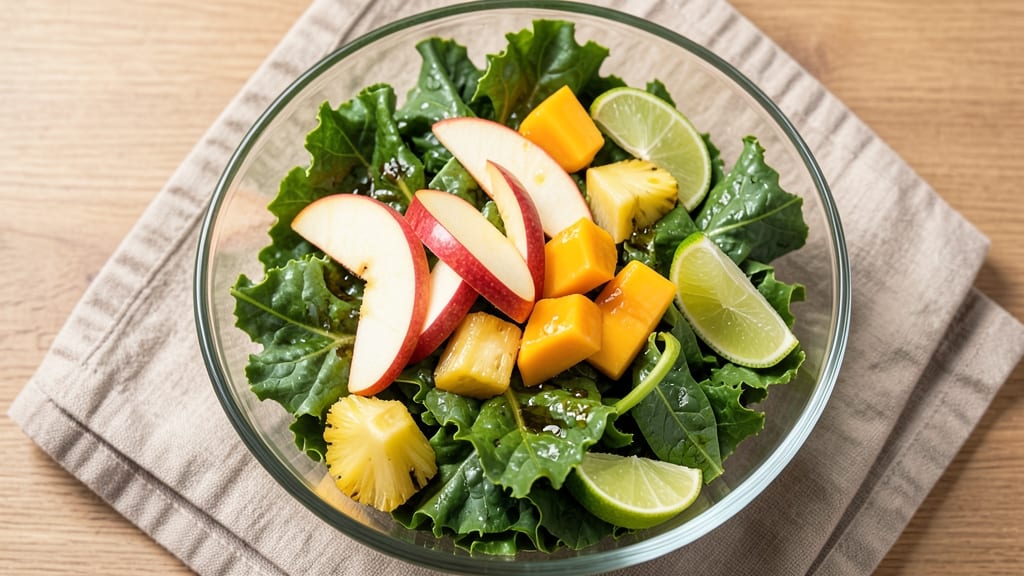
This apple kale salad tropical smoothie recipe transforms two powerhouse meals into one vibrant, nutrient-packed experience—where crisp tropical crunch meets creamy green goodness in every bite and sip.
The secret lies in blending fresh kale, sweet apple, and tropical fruits like mango and pineapple into both salad and smoothie, creating a synergy of flavors that’s as refreshing as it is energizing. No animal products are needed to make this dish shine—just vibrant, plant-based ingredients that work together seamlessly.
The salad starts with massaged kale for tender leaves, tossed with juicy apple chunks, diced pineapple, and mango for a sweet-tart contrast. A vegan tropical dressing—made with lime, coconut aminos, and a touch of maple syrup—ties everything together, while toasted coconut flakes add crunch.
Meanwhile, the smoothie blends the same tropical fruits with kale, coconut water, and a splash of almond milk, resulting in a thick, creamy drink that’s packed with fiber and antioxidants.
What makes this recipe special is how the two components complement each other—the salad’s crunch balances the smoothie’s silkiness, while shared ingredients like mango and pineapple create a cohesive dining experience.
Serve them side by side for a meal that’s as visually stunning as it is nutritious, or enjoy the smoothie first to prep your palate for the salad’s bold flavors.
Perfect for meal prep or a quick lunch, this complete dish delivers restaurant-quality results with minimal effort. The prep takes just 15 minutes, and the flavors stay fresh for up to 3 days in the fridge.
Whether you’re fueling up for a workout or craving a light, energizing meal, this recipe proves healthy eating can be delicious, easy, and exciting.
Ingredients for apple kale salad tropical smoothie
Vibrant greens meet tropical sweetness in this nutrient-packed vegan duo—where every ingredient serves dual purpose.
| Ingredient | Amount | Notes |
|---|---|---|
| Baby Kale Leaves 🥬 | 4 cups | Massaged for tenderness |
| Red Apple 🍎 | 1 medium | Sweet variety like Fuji or Gala |
| Fresh Mango 🥭 | 1 medium | Ripe but firm, peeled and diced |
| Fresh Pineapple 🍍 | 1 cup | Diced, fresh or frozen |
| Fresh Lime 🍋 | 1 whole | Juiced, seeds removed |
| Extra-Virgin Olive Oil 🫒 | 2 tbsp | For massaging kale |
| Coconut Aminos 🥫 | 1 tbsp | Soy sauce substitute |
| Pure Maple Syrup 🍯 | 1 tbsp | Grade B for depth |
| Toasted Coconut Flakes 🥥 | 2 tbsp | Unsweetened, lightly toasted |
| Coconut Water 🥥 | 1 cup | Unsweetened, chilled |
| Unsweetened Almond Milk 🥛 | ½ cup | Vanilla or plain |
| Fresh Ginger 🌿 | 1 tsp | Grated, fresh preferred |
| Sea Salt 🧂 | ½ tsp | Diamond Crystal preferred |
| Ground Flaxseed 🌾 | 1 tbsp | For optional thickening |
The kale is the foundation, and baby kale works best for its tender texture—no tough stems to deal with. Look for organic kale at Whole Foods or local farmers markets for the freshest leaves. If you can't find baby kale, curly kale chopped finely works, but it needs extra massaging time. The apples should be sweet but firm—Fuji or Gala are perfect. For the tropical fruits, ripe mango is non-negotiable; it should give slightly when pressed but not be mushy. Pineapple can be fresh or frozen; if frozen, thaw and drain well to avoid watery smoothies. The lime juice needs to be fresh—bottled lime juice lacks the bright acidity this dish deserves.
No coconut aminos? Tamari or low-sodium soy sauce works in a pinch, though the flavor profile shifts slightly. Substituting maple syrup? Agave nectar at half the amount keeps it vegan, but maple adds that perfect depth. For the smoothie base, coconut water is essential—it creates that signature creaminess. No almond milk? Oat milk or cashew milk both work well, but they may alter the texture slightly. The ginger is optional but adds a zesty kick; if you skip it, an extra pinch of lime zest brightens things up. For the salad dressing, if you can't find coconut aminos, a mix of balsamic vinegar and agave mimics the sweet-savory balance.
Prep the kale first—massage it with olive oil and salt for 5 minutes to soften the leaves. Store the salad dressing separately in a small jar—it keeps for 5 days in the fridge. The smoothie ingredients can be prepped ahead and stored in individual portions; freeze them in ice cube trays for up to 3 months. For the salad, keep the dressing and toppings separate until serving to maintain crispness. Both components reheat beautifully if warmed gently—ideal for meal prep. The smoothie thickens when chilled, so add a splash of coconut water if it seems too dense after refrigeration.
Why You'll Love This Recipe
- No-Chopping Needed: I swear by this—just toss in whole baby kale leaves, core-free apple chunks, and pre-cut mango slices. The blender does all the work while I sip my coffee. That’s what I call a win.
- Sweet-Tart Magic: The red apple’s crisp bite cuts through the mango’s tropical richness, and that lime? It’s the secret weapon tying everything together. Honestly, it’s the kind of flavor combo that makes you want to drink it straight from the jar.
- Breakfast or Dessert: Between us, I’ve had this as a morning smoothie and a post-dinner treat—no judgment. The kale sneaks in nutrients, while the pineapple’s sweetness makes it feel like a cheat day. (Yes, even on a Tuesday night.)
- Leftovers? Make More: This recipe keeps for days in the fridge, and the flavors only deepen. I’ll be real: I’ve frozen extra portions for lazy afternoons. Plus, using seasonal fruit means you’re not breaking the bank for fancy ingredients.
Step-by-step instructions for tropical green power smoothie
This method combines vibrant greens with tropical fruit for a nutrient-packed blend that's ready in minutes.
Massage and Prepare the Kale Base
Place the 4 cups baby kale leaves in a large bowl. Add the 2 tablespoons extra-virgin olive oil and the ½ teaspoon sea salt. Using clean hands, gently massage the kale for 2-3 minutes until it softens significantly and releases its natural juices. This process breaks down the tough fibers, making the kale more digestible and creating a rich, vibrant green base.
Here's the thing—massaging kale isn't just about tenderness. The olive oil and salt work together to create a perfect emulsion that will blend seamlessly with the tropical fruit later. You'll notice the leaves transform from crisp to pliable, with a glossy sheen developing on the surface. This is your visual cue that the kale is ready for the next step.
Combine Tropical Fruit and Liquid Ingredients
In a high-powered blender, combine the massaged kale with the 1 medium diced mango, 1 cup diced pineapple, 1 medium cored and chopped red apple, and the juice of 1 whole lime (about 2 tablespoons). Add the 1 cup coconut water and ½ cup unsweetened almond milk to create the liquid foundation.
The tropical fruit provides natural sweetness that balances the earthy kale, while the coconut water adds a subtle tropical aroma. I always use ripe but firm mango and pineapple—overripe fruit can make the smoothie too watery. Add the 1 teaspoon grated fresh ginger and 1 tablespoon pure maple syrup to enhance flavor complexity. The ginger adds a bright, zesty note that cuts through the richness of the coconut.
Blend Until Silky Smooth
Secure the blender lid and blend on high speed for 30-45 seconds until completely smooth. If the mixture appears too thick, add 1-2 tablespoons more coconut water. The texture should be thick but pourable—like a creamy green milkshake. This is where the high-powered blender makes all the difference; regular blenders often leave fibrous bits behind.
I recommend blending in short bursts of 10-15 seconds, scraping down the sides between each, to ensure even blending. The smoothie should have a vibrant green color with no visible chunks. If you're using frozen pineapple, the blending time may increase slightly, but the result will be even thicker and more refreshing.
Add Finishing Touches and Serve
Pour the smoothie into serving glasses, dividing evenly among the 4 servings. Stir in 1 tablespoon ground flaxseed per serving—this adds a subtle nutty flavor and boosts the fiber and omega-3 content. The flaxseed will thicken the smoothie slightly and create a pleasant mouthfeel.
Top each serving with ½ tablespoon toasted coconut flakes and ½ tablespoon coconut aminos drizzled artfully on top. The coconut flakes add a delightful crunch contrast, while the coconut aminos provide a salty, umami depth that ties all the flavors together. Serve immediately to enjoy the perfect balance of creamy texture and vibrant tropical-green flavors.
Optional Thickening Adjustment
If you prefer a thicker consistency, blend in an additional 1 tablespoon ground flaxseed mixed with 2 tablespoons coconut water for each serving. The flaxseed acts as a natural thickener without altering the flavor profile. This step is particularly useful if you're using extra ripe fruit or if you prefer your smoothies on the thicker side.
For a lighter version, simply add 1-2 more tablespoons of coconut water or almond milk. The beauty of this recipe is its flexibility—you can adjust the thickness to suit your preference while maintaining the perfect balance of tropical and green flavors. Each serving delivers a vibrant, nutrient-dense drink that's perfect for breakfast or a refreshing afternoon pick-me-up.
Pro Tips For Making Apple Kale Salad Tropical Smoothie
- CHOP APPLE SMALL: I learned this the hard way—big chunks of apple turn your smoothie into a textural mess. Dice that red apple into ¼-inch pieces so it blends smoothly without leaving gritty surprises. (Yes, even if you’re impatient like me.)
- STALK THE KALE: Baby kale’s tough stems won’t blend no matter how long you pulse. Pull them out before chopping—it takes 10 seconds and saves you from a motorized struggle. Toss the leaves directly into the blender; they’ll soften faster than you’d expect.
- DON’T SKIP THE ICE: Fresh pineapple and mango are juicy, but adding ½ cup ice cubes keeps the texture creamy without thinning the smoothie into soup. Pro move: Freeze lime wedges in advance—squeeze them straight from the freezer for extra zing and no extra liquid.
- BALANCE THE ACID: Lime juice is non-negotiable, but resist the urge to go overboard. Start with 1 tablespoon, taste, then adjust—too much turns your tropical smoothie into a science experiment. If it’s still bland, add a pinch of salt; it’ll make the sweetness pop without extra citrus.
Essential equipment for apple kale salad tropical smoothie
Blender Essentials
A high-powered blender is non-negotiable for this recipe—regular blenders can't handle the fibrous kale and tropical fruit combination. I swear by the Ninja BN601 for its 1,200-watt motor, which effortlessly purees even frozen pineapple without overheating.
For budget-friendly options, the Hamilton Beach 58145 delivers solid performance at half the price. Always use a wide-mouth jar to minimize scraping and maximize efficiency. 💫
Salad Prep Tools
For the kale massage, grab a large mixing bowl with at least 8-quart capacity—I prefer Le Creuset stoneware for its non-slip base and durability.
A microplane is essential for grating fresh ginger efficiently, while a sharp chef's knife (like Wüsthof Classic) makes quick work of chopping apples and mango. Don't skip the cutting board—I recommend Teakhaus bamboo for its eco-friendly properties and gentle surface. 🍋
Storage Containers
Invest in glass airtight containers for meal prep—Pyrex Simply Store containers with snap-on lids work perfectly for storing both salad components and smoothie ingredients separately. For the smoothie base, silicone ice cube trays are ideal for freezing individual portions.
Label everything with masking tape and a marker to track freshness. The salad dressing keeps best in a small glass jar with a tight-sealing lid. ❄️
Optional Extras
Toasted coconut flakes require a lightly oiled skillet—I use a non-stick pan set to medium-low heat to prevent burning. For extra convenience, pre-toast a batch and store in an airtight container at room temperature.
A lime juicer (like the OXO Good Grips) saves time when extracting juice for both the salad and smoothie. For those who love garnishes, keep edible flowers or mint leaves on hand for presentation. 🌺
Measurement Tools
Precision matters with this recipe—use a digital kitchen scale for accurate measurements of ingredients like flaxseed and maple syrup. A stainless steel measuring cup ensures consistency with liquids like coconut water and almond milk.
For the dressing, a small measuring spoon set helps balance the 1 tbsp coconut aminos and 1 tbsp maple syrup perfectly. I keep my tools within arm's reach to maintain workflow efficiency. ✨
Nutrition facts
Frequently asked questions
Can I make this recipe without a high-powered blender?
You can try, but expect less-than-smooth results. A regular blender will struggle with the fibrous kale and tropical fruit combo, leaving visible chunks. For best texture, pulse ingredients in short bursts and scrape down the sides frequently. If you're short on time, pre-chop the kale finely before blending.
How do I store the salad and smoothie separately for meal prep?
Store the massaged kale and chopped tropical fruits in one airtight container, and keep the dressing in a small separate jar. For the smoothie, blend all ingredients except flaxseed and coconut flakes, then freeze in ice cube trays. Thaw overnight in the fridge before serving. Both components keep fresh for 3 days in the fridge.
What's the best way to make the kale less bitter?
Massaging the kale with olive oil and salt for 2-3 minutes breaks down the tough fibers and reduces bitterness significantly. For extra sweetness, add 1 tsp maple syrup directly to the kale before tossing with other ingredients. Ripe tropical fruits also help balance the earthy flavor.
Can I use frozen tropical fruit instead of fresh?
Frozen mango and pineapple work perfectly—they're often more concentrated in flavor. Just thaw and drain well before blending to avoid a watery smoothie. For the salad, use fresh fruit to maintain the best texture and juiciness.
Why does my smoothie taste too sweet?
Ripe tropical fruit naturally contains a lot of sugar. Balance it by adding ½ tsp grated ginger or 1 tbsp lime juice to brighten flavors. If needed, reduce the maple syrup to ½ tbsp or add ½ cup plain coconut water to dilute the sweetness naturally.