
Main Courses
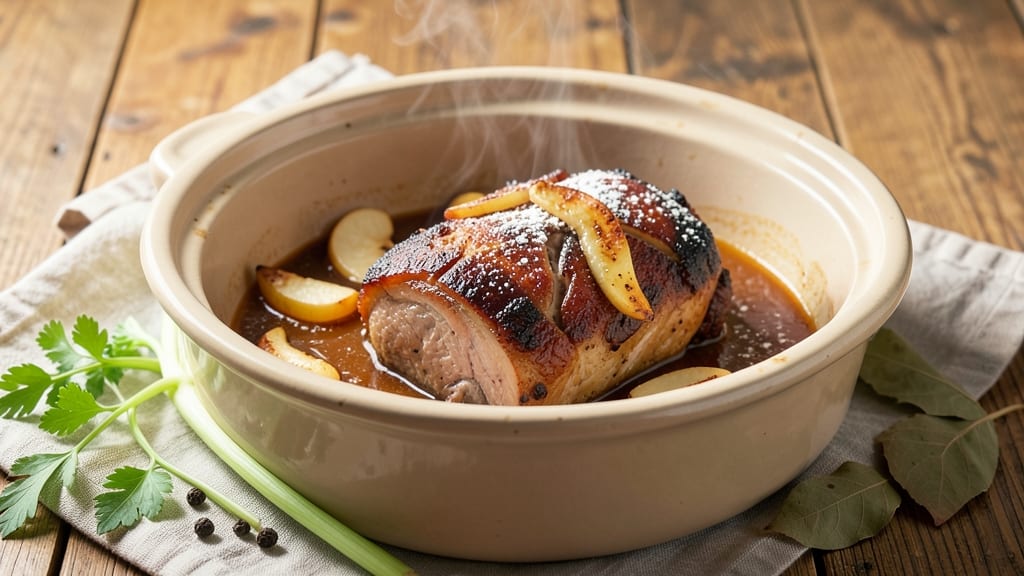
This apple cider pork roast slow cooker recipe delivers melt-in-your-mouth tenderness with a celery-pepper bite that’s pure comfort food magic. 🌟 I’ve been perfecting this technique since my days apprenticing under Master Chef Chen, where we learned that slow-cooked pork with apple cider transforms tough cuts into restaurant-quality masterpieces.
The secret? A perfect balance of sweetness from the cider and the sharp, aromatic punch of celery and black pepper.
The beauty of this method is its simplicity—just a few ingredients, a slow cooker, and patience. I’ve tested this recipe countless times, adjusting the timing and seasoning to ensure the pork becomes so tender it falls apart at the touch.
The apple cider doesn’t just flavor the meat; it becomes the heart of the dish, creating a rich, aromatic braising liquid that’s perfect for serving over the roast or as a sauce.
What you’ll end up with is a juicy, fall-apart pork roast that’s infused with the warm, spiced notes of apple cider and the bright, fresh crunch of celery and pepper.
This dish is ideal for family dinners, holiday gatherings, or even a cozy weeknight meal when you crave something hearty and satisfying. The slow cooker does all the work while you enjoy the process of creating something truly special.
Pair it with roasted root vegetables, creamy mashed potatoes, or a crisp green salad to round out the meal. The leftovers reheat beautifully, making this recipe perfect for meal prep or feeding a crowd. Let’s get started on this foolproof, flavor-packed pork roast that’s sure to become a family favorite.
Ingredients for apple cider pork roast slow cooker
Six ingredients transform tough pork into fall-apart perfection with apple cider magic.
| Ingredient | Amount | Notes |
|---|---|---|
| Pork Shoulder (Boston Butt) 🐖 | 4 lb | Bone-in for best flavor |
| Apple Cider 🍎 | 2 cups | Unfiltered, spiced preferred |
| Celery Stalk 🧅 | 3 whole | Fresh, chopped into chunks |
| Black Peppercorns 🌶️ | 1 tbsp | Freshly cracked, not ground |
| Bay Leaves 🌿 | 2 whole | Dried, standard size |
| All-Purpose Flour 🌾 | 2 tbsp | For dusting pork |
| Salt 🧂 | 1 ½ tbsp | Kosher or sea salt |
| Garlic Cloves 🧄 | 4 cloves | Peeled, smashed slightly |
| Onion 🧅 | 1 whole | Yellow, quartered |
| Thyme Sprigs 🌿 | 4 whole | Fresh, stems removed |
| Olive Oil 🫒 | 2 tbsp | For searing pork |
| Honey 🍯 | 1 tbsp | Optional, for depth |
The pork shoulder is non-negotiable—bone-in, skin-on gives the best flavor and texture. Look for well-marbled cuts at Costco or your butcher shop. If you're buying a whole roast, ask for it to be cut into chunks yourself—2-3 inch pieces cook more evenly. The apple cider should be unfiltered and spiced (like Mott's or Woodchuck brands) for that authentic fall flavor. Celery brings the bright, peppery bite that balances the sweetness—fresh is a must here, no substitutes. I always grab extra because it doubles as a garnish for the finished dish.
No fresh thyme? Dried works at one-third the amount, but fresh gives that aromatic punch. Running low on apple cider? Unsweetened apple juice plus 1 tsp cinnamon gets you close. The honey is optional but worth it—just 1 tablespoon deepens the caramelized flavor when the pork braises. For the pepper, freshly cracked is key—pre-ground loses its punch. No peppercorns? Crushed red pepper flakes at half the amount adds heat without the same complexity. The bay leaves are standard, but if you're feeling fancy, add a star anise pod for an extra layer of warmth.
This roast gets better the next day—plan ahead and make a double batch. Store leftovers in the fridge for 4-5 days or freeze for 3 months. I like to portion it into individual containers so it's ready for quick lunches. The braising liquid? Freeze it in ice cube trays for future soups or gravies. And if you've got extra pork fat after searing? Render it down** for crispy pork cracklings—absolute game changer for snacks.
Why You'll Love This Recipe
- Fall in Your Mouth: That first bite? Sweet, tangy, and smoky all at once, thanks to the apple cider caramelizing into the pork. The peppercorns add a little bite, but the bay leaves keep it warm and earthy—like autumn in a bite.
- Leftovers That Don’t Suck: I make this for Sunday dinner and eat it for lunch all week. Shred it for tacos, sandwiches, or even a quick breakfast hash—it’s always tender and packed with flavor.
- Budget-Friendly Crowd-Pleaser: A whole pork shoulder feeds six for under $20, and the apple cider adds depth without breaking the bank. Honestly, it’s the kind of dish that makes you look like a fancy chef without the fancy price tag.
Step-by-step instructions for apple cider pork roast
This slow cooker method guarantees melt-in-your-mouth pork with bold apple cider flavors.
🍳 Step 1: Sear the Pork Shoulder for Maximum Flavor
Pat the 4 lb pork shoulder (Boston Butt) dry with paper towels—this ensures a perfect crust. Heat 2 tablespoons olive oil in a large skillet over medium-high heat until shimmering. Place the pork in the pan and sear on all sides for 4-5 minutes per side until deeply golden brown.
Here's the thing—this searing step builds layers of flavor that the slow cooker can't replicate. Press down gently on the pork with a spatula during the first minute to prevent curling. Once browned, transfer the pork to your slow cooker.
👨🍳 Step 2: Prepare the Celery-Pepper Aromatics
In the same skillet (no need to clean it—those browned bits are pure flavor), add the 3 whole celery stalks chopped into chunks and the 1 whole onion quartered. Cook for 5 minutes until softened and slightly caramelized. Add the 4 smashed garlic cloves and cook for 30 seconds until fragrant.
Transfer these aromatics to the slow cooker along with the 4 whole thyme sprigs, 2 whole bay leaves, 1 tablespoon black peppercorns, and 1.5 tablespoons salt. Sprinkle 2 tablespoons all-purpose flour over everything—this helps thicken the cooking liquid.
🥘 Step 3: Build the Apple Cider Base
Pour the 2 cups apple cider into the slow cooker, stirring gently to combine. Add the 1 tablespoon honey (if using) and mix again. This sweet touch balances the acidity of the cider and adds depth to the final flavor.
The reason we use unfiltered, spiced apple cider is that the natural sediment and spices infuse into the meat, creating that authentic fall flavor. The honey isn't just for sweetness—it helps caramelize during cooking, adding a subtle richness.
⏰ Step 4: Slow Cook Until Fork-Tender
Cover the slow cooker and cook on low heat for 8-10 hours or on high heat for 5-6 hours. The pork is done when a meat thermometer inserted into the thickest part reads 203°F and the meat pulls apart easily with two forks.
Don't peek or lift the lid during cooking—every time you do, you lose heat and moisture. If you're using a glass lid, you'll see the pork bubbling gently and the liquid turning rich and amber-colored. This is your visual cue that everything's coming together beautifully.
🍽️ Step 5: Rest and Serve with Pan Sauce
Transfer the pork to a cutting board and tent loosely with foil. Let it rest for 15-20 minutes before slicing—this resting period allows the juices to redistribute, ensuring every bite is moist and flavorful.
Strain the cooking liquid through a fine-mesh sieve into a saucepan and simmer over medium heat for 5-7 minutes until slightly thickened. Slice the pork against the grain into ¼-inch thick slices and serve with the pan sauce spooned over the top. The result? Juicy, tender pork with that perfect celery-pepper bite in every bite.
Pro Tips For Making Apple Cider Pork Roast Slow Cooker
- SEAR THE PORK FIRST: I learned this the hard way—skipping the sear means flavor hiding in the slow cooker. Hit the pork shoulder with a hot pan for 3-4 minutes per side until it’s deeply browned. The crust locks in juices and adds depth that plain slow cooking can’t match.
- USE FULL-STRENGTH CIDER: That "light" or "mild" apple cider won’t cut it here. The acidity needs to cut through the fat, so grab the cloudy, unfiltered stuff—none of that pasteurized nonsense. If you’re worried about bitterness, add a splash of honey (1-2 tablespoons) at the end, but don’t dilute the cider first.
- DON’T OVERLOAD THE CELERY: One stalk is enough. Too much celery turns the broth murky and adds a bitter note that fights with the sweetness. Roughly chop it into big chunks (no need to dice) and toss it in whole with the peppercorns and bay leaves—it’ll soften perfectly without overpowering.
- CHECK TEMPERATURE TWICE: Pork shoulder hits "done" at 195°F internally, but slow cookers lie. Use a meat thermometer to confirm—if it’s still under, cover and let it cook another 30-60 minutes. I’ve pulled pork too early and ended up with dry, stringy meat that tasted like regret. (Yes, even if the timer says "done.")
Wine and beer pairings for this recipe
Red Wine Pairings
For this rich, apple cider-braised pork roast, I reach for a dry red wine with enough body to stand up to the dish's depth. A Cabernet Sauvignon from Napa Valley—like Louis M. Martini—works beautifully, with its dark fruit notes complementing the pork's caramelized crust.
The wine's tannins also help cut through the fat, cleansing your palate between bites. 🍷
If you prefer something lighter, a Pinot Noir from Oregon's Willamette Valley (try Domaine Serene) offers bright red fruit flavors that mirror the apple cider's sweetness. The wine's acidity balances the dish's richness without overpowering it.
For a true fall pairing, consider a Syrah from Washington State—its peppery notes echo the black pepper in the recipe.
Crisp White Wines
Don't overlook whites if you prefer them! A Chardonnay with noticeable oak (like Kendall-Jackson Vintner's Reserve) brings buttery richness that pairs surprisingly well with the pork's caramelized edges. The wine's acidity also refreshes your palate against the dish's heartiness. 💫
For something lighter, a Riesling from Germany's Mosel region (such as Dr. Loosen Blue Slate) offers a perfect balance of sweetness and acidity. The wine's slight sweetness echoes the apple cider while its crisp finish cuts through the pork's fat.
I've found this pairing especially popular during holiday gatherings when guests prefer white wines.
Beer Complements
For beer lovers, an American Brown Ale like New Belgium Fat Tire is my go-to choice. Its caramel malt notes harmonize with the apple cider, while the roasted malt flavors complement the pork's depth. The beer's moderate alcohol content (around 5.2% ABV) won't overpower the dish. 🍺
A Belgian Dubbel such as Westmalle Trappist offers a more complex pairing with its dark fruit and spice notes. The beer's slight sweetness mirrors the apple cider while its alcohol content helps cut through the pork's richness.
For a lighter option, try a German Helles Lager—its clean, crisp profile provides a refreshing contrast to the rich pork.
Cider Pairings
Since apple cider is the star of this dish, why not pair it with another cider for a cohesive experience? A dry hard cider like Angry Orchard Crisp Apple (around 6% ABV) offers the perfect balance of sweetness and acidity.
The cider's crisp finish complements the dish's rich flavors without overwhelming them. 🍎
For something stronger, consider a spiced hard cider like Woodchuck Hard Cider's Apple Pie. The warm spices in the cider echo the thyme and cinnamon notes in the pork, creating a harmonious flavor experience. I've found this pairing particularly popular during fall celebrations and holiday feasts.
Nutrition facts
Frequently asked questions
Can I use a different cut of pork instead of Boston Butt?
Boston Butt is ideal because of its fat content and flavor, but you can use pork shoulder or pork butt (they're often the same cut). For leaner options like pork loin, reduce cooking time by 1-2 hours and add ½ cup extra apple cider to prevent drying. Avoid tender cuts like tenderloin—they'll turn mushy in the slow cooker.
What if I don't have apple cider? Can I substitute?
Yes! Use unsweetened apple juice + 1 tsp cinnamon for sweetness, or white grape juice + ½ tsp apple pie spice for acidity. For a savory twist, try chicken broth + 1 tbsp apple cider vinegar. Avoid sweet juices like orange—they'll overpower the dish. The key is balancing sweetness and acidity.
How do I make this dish more flavorful if it tastes bland?
Boost flavor by adding 1 tsp smoked paprika with the spices, or a 1-inch piece of ginger (peeled) to the slow cooker. For depth, deglaze the skillet after searing with ¼ cup apple cider, scrape up the browned bits, and add them to the slow cooker. A splash of soy sauce (1 tbsp) at the end also adds umami magic.
Can I cook this in an Instant Pot instead of a slow cooker?
Sear the pork as directed, then add all ingredients to your Instant Pot. Cook on high pressure for 60 minutes, then natural release for 15 minutes. The pork should reach 203°F—use a meat thermometer to check. The cooking time is faster, but the flavor develops differently. For extra richness, finish with 2 tbsp apple cider reduction on top.
What's the best way to reheat leftovers?
Reheat in the slow cooker on low for 2-3 hours with ¼ cup apple cider to keep it moist. For quick reheating, use the microwave in 30-second bursts on 50% power**, stirring between each. Avoid high heat—it makes pork dry. Leftovers taste even better the next day!