
Main Courses
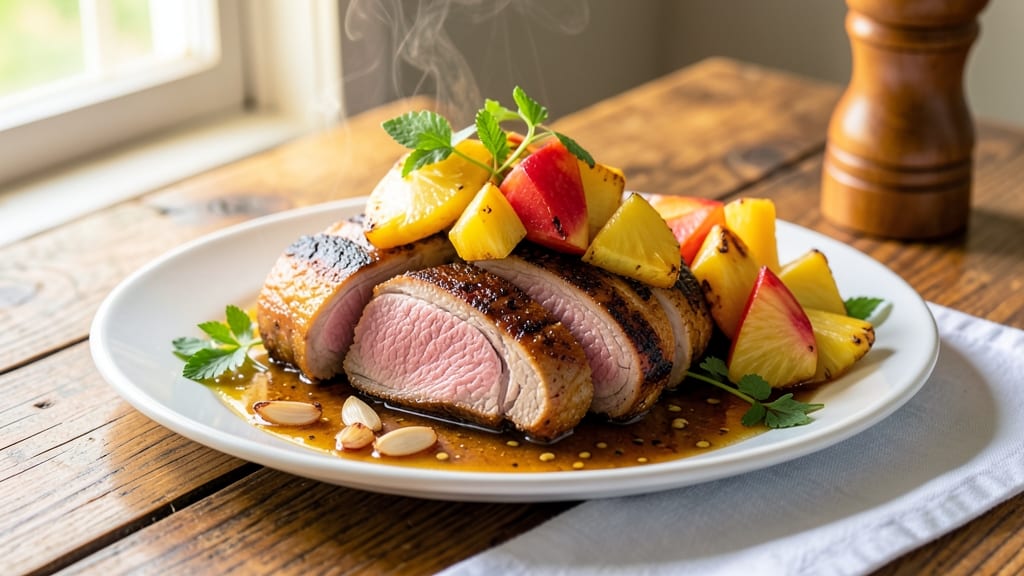
This Filipino-style pork with pineapple recipe brings together the bold flavors of adobo with the sweet-tangy brightness of pineapple in one foolproof pan. The secret lies in balancing soy sauce, vinegar, and brown sugar while letting the pineapple caramelize into sticky, flavorful chunks—just like my abuela used to make.
I first tasted this dish at a family gathering in Manila, where the sweet-savory contrast had everyone reaching for seconds.
The beauty of this recipe is its simplicity: 30 minutes of prep and 45 minutes of cooking time delivers restaurant-quality results. Tender pork shoulder absorbs the adobo marinade while the pineapple softens just enough to release its natural sweetness.
The key is cooking the pork until fork-tender, then finishing with the pineapple to let those flavors meld perfectly. This dish is as comforting as it is impressive.
What you'll end up with is a rich, caramelized pork dish where each bite delivers tender meat, juicy pineapple, and a perfect balance of sweet and savory. The aroma alone will have your kitchen smelling like a Filipino fiesta.
Serve it over steamed rice to soak up every last bit of that delicious sauce—it's the kind of meal that makes weeknights feel special.
This recipe works beautifully as a weeknight dinner or for gatherings, and the leftovers reheat just as well. The versatility of the sauce means you can use it for rice bowls, tacos, or even as a marinade for grilled chicken. Let's get cooking!
Ingredients for pork with pineapple recipe filipino style
Pantry staples meet tropical flavors in this Filipino-inspired one-pan masterpiece.
| Ingredient | Amount | Notes |
|---|---|---|
| Pork Shoulder 🥩 | 2 lb | Bone-in preferred for flavor |
| Fresh Pineapple 🍍 | 1 whole | Cored, cut into 1-inch chunks |
| Soy Sauce 🥄 | ½ cup | High-quality, low-sodium preferred |
| White Vinegar 💧 | ¼ cup | White or apple cider vinegar |
| Brown Sugar 🍚 | ½ cup | Packed, light or dark |
| Garlic Cloves 🧄 | 6 cloves | Minced, fresh preferred |
| Fresh Ginger 🌿 | 2 tbsp | Grated, peeled |
| Black Peppercorns 🌶️ | 1 tsp | Freshly cracked |
| Bay Leaves 🍃 | 2 whole | Dried, crushed slightly |
| Olive Oil 🫒 | 2 tbsp | Extra-virgin for richness |
| Salt 🧂 | 1 ½ tsp | Kosher or sea salt |
| Green Onions 🧅 | 3 whole | Sliced, for garnish |
| Fresh Cilantro 🌿 | ¼ cup | Chopped, for garnish |
The pork shoulder is non-negotiable here—bone-in delivers the richest flavor, but boneless works in a pinch. Costco or Trader Joe's usually have great cuts at reasonable prices. Look for marbling; it's your indicator of juiciness. Fresh pineapple is a game-changer too—canned won't cut it for that authentic texture. I grab the whole fruit and cut it myself; the core's full of flavor. For the ginger, Asian markets often have fresher, plumper roots than the grocery store. If you can't find fresh, powdered works at half the amount—just know it's less vibrant.
No soy sauce? Coconut aminos in a 1:1 swap works surprisingly well. Vinegar substitutes? Lemon juice or apple cider vinegar both work, though the flavor profile shifts slightly. Brown sugar substitute? Coconut sugar or maple syrup—both caramelize beautifully. The garlic and ginger can be pre-minced from the store if you're short on time, but freshly grating ginger on a microplane adds depth. For the bay leaves, if you've only got whole ones, lightly crush them with your palm before adding to release the oils. The green onions and cilantro are purely for freshness—skip them if you're using this as a marinade.
This dish tastes even better the next day as the flavors meld. Store leftovers in an airtight container for up to 5 days in the fridge, or freeze portions for 3 months. I like to portion it into meal prep containers—one for rice bowls, one for tacos. The sauce thickens as it cools, so if you're reheating, add a splash of water or vinegar to loosen it up. Garnish with extra cilantro right before serving; it brightens everything up.
Why You'll Love This Recipe
- One-Pan Magic: I swear by this for lazy nights—just toss pork shoulder chunks with pineapple chunks, a splash of soy sauce, and a quick sear. The vinegar cuts through the richness while the brown sugar caramelizes everything into sticky, saucy perfection without a single extra dish.
- Sweet-Savory Balance: That first bite? Tangy, caramelized pork with fresh pineapple cutting through the richness—it’s like a flavor party in your mouth. Honestly, the soy-vinegar glaze makes even the simplest pork taste like it’s been slow-cooked for hours.
- Leftover Goldmine: This dish tastes better the next day, especially reheated with a splash of water to loosen the sauce. I meal prep it all the time—packs perfectly for lunches and freezes like a dream when wrapped tightly.
- Budget-Friendly Feast: Pork shoulder is cheap, pineapple’s often on sale, and you’re using pantry staples. For under $15, you feed four people a dish that feels fancy but costs next to nothing—my wallet and my family’s taste buds thank me every time.
Step-by-step instructions for sweet-savory Filipino-style pork with pineapple
Here's how to blend rich adobo flavors with tropical pineapple for a one-pan masterpiece.
Prep and Sear the Pork Shoulder for Maximum Flavor
Pat the 2 lb pork shoulder completely dry with paper towels—this ensures a crispy exterior later. In a large Dutch oven or deep skillet, heat 2 tablespoons olive oil over medium-high heat until shimmering. Add the pork shoulder and sear on all sides for 5-6 minutes total, pressing gently to prevent curling. You're building that deep, caramelized crust that holds all the flavors.
Once the pork is golden brown, remove it from the pan and set aside. The rendered fat in the pan is pure flavor—don't wipe it out. This is where the magic starts. Here's the thing: searing first develops a rich base for the sauce, while keeping the pork tender throughout the long cook.
Build the Sweet-Savory Sauce with Aromatics
In the same pan, reduce heat to medium and add 6 minced garlic cloves and 2 tablespoons grated fresh ginger. Sauté for 1-2 minutes until fragrant—you should smell that sharp garlic aroma wafting through your kitchen. Add 2 crushed bay leaves, 1 teaspoon black peppercorns, and 1.5 teaspoons salt, stirring for 30 seconds to toast the spices slightly.
Pour in 0.5 cup soy sauce, 0.25 cup white vinegar, and 0.5 cup packed brown sugar. Stir vigorously to dissolve the sugar completely, then add 1 whole fresh pineapple cut into 1-inch chunks. Bring to a gentle simmer and cook uncovered for 5 minutes, letting the liquid reduce slightly while the pineapple softens just enough to release its juices.
Braise the Pork Until Fork-Tender
Return the pork shoulder to the pan, nestling it into the sauce. Increase heat to medium-high and bring to a boil, then immediately reduce to a gentle simmer. Cover and cook for 1 hour 15 minutes, turning the pork occasionally to ensure even cooking and sauce distribution. The pork should be tender enough to pierce with a fork but still hold its shape.
Here's where patience pays off: the pork needs time to break down into melt-in-your-mouth perfection. If the sauce reduces too much before the pork is tender, add 2-3 tablespoons water to maintain moisture. The sauce should coat the back of a spoon but still be thick enough to cling to the pork.
Finish with Fresh Herbs and Garnish
Once the pork reaches 200°F internal temperature (use a meat thermometer), remove it from the pan and let it rest for 10 minutes on a cutting board. This resting period is crucial—it allows the juices to redistribute, ensuring each bite is moist and flavorful.
While the pork rests, skim any excess fat from the sauce (if desired) and stir in 3 sliced green onions and 0.25 cup chopped fresh cilantro. Return the pork to the pan, spooning the sauce generously over the top. The bright herbs cut through the richness, adding a fresh finish that balances the sweet-savory profile.
Slice the pork shoulder against the grain into Serve with Perfectly Balanced Sauce
Serve immediately over steamed rice to soak up every last drop of that luscious sauce. The contrast of the warm, tender pork with the bright pineapple and aromatic herbs creates a dish that's equal parts comforting and exciting—exactly what makes Filipino comfort food so special.
Pro Tips For Making Pork With Pineapple Recipe Filipino Style
- SEAR THE PORK FIRST: Hit the pork shoulder with high heat until it’s deep golden—no need for fancy cuts, just let the edges crisp for 3-4 minutes per side. I used to skip this and ended up with bland, mushy meat that soaked up all the sauce instead of standing up to it.
- COOK THE PINEAPPLE LOW: Simmer the pineapple chunks covered for 10 minutes after adding soy sauce and vinegar—this softens it just enough without turning it to mush. Overcooking turns it into sad, watery pulp, and nobody wants that in their adobo-style pork.
- BALANCE THE SWEET-SOUR: Taste the sauce early and adjust the brown sugar-to-vinegar ratio before the pork finishes. Too much sugar? Add a splash of vinegar. Too sharp? A pinch of sugar or a spoonful of soy sauce smooths it out. I learned this the hard way after serving a batch that tasted like dessert first.
- REST THE PORK UNDER FOIL: Pull the pork out of the pan 5 minutes early, tent it with foil, and let it sit. This keeps it juicy while you finish the sauce—no one likes dry, shredded pork that falls apart at the touch. (Yes, even if you’re impatient like me.)
Troubleshooting this dish
Pineapple Not Softening
If your pineapple chunks remain firm after cooking, it’s likely not been in the pan long enough. Fresh pineapple needs 10-15 minutes in the sauce to soften properly—don’t rush this step! I’ve found that using ripe but firm pineapple (yellow with no bruising) ensures it caramelizes rather than turns mushy.
If it’s still tough, add 2 tablespoons water to the pan and simmer uncovered for another 5 minutes. 🍍
Sauce Too Thin
A thin sauce usually means the liquid reduced too quickly. The fix? Simmer uncovered for 5-10 extra minutes to thicken it naturally. If you’re in a hurry, mix 1 teaspoon cornstarch with 1 tablespoon cold water, stir into the sauce, and cook for 2 minutes until it glistens.
Pro tip: I always taste the sauce mid-cook—if it’s too thin, I know to adjust early rather than scrambling at the end.
Pork Too Dry
Overcooking is the #1 reason for dry pork. Use a meat thermometer and remove the pork at 195°F—it’ll rise to 200°F while resting.
If your pork feels dry after cooking, try this: Add 2 tablespoons water or broth to the pan during the last 15 minutes of cooking, then cover tightly. The steam will keep it moist.
I also swear by brining the pork for 30 minutes before cooking if I’m worried about dryness.
Burnt Pineapple
Pineapple burns easily because of its high sugar content. Keep the heat at medium-low when cooking the pineapple and stir occasionally. If you see browned bits forming, immediately reduce heat to low and stir gently.
For extra insurance, add the pineapple to the pan after the pork has been seared and the aromatics cooked down—this prevents direct high-heat contact. 🔥
Weak Flavor Balance
The sauce should sing with sweet, tangy, and umami notes. If yours tastes flat, it’s likely under-seasoned. Taste as you go! Add ½ teaspoon more salt or 1 tablespoon brown sugar if needed.
For depth, a splash of soy sauce or a pinch of ground white pepper can elevate the flavor. I often finish with a squeeze of lime juice to brighten the dish—it’s a trick I learned from my abuela.
Fat Separating
Excess fat floating on top is normal, but if it’s overwhelming, skim it off with a spoon before serving. For a cleaner presentation, use a fat separator funnel or let the sauce cool slightly—fat solidifies and can be easily removed.
If you’re reheating leftovers, skim the fat before warming to keep the sauce cohesive. I also like to chill the sauce overnight; the fat hardens on top and can be scooped off easily. ❄️
Nutrition facts
Frequently asked questions about Filipino-style pork with pineapple
Can I use pork tenderloin instead of pork shoulder?
The recipe calls for pork shoulder because it stays moist and flavorful during long cooking. Pork tenderloin is leaner and can dry out quickly in this sauce. If you must use it, cut it into 1-inch chunks and reduce cooking time to 30 minutes instead of braising. For best results, marinate the tenderloin for 1 hour first in half the sauce ingredients.
How do I make this dish vegetarian?
Swap the pork for extra-firm tofu or chickpeas (for protein). Press tofu to remove excess water, then cube and pan-fry until golden. Use the same sauce proportions but reduce cooking time to 20 minutes. For extra richness, add 2 tablespoons coconut milk to the sauce. The pineapple will still caramelize beautifully while the plant-based protein absorbs the flavors.
What's the best way to reheat leftovers?
Reheat in a skillet over medium-low heat with 1-2 tablespoons water or vinegar to loosen the sauce. Cover and warm for 5-7 minutes, stirring occasionally. For microwave reheating, cover with a damp paper towel and heat in 30-second intervals until warmed through. The sauce may thicken further—add a splash of water if needed. Leftovers taste even better the next day as flavors meld!
Can I grill this instead of using a Dutch oven?
Sear the pork on the grill first, then transfer to a grill-safe pan or foil packet with the sauce ingredients. Cook covered on medium heat for 1 hour, basting occasionally. Finish with fresh herbs and serve. For extra smoky flavor, add 1 teaspoon smoked paprika to the sauce. Just be mindful of flare-ups from the pineapple's sugar—keep the lid on to control heat.
What other Filipino dishes pair well with this?
This sweet-savory pork works perfectly with classic Filipino sides like garlic fried rice, sinigang (sour tamarind soup), or lumpia (spring rolls). For a complete meal, serve with steamed white rice and a simple slaw of shredded cabbage with vinegar dressing. The tangy contrast balances the rich pork beautifully. For dessert, try halo-halo or leche flan to round out the meal.