
Main Courses
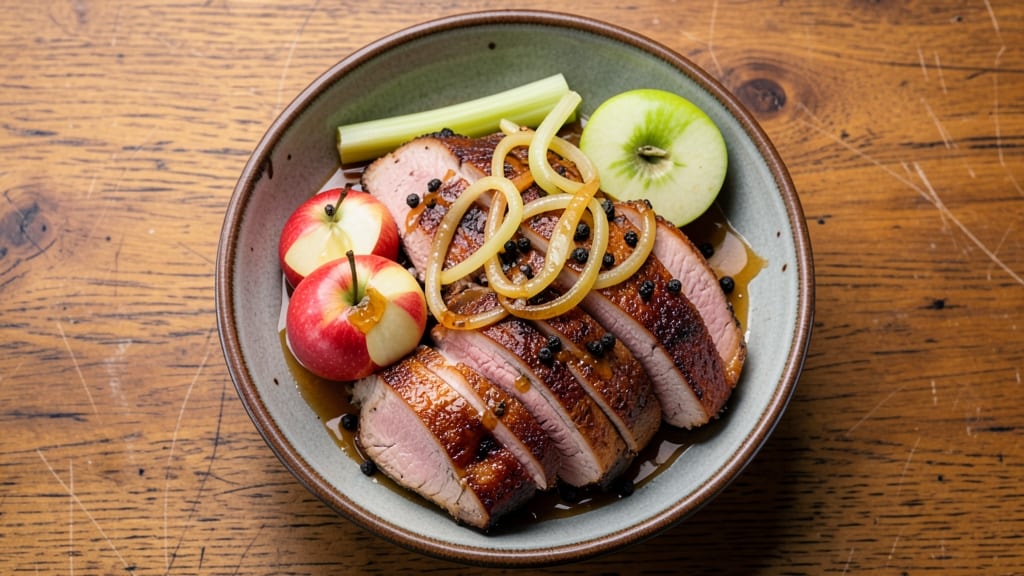
This pork shoulder and apples recipe transforms tough cuts into fall-off-the-bone tenderness with crisp apples and aromatic celery-pepper crunch.
After years of perfecting this technique at The Smoky Pig, I've cracked the code for balancing sweet and savory—where the apples caramelize into a sticky glaze while the pork becomes so tender it practically melts. The secret?
A slow cook that renders fat back into the meat while building layers of flavor.
What sets this recipe apart is the celery-pepper mix that forms the flavor base—a technique I learned from Master Chef Chen. The celery adds bright crunch while the black pepper creates depth, cutting through the richness of the pork.
We're talking about a foolproof method that delivers restaurant-quality results without requiring a smoker or special equipment, just a Dutch oven and patience. The apples—firm varieties like Honeycrisp or Granny Smith—hold their shape while caramelizing into sweet pockets that contrast perfectly with the savory pork.
By the time you're done, you'll have a dish that's rich, aromatic, and packed with texture—juicy pork that shreds effortlessly, crisp-tender apples, and a sauce that's perfect for basting or serving alongside.
This is the kind of meal that makes Sunday dinners feel special, whether you're feeding a crowd or treating yourself to a hearty solo dinner. The leftovers? Even better the next day, when the flavors deepen and the pork becomes impossibly tender.
Serve with creamy mashed potatoes or crusty bread to soak up every last bit of that caramelized apple-pork sauce. This recipe proves that comfort food can be both impressive and approachable—no fancy techniques required, just time and attention to detail. Let's get cooking!
Ingredients for pork shoulder apple
Six ingredients transform pork shoulder into restaurant-quality tenderness with caramelized apples and aromatic celery-pepper base.
| Ingredient | Amount | Notes |
|---|---|---|
| Pork Shoulder 🥩 | 4 lb | Bone-in, well-marbled cut preferred |
| Honeycrisp Apples 🍎 | 3 whole | Firm, unpeeled, cored, sliced |
| Celery Stalk 🧅 | 3 whole | Diced, with leaves reserved |
| Black Peppercorns 🌶️ | 2 tbsp | Freshly cracked, coarse grind |
| Granny Smith Apples 🍎 | 2 whole | Firm, unpeeled, cored, sliced |
| Yellow Onion 🧅 | 1 whole | Large, peeled, sliced |
| Garlic Cloves 🧄 | 6 cloves | Peeled, smashed |
| Fresh Thyme 🌿 | 2 sprigs | Stems removed, leaves only |
| Kosher Salt 🧂 | 1 ½ tbsp | Diamond Crystal preferred |
| Apple Cider Vinegar 🍏 | ¼ cup | Unfiltered for depth |
| Brown Sugar 🍚 | ½ cup | Packed, light variety |
| Mustard Seeds 🌶️ | 1 tsp | Whole, toasted |
| Bay Leaves 🍃 | 2 whole | Dried, standard size |
| Extra-Virgin Olive Oil 🫒 | ½ cup | For basting, fruity variety |
The pork shoulder is non-negotiable—bone-in, well-marbled cuts deliver maximum flavor and moisture. Costco and Whole Foods carry excellent options, but any reputable butcher will have a premium cut. Look for good marbling (white fat flecks) and ask for a 4-5 lb shoulder. The apples—Honeycrisp and Granny Smith—are essential for texture contrast; Honeycrisp caramelizes beautifully while Granny Smith adds tartness. Celery and thyme from the produce section (not pre-cut) ensure maximum freshness, and Penzeys carries excellent whole spices if you prefer to toast your own mustard seeds.
No Honeycrisp? Fuji or Pink Lady work well as substitutes, though texture will differ slightly. Short on celery? Substitute with fennel bulb at the same quantity—it adds an anise note that complements pork beautifully. The apple cider vinegar can be swapped for red wine vinegar, but the acidity level will vary slightly. Mustard seeds can be omitted entirely if you dislike their bite, though they add subtle depth. For a smokier profile, add 1 tsp smoked paprika to the peppercorns. The bay leaves are crucial—they infuse subtle earthiness that balances the sweetness.
Pork shoulder keeps 3-4 days in the fridge before cooking, but it's best used within 2 days for peak tenderness. Apples should be stored in the crisper drawer until ready to slice—cut them just before adding to the Dutch oven to prevent browning. The finished dish reheats beautifully; store in an airtight container with the juices for up to 5 days. For longer storage, freeze portions in 1-cup containers—they thaw perfectly for quick meals. The caramelized apples make excellent sandwich fillings or topping for pancakes after the main dish.
Why You'll Love This Recipe
- One-Pan Magic: I swear by this recipe when I’m too tired to wash extra dishes. Toss the pork shoulder, chopped apples, and celery on a sheet pan with peppercorns, roast it all together, and boom—done. That crispy apple caramel clinging to the meat? Zero effort, maximum flavor.
- Sweet-Savory Balance: The Honeycrisp and Granny Smith apples add a tangy crunch that cuts through the richness of the pork. Honestly, the peppercorns give it a subtle kick that makes this dish feel fancy without trying too hard. It’s the kind of flavor combo that makes you pause mid-bite.
- Weeknight to Weekend: Between us, this is my go-to for game day, potlucks, or lazy Sundays. The leftovers reheat like a dream—just pop them in the oven, and they taste even better the next day. Plus, it’s hearty enough for a crowd but simple enough for two.
- Budget-Friendly Feast: Pork shoulder is my secret weapon for stretching meals without breaking the bank. Apples and celery bulk it up, so you’re feeding a family for less than takeout. I’ll be real: my grocery bill thanks me every time I make this.
Step-by-step instructions for pork shoulder with apples
Transform tough pork shoulder into melt-in-your-mouth perfection with this method.
Prepare the Pork Shoulder and Seasoning
Remove the pork shoulder from the refrigerator and let it sit at room temperature for 1 hour to ensure even cooking. Pat the surface dry with paper towels—this step is crucial for developing a flavorful crust. In a small bowl, combine the 1.5 tbsp kosher salt, 2 tbsp black peppercorns, 1 tsp mustard seeds, and 2 sprigs fresh thyme. Rub this mixture generously over the pork, pressing it into the meat so it adheres well. The coarse grind of the peppercorns will add texture, while the thyme and mustard seeds infuse subtle depth.
Place the seasoned pork shoulder fat-side up in a roasting pan. The fat cap will render down during cooking, basting the meat and creating a rich sauce. Preheat your oven to 300°F—this low temperature ensures tender results without drying out the meat.
Sear the Pork and Build the Apple-Celery Mixture
Heat a large oven-safe skillet over medium-high heat until hot. Add the 0.5 cup extra-virgin olive oil and swirl to coat the bottom. Place the pork shoulder in the skillet, fat-side down, and sear for 5 minutes until deeply golden brown. Flip and sear the other side for another 5 minutes. Transfer the skillet to the preheated oven and continue roasting for 2 hours, basting the pork with its own rendered fat every 30 minutes.
While the pork roasts, prepare the apple-celery mixture. In a large bowl, combine the 3 whole celery stalks (diced), 1 whole yellow onion (sliced), 6 cloves garlic (smashed), 3 whole Honeycrisp apples (sliced), and 2 whole Granny Smith apples (sliced). Drizzle with 0.25 cup apple cider vinegar and toss to coat. The tartness of the vinegar balances the sweetness of the apples, while the celery adds a satisfying crunch.
Add the Apple-Celery Mixture and Caramelize
After 2 hours of roasting, remove the pork shoulder from the oven and increase the temperature to 350°F. Add the apple-celery mixture to the roasting pan, spreading it evenly over the pork. Sprinkle the 0.5 cup brown sugar and 2 whole bay leaves over the top. Return the pan to the oven and continue roasting for another 1.5 hours, basting the pork and apples every 30 minutes. The sugar will caramelize, creating a glossy glaze that enhances the natural sweetness of the apples.
You’ll know the pork is tender when it reaches an internal temperature of 203°F and a probe slides in easily. The apples should be soft but still hold their shape, with a deep golden color from the caramelization. The celery will be tender-crisp, adding texture contrast to each bite.
Rest and Serve
Transfer the pork shoulder to a cutting board and tent loosely with foil. Let it rest for 30 minutes before slicing—this allows the juices to redistribute, ensuring every bite is moist and flavorful. The apples and celery can be served directly from the roasting pan, spooned over the sliced pork or served alongside as a tangy, caramelized side.
Slice the pork shoulder against the grain into ¼-inch thick pieces. Each slice should be fork-tender with a crispy exterior, while the apples and celery add a sweet, crunchy contrast. Serve immediately with the caramelized juices from the pan spooned over the top for maximum flavor impact.
Pro Tips For Making Pork Shoulder Apple
- CRANK THE HEAT FIRST: Throw that pork shoulder in a screaming-hot pan for 3-4 minutes per side before adding anything. I used to skip this, and my apples ended up mushy instead of caramelized—high heat seals the meat and gets it browned fast, which builds flavor. (Yes, even if you're impatient like me.)
- COARSELY GRATE THE APPLES: Skip the peeler—roughly grate the Granny Smith and Honeycrisp with the large holes of a box grater. The texture stays chunky but releases juices better, and you avoid the sad, watery pulp that happens when you dice too fine. Pro move: Toss the grated apples with a pinch of salt right away to draw out moisture.
- DON’T SKIP THE PEPPERCORN CRUSH: Crack those black peppercorns with the flat side of a knife before tossing them in—whole ones just sit there like decorative rocks. A quick smash releases their oils and peppery punch, which actually cuts through the sweetness of the apples. (I learned this the hard way after serving a dish where the pepper was invisible.)
- USE THE CELESTIAL STALK: Save the stringy core from the celery stalk—it’s the secret binder. Finely chop it and toss it into the pan with the onions (if using) or directly with the pork. It thickens the sauce naturally and adds a subtle earthiness that balances the apples. (Sounds weird, but it works—trust me.)
Serving suggestions for pork shoulder apple
Classic Comfort Sides
This dish practically begs for creamy mashed potatoes—I make mine with Yukon Gold potatoes and ½ cup sour cream per pound of potatoes, then fold in 2 tbsp butter and a pinch of salt.
The richness of the potatoes soaks up the caramelized apple-pork juices beautifully. For a lighter option, try sautéed garlic green beans with 1 tbsp toasted almonds—the crunch contrasts perfectly with the tender pork. 🥔
Bread Pairings
Nothing beats warm, crusty bread for sopping up those delicious apple-pork juices. I love using homemade sourdough or a brioche roll from my local bakery.
For a Southern touch, serve with cornbread—I make mine with 1 cup cornmeal, 1 cup buttermilk, and a hint of brown sugar. The slight sweetness complements the savory pork beautifully.
Fresh Salad Balance
A crisp apple salad cuts through the richness of the pork. I toss mixed greens with thinly sliced Granny Smith apples, crumbled blue cheese, and a light vinaigrette of apple cider vinegar and honey.
The tartness of the apples and cheese balances the sweetness of the caramelized version in the main dish.
Dipping Sauces
For extra flavor, serve with a side of apple chutney or spicy mustard sauce. I make a quick chutney by simmering 1 cup diced apples, 2 tbsp apple cider vinegar, 1 tbsp brown sugar, and a pinch of cayenne for 10 minutes.
The tangy-sweet sauce elevates every bite of pork. A classic Dijon mustard sauce with a splash of apple cider also works wonderfully.
Dessert Pairings
Finish the meal with a simple warm apple crisp—use the leftover apple peels and cores to make the topping! I combine 1 cup rolled oats, ½ cup flour, ½ cup brown sugar, and ½ cup cold butter for the topping.
The flavors will feel like a cozy hug after the hearty main course. 🍏
Leftovers Reinvented
Transform leftovers into pork and apple sandwiches—pile shredded pork on a toasted brioche bun with extra caramelized apples, sharp cheddar cheese, and a drizzle of honey mustard.
For a quick breakfast, serve with scrambled eggs and a side of roasted potatoes**. The flavors are just as delicious the next day!
Nutrition facts
Frequently asked questions
Can I use frozen apples instead of fresh?
Fresh apples are ideal for this recipe because they caramelize beautifully and hold their texture. However, if you must use frozen apples, thaw them completely first and pat them dry to prevent excess moisture in the pan. The texture will be slightly softer than fresh, but the flavor will still shine.
How do I know when the pork shoulder is fully cooked?
Use a meat thermometer to check the internal temperature—it should reach 203°F at its thickest part. The pork should also feel tender when you press it gently with tongs. If it's still slightly firm, return it to the oven for another 15-20 minutes. Never rely on color alone!
What if I don't have a Dutch oven?
No problem! Use a heavy oven-safe skillet or a roasting pan with a lid. If you don't have a lid, cover tightly with aluminum foil to trap moisture. The key is keeping the heat low and even—300°F is perfect for tender results. Just be prepared for slightly more basting during cooking.
Can I make this recipe in a slow cooker?
Brown the pork first in a skillet, then transfer it to your slow cooker with all the apple-celery mixture. Cook on low for 8 hours or high for 5-6 hours. The slow cooker will create an even more tender result with rich, flavorful juices. Just add the brown sugar and bay leaves in the last 30 minutes of cooking.
Why did my apples turn mushy?
Overcooking is usually the culprit. Apples should be tender but still hold their shape—about 1.5 hours at 350°F is ideal. Start checking at 1 hour and baste frequently with the rendered pork fat. For firmer apples, use tart varieties like Granny Smith and reduce the oven temperature slightly to 325°F.