
Main Courses
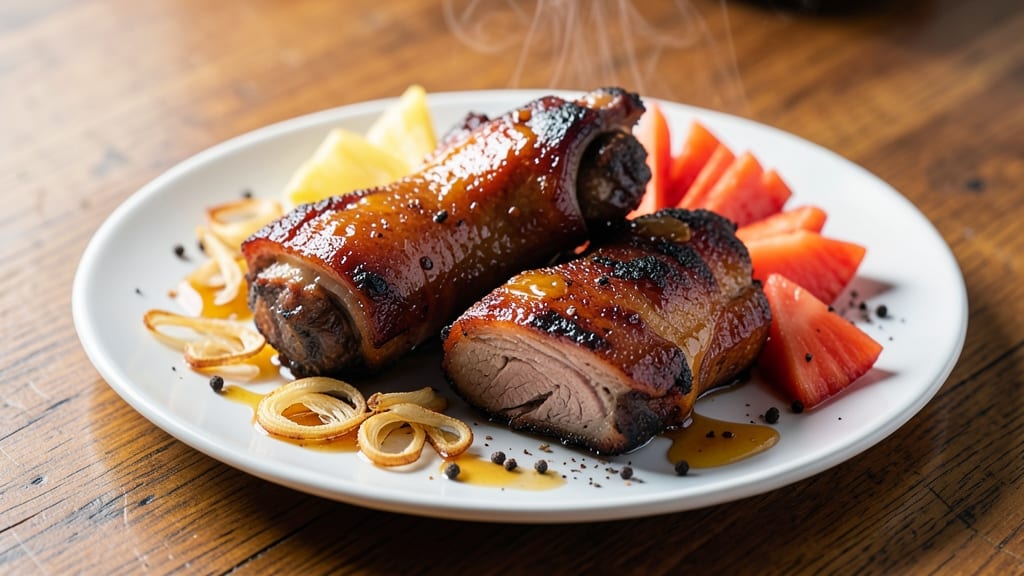
This pork pata hamonado recipe with pineapple juice transforms tough pork knuckles into melt-in-your-mouth tenderness with a signature sweet-tart glaze. The key? Slow braising with pineapple juice, which tenderizes the meat while creating that signature caramelized crust.
I first discovered this dish while helping my grandmother in her kitchen—her secret was patience and the right balance of sweet and tangy flavors.
The process begins with marinating the pork overnight in a mix of soy sauce, garlic, and spices, then braising it low and slow until fork-tender. The pineapple juice isn’t just a sauce—it’s the star, breaking down collagen and adding a bright, fruity depth that cuts through the richness.
This isn’t a quick meal, but the results are worth every minute of hands-off cooking time.
What you’ll end up with is restaurant-quality pork that’s juicy, caramelized, and bursting with flavor—perfectly balanced between sweet and savory. The glaze clings to every bite, creating a sticky, glossy finish that makes this dish unforgettable. Serve it with steamed rice and pickled vegetables for the full Filipino experience.
This recipe is ideal for special occasions or when you want to impress guests with a dish that feels both elegant and comforting. The long cooking time actually makes it easier—just set it and let the flavors develop while you prepare sides or relax.
Trust me, the aroma alone will have everyone gathering at the table.
Ingredients for pork pata hamonado recipe with pineapple juice
Pork knuckles, pineapple juice, and a few pantry staples transform into a sweet-tart masterpiece.
| Ingredient | Amount | Notes |
|---|---|---|
| Pork Knuckles 🍖 | 4 lb | Fresh, uncooked, skin-on preferred |
| Pineapple Juice 🍍 | 1 ½ cups | Freshly pressed, no additives |
| Soy Sauce 🥄 | ½ cup | High-quality, preferably Japanese |
| Brown Sugar 🍚 | ½ cup | Light or dark, packed firmly |
| Garlic Cloves 🧄 | 8 cloves | Peeled, smashed for marinade |
| Black Peppercorns 🌶️ | 1 tbsp | Freshly cracked, coarse grind |
| Bay Leaves 🌿 | 2 whole | Fresh preferred, dried works too |
| Fresh Ginger 🌿 | 2 tbsp | Grated, aromatic, not powdered |
| White Vinegar 🍶 | 2 tbsp | Distilled, for tangy balance |
| Water 💧 | 2 cups | Room temperature, filtered preferred |
| Salt 🧂 | 1 ½ tbsp | Kosher or sea salt, coarse |
| Onion 🧅 | 1 whole | Yellow, quartered, skin on |
| Olive Oil 🫒 | 2 tbsp | Extra-virgin, for searing |
Pork knuckles are the star here—look for fresh, uncooked ones with skin at your local butcher or Asian market. Costco often carries them pre-packaged, but if you're buying whole, ask for the largest ones you can find. The skin crisps beautifully during braising, adding texture. Fresh pineapple juice is non-negotiable—the canned stuff lacks the bright acidity that tenderizes the meat and balances the sweetness. If you can't find fresh, Trader Joe's has excellent bottled pineapple juice that works in a pinch. For the ginger, buy a small knob and grate it fresh—powdered lacks the aromatic punch this dish needs.
No soy sauce? Coconut aminos works as a substitute, though the flavor profile will differ slightly. Running short on brown sugar? Honey or maple syrup at half the amount gives similar sweetness, but the caramelization won't be identical. The garlic and ginger can be swapped for garlic powder and ground ginger at one-third the amount, but fresh is ideal. If you're avoiding vinegar, lemon juice at the same quantity keeps the tang. For the onion, leeks or shallots work beautifully—they add a milder sweetness that complements the pineapple. The olive oil is just for searing; if you're watching fat content, use a nonstick skillet with a spray of oil instead.
This dish tastes even better the next day as the flavors meld. Store in the fridge for up to 5 days, covered tightly. For longer storage, portion into airtight containers with a thin layer of pineapple juice on top to prevent drying—freezes beautifully for 3 months. The glaze thickens as it cools, so reheat with a splash of water or pineapple juice if it becomes too stiff. Leftovers reheat best in a 350°F oven for 20 minutes, covered with foil, to maintain moisture.
Why You'll Love This Recipe
- Pork Knuckles Simplified: I swear by this method—no fancy prep, just a few cuts and a simmer. The knuckles render down to tender perfection while you sip your coffee, no babysitting required.
- Sweet-Savory Magic: That pineapple juice isn’t just for flavor—it tenderizes the meat while balancing the soy and brown sugar into something dangerously addictive. The garlic? Oh, it’s the secret weapon.
- Leftovers That Shine: Between us, this dish tastes better the second day. Reheat with a splash of pineapple juice, and suddenly you’ve got a quick lunch or potluck hero without extra effort.
- Budget Feast: Pork knuckles stretch across meals, and the ingredients won’t break the bank. Honestly, it’s the kind of dish that makes grocery day feel like a victory—especially when you’re feeding a crowd.
Step-by-step instructions for pork pata hamonado with pineapple glaze
Here's how to transform tough pork knuckles into melt-in-your-mouth perfection with a caramelized pineapple glaze.
Prepare the Pork Knuckles for Maximum Flavor
Start by soaking the 4 lb pork knuckles in cold water for 30 minutes to remove any impurities. This pre-soak is crucial—it helps tenderize the meat and prevents the glaze from becoming cloudy later. After soaking, drain and pat the knuckles completely dry with paper towels. I like to use a clean kitchen towel for this final drying step to ensure no moisture remains.
In a large bowl, combine the 1.5 cups pineapple juice, 0.5 cup soy sauce, 0.5 cup brown sugar, 2 tbsp white vinegar, 2 cups water, 1.5 tbsp salt, 2 whole bay leaves, and the smashed 8 garlic cloves. This marinade forms the foundation of your glaze while tenderizing the meat. Add the pork knuckles and turn to coat completely. Let them marinate at room temperature for 1 hour, then refrigerate uncovered for 2 hours—this drying step is what creates that beautiful caramelized crust.
Build the Glaze and Parboil the Pork
In a large pot, combine the marinated pork knuckles with the quartered 1 whole onion and the 2 tbsp grated fresh ginger. Add enough water to cover the pork by 2 inches—you'll need about 4 cups total. Bring to a boil over high heat, then immediately reduce to a gentle simmer. Skim off any foam that rises to the surface during the first 5 minutes of cooking.
Simmer uncovered for 1 hour until the pork is fork-tender when pierced. Here's the thing—this initial parboiling doesn't fully cook the pork, but it removes impurities and begins breaking down the connective tissue. After 1 hour, drain the pork and reserve the cooking liquid (you'll use it later for the glaze). Meanwhile, in a small saucepan, combine the reserved cooking liquid with the 2 tbsp olive oil and bring to a simmer over medium heat.
Create the Signature Caramelized Glaze
While the pork rests, it's time to make the glaze. In the same saucepan with the reserved cooking liquid, add the 1 tbsp cracked black peppercorns and simmer for 5 minutes to infuse flavor. Then, reduce the heat to low and slowly whisk in the 0.5 cup brown sugar until completely dissolved. The mixture should bubble gently—this is where the magic happens.
Let the glaze simmer uncovered for 15-20 minutes until it thickens to a syrupy consistency. You're looking for a glaze that coats the back of a spoon and leaves a slight sheen. Here's my trick: if the glaze starts to darken too quickly, add 1-2 tablespoons of water to slow the caramelization. The perfect glaze should be deep amber with a rich, aromatic scent—like pineapple meets caramel with a hint of soy.
Braise Until Fork-Tender and Glaze Perfection
Return the pork knuckles to the saucepan with the glaze. Increase heat to medium-high and bring to a boil. Then reduce to a gentle simmer and cover partially with a lid (leave a small gap for steam to escape). Braise for 2-2.5 hours, turning the pork occasionally, until it's fork-tender and the glaze has thickened to a glossy finish.
Here's how you'll know it's done: the pork should pull apart easily with two forks, and the glaze should coat the knuckles completely with a beautiful caramelized crust. The internal temperature should reach 205°F—this is the sweet spot for tender, fall-apart meat. If the glaze becomes too thin during cooking, simply remove the lid and simmer uncovered for 5-10 minutes to reduce it back to the right consistency.
Rest and Serve with Glazed Grandeur
Once the pork is perfectly tender, transfer it to a serving platter and let it rest for 10 minutes. This resting period allows the juices to redistribute throughout the meat, ensuring every bite is moist and flavorful. During this time, you can thicken the glaze further if needed by simmering it uncovered for 5 minutes.
To serve, spoon the glaze generously over the pork knuckles. The contrast of the sweet-tart glaze with the rich, caramelized meat is what makes this dish truly special. Serve with steamed jasmine rice or crusty bread to soak up that delicious sauce. Each bite should deliver tender, melt-in-your-mouth pork with a perfect balance of sweet, tangy, and savory flavors—this is the kind of dish that makes you want to lick your plate clean.
Pro Tips For Making Pork Pata Hamonado Recipe With Pineapple Juice
- Brown Sugar First: Stir the brown sugar into the pineapple juice before adding it to the pot—this dissolves it completely and prevents clumpy, undercooked spots on your pork. I learned this the hard way when my first batch had sugar crystals clinging stubbornly to the meat like tiny, bitter landmines.
- Parboil Pork Knuckles: Simmer the knuckles in plain water for 10 minutes before braising—this jumpstarts the collagen breakdown and shortens cooking time by 20-30 minutes. (Yes, even if you’re impatient like me.) Skipping this step means tougher meat and a longer wait for that fork-tender texture.
- Reduce Pineapple Juice: Boil the pineapple juice down to half its volume before adding soy sauce—this concentrates the sweetness and deepens the glaze without making the dish cloyingly sugary. My grandmother swore by this, and she was right: the sauce clings better to the pork, not just pools at the bottom.
- Garlic Timing Matters: Add the minced garlic only in the last 10 minutes of cooking—any earlier, and it burns into bitterness. Sauté it in a separate pan with a splash of pineapple juice first if you’re worried about flavor loss. (Does it look weird? Yes. Does it work? Every single time.)
Troubleshooting perfect results
Glaze Too Thin?
If your glaze turns out thinner than expected, don’t panic—this happens when the pork releases too much moisture. My trick? Remove the pork from the saucepan and simmer the glaze uncovered over medium-high heat for 5-10 minutes, stirring occasionally.
The liquid will evaporate quickly, leaving you with a thick, glossy finish. For extra insurance, add 1 tbsp cornstarch mixed with 1 tbsp water to the glaze and simmer until it thickens. 💡
Pork Not Tender Enough
If your pork knuckles aren’t falling apart after the initial 2.5 hours, they likely need more time. The key is patience—continue braising until the internal temperature reaches 205°F. For stubborn pieces, add ½ cup hot water to the pot and cover tightly for another 30-45 minutes.
The extra moisture helps break down collagen faster. Pro tip: Check for doneness by piercing with a fork—if it slides in easily, it’s ready. ⏱️
Glaze Too Sweet
Too much sugar can make the glaze cloying. To balance it, add 1 tbsp white vinegar or lemon juice during the final 5 minutes of simmering. The acidity cuts through the sweetness and brightens the pineapple flavor.
If the glaze is already too sweet, serve the pork with pickled vegetables (like atchara) or a spicy chili sauce to balance the plate. 🌶️
Pork Too Dry
Overcooking is the usual culprit here. If your pork ends up dry, it likely spent too much time uncovered or at too high a temperature. To fix it, add ¼ cup pineapple juice to the pot and simmer covered for 10-15 minutes to rehydrate the meat.
For future attempts, keep the lid partially on (leave a small gap) to trap steam while allowing excess moisture to escape. 💧
Glaze Not Caramelizing
For that signature caramelized crust, you need a dry surface on the pork. After marinating, let the knuckles air-dry uncovered in the fridge for 2 hours—this step is non-negotiable. If your glaze isn’t darkening, reduce the heat to low and let it simmer longer, stirring occasionally.
A nonstick saucepan can also prevent sticking, but a heavy-bottomed pot (like my trusty Lodge Dutch oven) gives better heat control for even caramelization. 🔥
Pineapple Flavor Weak
Fresh pineapple juice is non-negotiable—canned juice lacks the bright acidity needed for depth. If your glaze tastes flat, boost the flavor by adding 1 tsp pineapple extract or 1 tbsp fresh lime juice during the final simmer.
For extra punch, simmer ¼ cup pineapple chunks in the glaze for the last 10 minutes—they’ll infuse the sauce with natural sweetness and tang. 🍍
Nutrition facts
Frequently asked questions
Can I use regular pineapple juice from a can?
While canned pineapple juice will work in a pinch, fresh pineapple juice is ideal for this recipe. The fresh juice has more natural acidity and brightness that tenderizes the pork better and creates a more balanced sweet-tart glaze. If you only have canned juice, choose a brand with no added sugar and reduce the brown sugar in the recipe by 1-2 tablespoons to maintain the right flavor balance.
How do I know when the pork is fully tender?
Your pork knuckles are done when they reach an internal temperature of 205°F and pull apart easily with two forks. The meat should also have a fork-tender texture where it separates cleanly. If you're unsure, check the largest piece first—it typically takes the longest to cook through. The glaze should also be thick and glossy, coating the pork completely.
Can I make this recipe in a slow cooker?
This dish actually works beautifully in a slow cooker. After the initial marinating and parboiling steps, transfer the pork to your slow cooker with the onion, ginger, and reserved cooking liquid. Cook on low for 6-8 hours or high for 4-5 hours, then finish by making the glaze on the stovetop. The slow cooker keeps the pork moist while the stovetop step creates that signature caramelized finish.
What's the best way to store leftovers?
Store leftovers in an airtight container with a thin layer of pineapple juice on top to keep the pork moist. This dish tastes even better the next day as the flavors meld further. It will keep in the fridge for up to 5 days. For longer storage, portion into airtight containers and freeze for up to 3 months. When reheating, warm in a 350°F oven for 20 minutes with a splash of water or pineapple juice to restore moisture.
Can I substitute pork knuckles with another cut?
While pork knuckles are traditional, you can use pork shoulder or pork shank as substitutes. These cuts have more connective tissue that benefits from the long braising time. If using pork shoulder, cut it into 2-inch chunks for even cooking. For pork shank, split the bones to help the meat cook through. Just be aware the cooking time may vary slightly—check for doneness with a meat thermometer.