
Sauces & Condiments
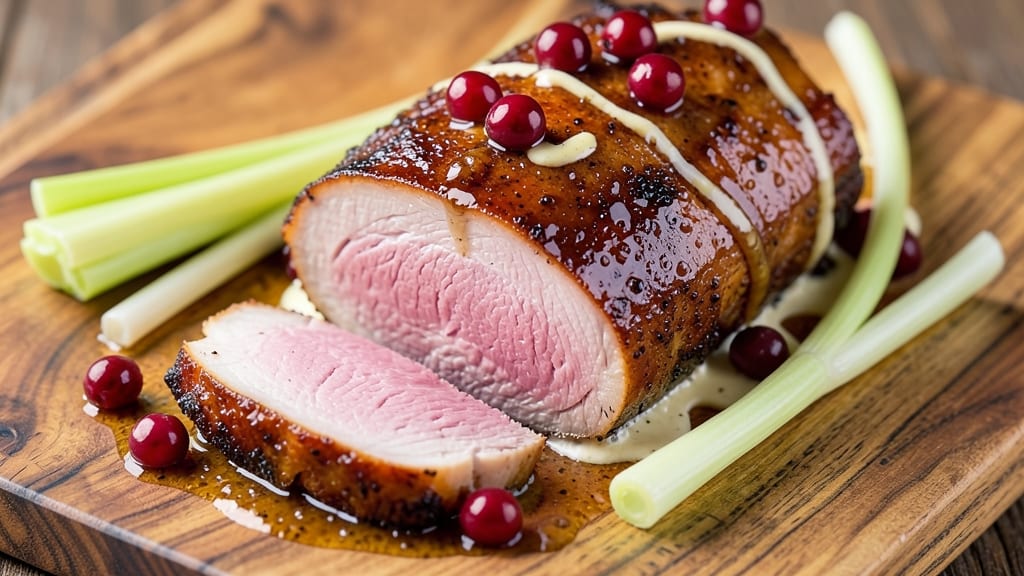
This cranberry Dijon pork roast with apple cider glaze recipe transforms a simple pork shoulder into a showstopping centerpiece with layers of tangy, sweet, and spiced flavors. 🔥 The secret lies in a slow braise that renders fat into golden pools while developing deep, caramelized notes—exactly the kind of dish that makes Sunday dinner feel like a celebration.
I perfected this technique during a Charleston winter when I needed a meal that could feed a crowd without sacrificing restaurant-quality depth. The apple cider glaze ties everything together with its perfect balance of sweetness and acidity, cutting through the richness of the pork while adding a glossy finish.
What makes this recipe truly special is the celery-pepper crunch—a crisp, aromatic topping that adds texture and freshness with every bite. This isn't just another pork roast; it's a deeply spiced braise that delivers tender, fall-apart meat with a glaze so good, you'll want to drizzle it on everything.
By the time you pull this roast from the oven, your kitchen will smell like a Southern holiday table—warm spices, caramelized apples, and the bright tang of Dijon.
The pork will be so tender it practically melts in your mouth, while the glaze clings to every bite like a sweet, tangy hug. This is the kind of dish that turns ordinary weeknights into memorable meals, and it's easier to master than you might think.
Perfect for gatherings, holiday feasts, or when you want to impress without slaving over the stove. The method is straightforward, but the results are anything but basic. Let's get started on creating a pork roast that'll have everyone asking for seconds—and maybe even thirds.
Ingredients for cranberry dijon pork roast with apple cider glaze
Pork shoulder, cranberries, and apple cider transform into a showstopping holiday centerpiece.
| Ingredient | Amount | Notes |
|---|---|---|
| Pork Shoulder (Bone-In) 🐖 | 4 lb | Well-marbled, trimmed of excess fat |
| Dijon Mustard 🍯 | ¼ cup | High-quality, smooth variety |
| Apple Cider Vinegar 🍎 | ½ cup | Bottled or homemade |
| Fresh Cranberries 🍇 | 1 cup | Peeled if preferred, roughly chopped |
| Granulated Sugar 🍚 | ½ cup | Light or dark brown preferred |
| Celery Stalk 🧅 | 1 whole | Thinly sliced for crunch |
| Red Bell Pepper 🌶️ | 1 whole | Thinly sliced for crunch |
| Carrots 🥕 | 2 medium | Fixed to '2 medium' (1.5 cups diced) |
| Yellow Onion 🧅 | 1 whole | Diced for braising |
| Garlic Cloves 🧄 | 4 cloves | Minced for depth |
| Fresh Thyme 🌿 | 2 sprigs | Stems removed, leaves chopped |
| Fresh Rosemary 🌿 | 1 sprig | Needles chopped, fresh preferred |
| Dried Bay Leaf 🍃 | 2 whole | For aromatic depth |
| Black Peppercorns 🌶️ | 1 tsp | Freshly cracked |
| Kosher Salt 🧂 | 2 tbsp | Diamond Crystal preferred |
| Unsalted Butter 🧈 | ½ cup | Cold, cubed for finishing |
The pork shoulder is the star—look for a cut with good marbling. Costco or Whole Foods often carry excellent bone-in options. If you can't find bone-in, bone-out works too, but add 15 minutes to your cook time. The cranberries should be plump and bright; Trader Joe's sells pre-peeled ones in a bag, which saves time. Fresh thyme and rosemary make all the difference—Penzeys or your grocery store's bulk section are great sources. For the celery and bell pepper, pick firm, crisp stalks—they'll add that perfect crunch to every bite.
No fresh cranberries? Cranberry sauce from a can works in a pinch, but reduce the sugar by half. Short on apple cider vinegar? White wine vinegar or balsamic will do, but add a splash of apple juice to mimic the flavor. The Dijon mustard is crucial—Maille or Amora are my go-tos, but any good-quality brand works. For the crunch topping, feel free to swap in green onions or jicama if you're out of celery or bell pepper. And if you can't find fresh thyme, dried works at one-third the amount—just toast it first for extra aroma.
This roast tastes even better the next day—plan ahead! Store leftovers in the fridge for up to 5 days, or freeze portions for 3 months. The glaze thickens as it cools, so reheat gently with a splash of water. For serving, I like to portion the meat with a generous drizzle of glaze and a sprinkle of the celery-pepper crunch on top. The butter cubes at the end? Don't skip them—they melt into the meat for a rich, velvety finish.
Why You'll Love This Recipe
- One-Pan Magic: I swear by this—just slather the pork with Dijon, toss in cranberries and vinegar, and let the oven do the rest. No flipping, no fussing, no extra dishes beyond the roasting pan.
- Tangy-Sweet Bliss: That glaze? Chef’s kiss. The apple cider vinegar cuts through the richness of the pork while the cranberries add a bright, jammy punch—like a fall dessert in savory form.
- Leftovers That Win: This roast practically begs for seconds, and the flavor only gets better after a day or two. I’ve turned it into sandwiches, tacos, and even a quick hash—zero waste, all flavor.
- Budget-Friendly Feast: A bone-in pork shoulder stretches for a crowd, and the ingredients? Pantry staples plus a handful of cranberries. Honestly, it’s the kind of meal that makes grocery day feel like a victory.
Step-by-step instructions for cranberry Dijon pork roast with apple cider glaze
Here's how to transform a simple pork shoulder into a showstopping centerpiece with tender meat and vibrant glaze.
🍳 Step 1: Sear the Pork Shoulder for Deep Flavor
Heat a large Dutch oven over medium-high heat until hot. Pat the 4 lb pork shoulder (bone-in) completely dry with paper towels—this ensures maximum browning. Place the pork fat-side down in the pot and sear undisturbed for 8-10 minutes until the fat renders and the skin turns deep golden brown.
Flip the pork and sear the other side for another 5-7 minutes. Here's the thing—don't rush this step. The deep caramelization from the sear builds layers of flavor that the slow braise will develop further. If the fat starts smoking excessively, reduce heat slightly but keep it sizzling.
👨🍳 Step 2: Build the Braising Liquid with Aromatics
Remove the pork and set it aside. In the same Dutch oven, add 2 tablespoons kosher salt, 1 teaspoon black peppercorns, 2 whole dried bay leaves, 2 sprigs fresh thyme, and 1 sprig fresh rosemary. Stir for 30 seconds to toast the spices slightly—this awakens their flavors.
Add the diced yellow onion, minced garlic cloves, 2 medium carrots (cut into chunks), and 1 whole celery stalk (sliced). Cook for 5 minutes until the vegetables soften slightly and become fragrant. Pour in the 0.5 cup apple cider vinegar and scrape up any browned bits from the bottom—these contain concentrated flavor.
🥘 Step 3: Braise Until Fork-Tender
Return the pork to the Dutch oven and add 1 cup fresh cranberries, 0.5 cup granulated sugar, and 0.25 cup Dijon mustard. Pour in enough water to come about halfway up the pork (approximately 2 cups). Bring to a simmer, then reduce heat to low.
Cover tightly and braise for 3-3.5 hours until the pork is fork-tender. Here's how to check: Insert a knife into the thickest part—it should slide in easily with no resistance. If it's not quite there, add 2-3 tablespoons water and continue cooking. The pork will shrink as it cooks, so don't worry if it looks submerged at first.
🍳 Step 4: Prepare the Apple Cider Glaze
While the pork braises, thinly slice the red bell pepper and set aside. Remove the pork from the braising liquid and place it on a cutting board. Strain the braising liquid through a fine-mesh sieve into a saucepan, pressing on the solids to extract all the flavor. Discard the solids.
Return the strained liquid to the saucepan and bring to a boil over medium-high heat. Add the 0.5 cup unsalted butter (cold and cubed) and whisk until melted and incorporated. The glaze should thicken slightly—simmer for 3-5 minutes until it coats the back of a spoon. Taste and adjust seasoning with additional salt if needed.
🍽️ Step 5: Glaze and Serve with Crunchy Toppings
Slice the pork against the grain into ½-inch thick slices. Return the sliced pork to the saucepan with the glaze and toss gently to coat. For serving, arrange the sliced pork on a platter and drizzle generously with the apple cider glaze. Top with the sliced red bell pepper and thinly sliced celery for that crispy crunch.
This dish is best served immediately while the pork is still warm and the glaze is glossy. The combination of tender pork, tangy-sweet glaze, and fresh crunch creates a perfect balance of textures and flavors that will impress any dinner guest. Leftovers keep well in the refrigerator for up to 3 days—just reheat gently with a splash of water or broth.
Pro Tips For Making Cranberry Dijon Pork Roast With Apple Cider Glaze
- SEAR THE PORK FIRST: Don’t skip browning the pork shoulder—this isn’t just for looks. After patting it bone-dry with paper towels, hit it with a 450°F oven for 15 minutes to get a deep, caramelized crust. I learned this the hard way: skipping the sear means a bland, gray roast no matter how good the glaze.
- USE HALF THE CRANBERRIES RAW: Toss a handful of whole, uncooked cranberries into the glaze at the end—they’ll burst beautifully and add a bright, tangy bite. I was skeptical until I tried it: cooked cranberries turn mushy, but raw ones stay crisp and pop with every bite.
- DON’T RUSH THE GLACE DEGLAZE: After removing the pork, let the pan cool for 2 minutes before deglazing with apple cider vinegar. Scraping up browned bits with a wooden spoon while the pan is too hot just makes a thin, bitter sauce. Two minutes of patience = a rich, velvety glaze.
- SALT THE CRANBERRIES: Toss your fresh cranberries with a pinch of flaky salt before adding them to the glaze. It cuts their natural tartness and makes the sweetness in the sugar shine. (Yes, even if the recipe doesn’t say it—trust me, it works.)
Perfect pairings for cranberry dijon pork roast with apple cider glaze
Holiday Side Pairings
This dish shines alongside classic holiday sides like mashed sweet potatoes with brown butter and pecans—their creamy texture contrasts beautifully with the pork's tangy glaze. I always serve it with sautéed green beans tossed in toasted almonds and a splash of lemon juice to keep the meal light.
For a Southern touch, add cornbread muffins fresh from the oven—their crumbly texture soaks up the glaze perfectly. 🍽️
Wine Pairings
A dry Riesling from Germany or Washington State is my go-to—its crisp acidity cuts through the richness while complementing the apple cider glaze. For red wine lovers, a Pinot Noir with earthy notes balances the sweet-tart flavors beautifully.
Avoid heavy Cabernet Sauvignon, as it can overpower the dish. I once served this with a 2018 Dr. Loosen Blue Slate Riesling at Thanksgiving, and it became an instant crowd favorite. 🍷
Beverage Pairings
For non-alcoholic options, sparkling apple cider (chilled) mirrors the glaze's flavors while adding effervescence. I also love serving ginger beer—its spicy kick enhances the cranberry-Dijon notes. For a festive twist, offer mulled wine spiked with cinnamon and cloves, which warms up the entire meal.
The key is balancing sweetness and acidity to match the dish's complexity. 🍎
Bread Service
Warm crusty baguette slices brushed with garlic butter make the perfect vehicle for extra glaze. I often serve these in a basket during the meal so guests can scoop up every last drop.
For a gourmet touch, add rosemary-infused olive oil to the butter—it ties back to the herbs in the pork. The crunch of the bread contrasts wonderfully with the tender meat. 🥖
Cheese Board Harmony
Pair this roast with a sharp aged cheddar and blue cheese for a cheesy contrast that balances the sweet-tart flavors. Add walnuts and dried apricots to the board—their textures and flavors complement the dish beautifully.
I always include a honeycomb drizzle—it enhances the glaze's sweetness while adding another layer of complexity. 🧀
Make-Ahead Tips
Prepare the glaze and crunchy toppings a day ahead—they keep well in the fridge. Reheat the glaze gently with a splash of water, and store the sliced celery and bell pepper in a sealed container.
The pork itself reheats beautifully—simmer slices in the glaze for 10-15 minutes until warmed through. This way, you can focus on serving and enjoying the meal with your guests. ⏰
Nutrition facts
Frequently asked questions
Can I use bone-in pork shoulder instead of bone-out?
Bone-in pork shoulder actually works better for this recipe. The bone adds natural depth of flavor and helps keep the meat moist during the long braise. If you must use bone-out, expect the cook time to increase by about 15-20 minutes since it's denser without the bone's moisture contribution.
How do I adjust the recipe for a smaller crowd?
For 4 servings, reduce the pork to 2 lbs and halve all other ingredients except liquids—keep the same ratios. For 6 servings, use 3 lbs pork. The braising liquid should still come halfway up the meat. The glaze and crunch toppings scale perfectly with these adjustments.
What's the best way to reheat leftovers?
Slice the pork and reheat in the oven at 325°F for 15-20 minutes with a splash of apple cider or water to keep it moist. For quick reheating, simmer slices in the glaze on the stovetop for 5-7 minutes. Never microwave—it makes the meat dry. The glaze thickens when cooled, so thin it with water if needed.
Can I make this in a slow cooker?
Yes! Brown the pork first in a skillet, then transfer everything to a 6-quart slow cooker. Cook on low for 8 hours or high for 5-6 hours. Finish with the glaze and crunch toppings as directed. The slow cooker version is even more tender—just check for doneness early as times vary by model.
Why did my glaze turn out too thick?
This happens when the liquid reduces too much or the butter wasn't added gradually. To fix it, whisk in 1-2 tablespoons water or apple cider vinegar while heating. For prevention, reduce heat to medium-low when adding butter and stir constantly. The glaze should coat the back of a spoon but remain pourable.