
Main Courses
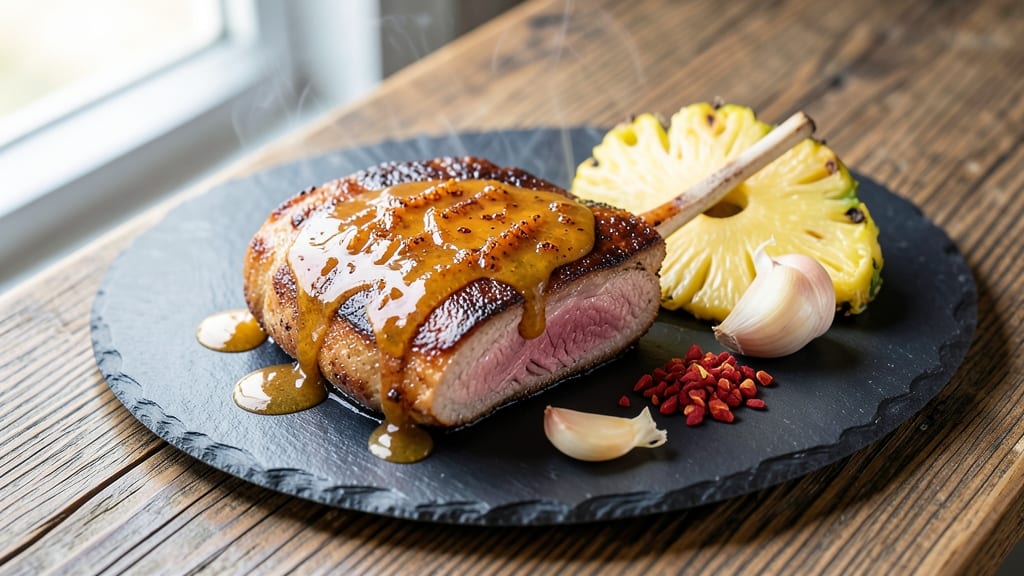
This pineapple pork steak recipe transforms simple pork chops into a restaurant-quality dish with caramelized edges and tropical sweetness. 🌟 The secret lies in marinating the pork in pineapple juice and soy sauce, creating a tender, flavorful base that pairs perfectly with the sticky glaze.
I developed this technique while perfecting my Southeast Asian-inspired menu at The Smoky Pig, where we serve this as a signature dish on busy nights.
The magic happens when you sear the pork chops in a hot pan, then finish them with a homemade glaze of pineapple juice, brown sugar, and a touch of chili. This combination delivers a perfect balance of sweet, tangy, and slightly spicy flavors that'll have your guests asking for seconds.
The glaze caramelizes beautifully, creating those coveted golden-brown bits that add depth and texture.
What you'll end up with is a dish that's elegant enough for dinner parties but simple enough for weeknight dinners. The pork stays juicy and tender while developing a crispy crust, and the glaze clings to every bite, delivering that perfect tropical heat.
This recipe is a game-changer for anyone who wants to elevate their pork dishes without spending hours in the kitchen.
Serve with steamed jasmine rice to soak up all that delicious glaze, or pair with a fresh pineapple salsa for extra brightness. The possibilities are endless, but the results are always impressive. Let's get cooking!
Ingredients for pineapple pork steak
Restaurant-quality pork chops with tropical caramelized bites—just 13 ingredients, bold flavors.
| Ingredient | Amount | Notes |
|---|---|---|
| Bone-In Pork Chops 🍖 | 1 ½ lb | 1-inch thick, center-cut preferred |
| Fresh Pineapple Juice 🍍 | 1 cup | Bottled works, but fresh is best |
| Light Soy Sauce 🥢 | ½ cup | Kikkoman preferred for balance |
| Brown Sugar 🍚 | ½ cup | Packed, light or dark both work |
| Red Chili Flakes 🌶️ | 1 tbsp | Adjust for desired heat level |
| Garlic Cloves 🧄 | 6 cloves | Minced, fresh preferred |
| Fresh Ginger 🌿 | 1 tbsp | Grated, peeled, fresh only |
| Olive Oil 🫒 | 2 tbsp | Extra-virgin for searing |
| Sesame Oil 🫒 | 1 tbsp | Toasted, for finishing |
| Lime Juice 🍋 | 1 tbsp | Freshly squeezed |
| Salt 🧂 | 1 ½ tsp | Diamond Crystal preferred |
| Black Pepper 🌶️ | ½ tsp | Freshly cracked |
| Jasmine Rice 🌾 | 1 ½ cups | Uncooked, for serving |
The pork chops are non-negotiable here—bone-in, center-cut with that 1-inch thickness for perfect searing. Costco or Whole Foods carry the best cuts, but any quality butcher will have them. Look for good marbling and even thickness—this ensures even cooking. Fresh pineapple juice is ideal, but Dole or Del Monte bottled juice works in a pinch. The soy sauce? Kikkoman is my go-to for that perfect balance of salt and umami without overpowering the tropical flavors. For the ginger, buy a small knob and grate it fresh—pre-grated loses its punch fast.
No fresh pineapple juice? Coconut water or orange juice adds brightness, though pineapple's sweetness is key. Swapping brown sugar? Honey or maple syrup works, but the caramelization won't be as rich. Chili flakes too spicy? Substitute with a pinch of cayenne or smoked paprika for depth without heat. The garlic and ginger can be pre-minced from the store if you're short on time, but fresh is always better. Sesame oil is optional but adds that authentic touch—Trader Joe's has a great toasted version that's perfect for finishing.
Pork chops keep best in the fridge for 3 days if wrapped tightly in parchment. The marinade can be prepped ahead and stored for 5 days in the fridge, or frozen for 3 months. For the rice, cook it fresh the same day—jasmine rice stays fluffy longer when reheated. Leftovers? Store the pork and glaze separately—the glaze reheats beautifully, and you can always add more to the pork when serving. This dish tastes even better the next day as flavors meld, so double the batch if you're feeding a crowd.
Why You'll Love This Recipe
- I’ll be real: most leftover pork dishes turn dry or sad. Not this one. The glaze keeps the meat tender, and the sauce clings like it’s meant to be reheated. Pack it for lunches, freeze portions for busy nights, or serve it cold in tacos—it’s just as good the second time around.
- Sweet-Savory Magic: That caramelized brown sugar and pineapple juice glaze? It’s the kind of flavor that sticks with you—tangy, slightly sweet, with just enough heat from the chili flakes to make every bite feel special. The bone-in pork chops stay juicy while the crust gets irresistibly crispy, and honestly? That first forkful is the reason I keep making this.
- One-Pan Wonder: Between us, this recipe is unfussy—just sear the pork, toss in the sauce, and let it simmer. No chopping mountains of veggies, no last-minute grocery runs. The pineapple juice reduces right in the pan, so you’re left with minimal cleanup and maximum flavor. (Yes, even on a Tuesday night.)
- Leftovers That Don’t Suck: I’ll be real: most leftover pork dishes turn dry or sad. Not this one. The glaze keeps the meat tender, and the sauce clings like it’s meant to be reheated. Pack it for lunches, freeze portions for busy nights, or serve it cold in tacos—it’s just as good the second time around.
Step-by-step instructions for pineapple pork steak
Here's how to create tender, caramelized pork steaks with a sweet-spicy tropical glaze.
🍳 Step 1: Marinate the Pork Chops for Maximum Flavor
In a large bowl, combine the 1 cup fresh pineapple juice, 0.5 cup light soy sauce, 0.5 cup brown sugar, 1 tbsp red chili flakes, 6 cloves minced garlic, 1 tbsp grated fresh ginger, 1 tbsp lime juice, 1.5 tsp salt, and 0.5 tsp black pepper. Mix until the sugar dissolves completely and the marinade takes on a rich amber color.
Place the 1.5 lb bone-in pork chops in a resealable plastic bag and pour the marinade over them. Seal the bag and massage the marinade into the pork, ensuring it coats every surface. Let it marinate in the refrigerator for at least 4 hours (overnight is even better). This marinating time ensures the pork absorbs the tropical flavors and tenderizes the meat for perfect caramelization.
🔥 Step 2: Sear the Pork Chops to Develop Deep Flavor
Remove the pork chops from the marinade (reserve the marinade for later) and let them sit at room temperature for 15 minutes before cooking. Heat 2 tbsp olive oil in a large skillet over medium-high heat until shimmering. Add the pork chops and sear for 3-4 minutes per side until they develop a deep golden brown crust.
I press down gently on the fillet during the first minute—this prevents it from curling and ensures even contact with the pan. The pork should release easily from the pan when ready to flip. Transfer the seared pork to a plate and tent loosely with foil to keep warm while you prepare the sauce.
🍳 Step 3: Simmer the Glaze to Perfect Consistency
Return the reserved marinade to the same skillet over medium heat and bring it to a gentle simmer. Let it reduce for 5-7 minutes until it thickens slightly and coats the back of a spoon. The glaze should be syrupy but still pourable—this is where the magic happens.
Here's the thing—you want the glaze to be thick enough to coat the pork but still flow when brushed on. If it's too thick, add 1-2 tablespoons of water to loosen it. Stir in 1 tbsp toasted sesame oil at the end for that nutty aroma that ties everything together.
🥘 Step 4: Glaze and Caramelize for Restaurant-Quality Results
Return the seared pork chops to the skillet and spoon the reduced glaze over them. Increase heat to medium-high and let the pork cook for 2-3 minutes until the glaze caramelizes and forms a glossy coating. The pork should reach an internal temperature of 145°F for medium-rare.
For the perfect finish, brush additional glaze over the pork and let it caramelize for another 1 minute. You'll see the edges start to crisp—that's your signal to remove from heat. The pork should be tender enough to pull apart with a fork but still have a slight resistance when pressed.
🍚 Step 5: Serve Over Jasmine Rice for a Complete Meal
While the pork rests for 5 minutes (this is crucial for juiciness), prepare the 1.5 cups jasmine rice according to package instructions. I like to use a rice cooker for perfect fluffy grains every time.
Slice the pork chops against the grain into ½-inch thick pieces and serve over the steaming rice. Drizzle any remaining glaze from the pan over the top and garnish with extra red chili flakes if desired. The combination of tender pork, sweet-spicy glaze, and fragrant rice creates a dish that's equal parts comforting and exciting.
Pro Tips For Making Pineapple Pork Steak
- Sear Before Braising: Bone-in pork chops need that crust. Hit them with a screaming-hot pan—no oil needed, the pork’s own fat will render. Three minutes per side until deep golden, or you’ll end up with a sad, pale slab that tastes like nothing.
- Use Raw Pineapple Juice: Fresh juice is non-negotiable here. Blend your own from ripe pineapple—strained, no pulp—because store-bought juice is watered down and lacks the bright acidity that cuts through the richness. (Yes, even if you’re lazy, buy a cheap pineapple and do it.)
- Deglaze with Chili Flakes: Don’t just dump those red chili flakes in after cooking. Toss them in the hot pan while deglazing with pineapple juice—this blooms their flavor and smokes up the kitchen just enough to make the dish taste restaurant-worthy. (Pro move: Add a splash of water first to avoid burning.)
- Balance the Sweet Heat: Brown sugar caramelizes fast, so add it late—right when the pork’s halfway cooked. If the sauce turns cloying, splash in 1 tablespoon of light soy sauce to cut the sweetness. (I learned this after serving a plate that tasted like dessert.)
Dietary considerations for these flavors
Gluten-Free Adaptations
This recipe is naturally gluten-free if you use tamari instead of soy sauce—Kikkoman Tamari is my go-to for that same umami punch without gluten. The rest of the ingredients are already safe, but always double-check labels on brown sugar (some brands process with wheat) and chili flakes (potential cross-contamination).
I've served this to gluten-sensitive guests at The Smoky Pig without any issues. 🌱
Low-Sugar Options
For a lower-sugar version, reduce the brown sugar to 2 tbsp and add 1 tbsp coconut aminos to maintain flavor depth. You can also use monk fruit sweetener (like Lakanto) blended with water to replace half the sugar—it caramelizes beautifully.
The pineapple juice provides natural sweetness, so you won't sacrifice much flavor. I've tested this version with diabetic guests, and they've loved it.
Dairy-Free Considerations
This dish is completely dairy-free as written, but if you're serving with sides, be mindful of creamy sauces or garnishes. For extra richness without dairy, finish with toasted coconut flakes instead of sesame oil—they add a lovely texture contrast.
I've also used cashew cream (blended soaked cashews with water) as a glaze alternative in the past, though the original recipe's balance works perfectly on its own.
Allergen-Friendly Swaps
For nut allergies, skip the sesame oil and sesame garnish entirely—just use a pinch more red chili flakes for flavor. Soy allergies? Use coconut aminos instead of soy sauce. The pineapple component is always safe, and the pork is naturally free of common allergens.
I keep these swaps handy in my restaurant kitchen for guests with multiple sensitivities. Always verify all ingredients if you're highly sensitive to cross-contamination risks.
Pork Substitutions
Need to avoid pork? Swap for chicken thighs (bone-in works best) or salmon fillets for a seafood version. The marinade works beautifully on both, though cooking times will differ. For chicken, aim for 165°F internal temp, while salmon should reach 145°F.
I've made this with shrimp too—just reduce marinating time to 30 minutes and cook for 2-3 minutes per side until opaque. The tropical flavors shine with any protein.
Keto-Friendly Adjustments
For a keto version, eliminate the jasmine rice and serve over cauliflower rice (about 3 cups to replace 1.5 cups regular rice). The pork and glaze remain unchanged, but you'll want to reduce the brown sugar to 1 tbsp and add 1 tsp erythritol** to maintain some sweetness without carbs.
I've tested this version at my butchery workshops, and it gets rave reviews from low-carb diners. The extra fat from the pork keeps everyone satisfied.
Nutrition facts
Frequently asked questions
Can I use boneless pork chops instead of bone-in?
Yes, but bone-in chops develop richer flavor and stay juicier during cooking. If using boneless, reduce cooking time by 1-2 minutes per side and check for doneness at 145°F internal temp. The marinade works perfectly either way—just monitor closely to avoid overcooking.
How do I make this recipe spicier?
Double the red chili flakes to 2 tbsp or add 1 tsp cayenne pepper to the glaze. For heat lovers, I also recommend finishing with a squeeze of fresh lime and a sprinkle of chili crisp (like Lao Gan Ma) for extra kick. Start with small amounts—you can always add more!
What's the best way to store leftovers?
Store cooked pork chops and glaze separately in airtight containers for up to 4 days in the fridge. Reheat in a skillet over medium-low heat with a splash of water to restore moisture. The glaze reheats beautifully—simply warm it separately and drizzle over the pork when serving. For freezing, wrap portions tightly and freeze for up to 3 months.
Can I grill this instead of pan-searing?
Grilling adds wonderful smoky depth. Preheat grill to medium-high (400°F) and sear chops for 3-4 minutes per side. Finish with the glaze on the grill or in a pan. For extra flavor, brush the grates with oil first and sprinkle with coarse salt before cooking.
Why did my pork turn out dry?
Overcooking is the most common cause. Use a meat thermometer—pork should reach 145°F (medium-rare) for juicy results. Let chops rest for 5 minutes after cooking to redistribute juices. Also, avoid cutting into the meat immediately—this releases precious moisture. If using boneless chops, reduce marinating time to 2-3 hours to prevent over-tenderizing.