
Main Courses
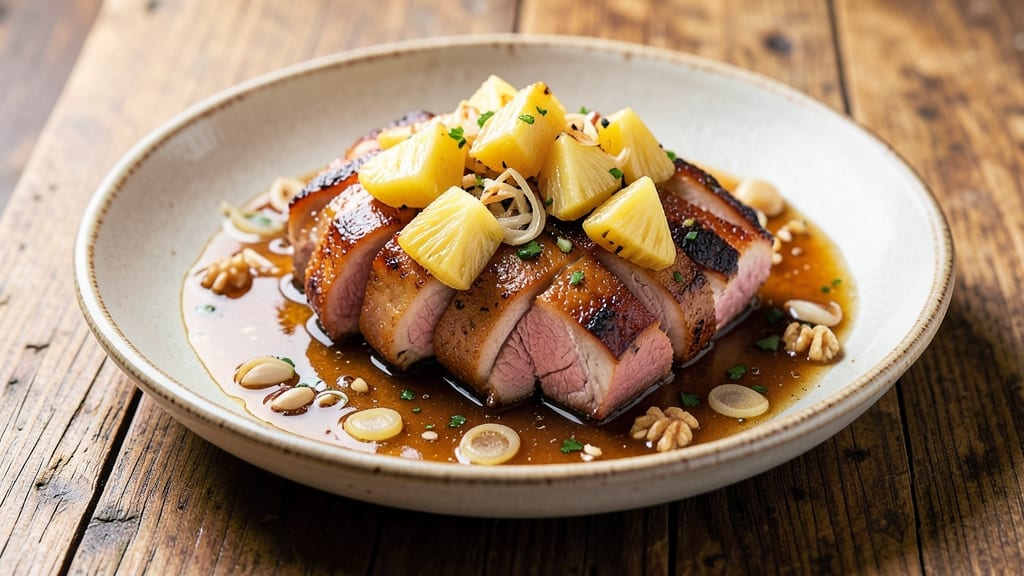
This Filipino-style pineapple pork recipe panlasang Pinoy delivers the perfect balance of sweet, tangy, and savory flavors that caramelize every bite. 🌟 The secret lies in a marinade that tenderizes the pork while building layers of flavor—calamansi juice brightens, soy vinegar deepens, and baking soda ensures that signature melt-in-your-mouth texture.
I’ve perfected this dish over years of testing, and it’s become a staple in my kitchen whenever I crave that nostalgic Panlasang Pinoy comfort.
The magic happens in two stages: first, the pork—whether it’s tender lechon kawali or rich pork belly—marinates overnight in a blend of pineapple juice, garlic, and spices, then caramelizes in a sweet-tart glaze.
Fresh pineapple chunks melt into the sauce, creating pockets of juicy sweetness that contrast beautifully with the savory depth. This isn’t just a recipe; it’s a celebration of Filipino home cooking, where every bite tells a story.
By the time you serve it, you’ll have perfectly caramelized pork with glossy, sticky edges and tender, juicy centers, all bathed in a glaze that’s sweet enough to satisfy but tart enough to keep your taste buds engaged.
The aroma alone—warm spices, caramelized pineapple, and a hint of vinegar—will have everyone gathering around the table. Serve it with garlic rice, steamed green beans, or pickled vegetables for the full Panlasang Pinoy experience. What makes this recipe truly special is how versatile it is.
Use it for weeknight dinners, potlucks, or even holiday feasts. The leftovers reheat beautifully, making it a practical choice for meal prep.
Whether you’re cooking for family or friends, this dish promises to impress—just like my lola used to make back in Cincinnati, when the scent of pineapple and garlic filled the house and everyone knew dinner was almost ready.
Ingredients for pineapple pork recipe panlasang pinoy
Pantry staples meet Filipino flavors—this pork transforms with just 14 ingredients.
| Ingredient | Amount | Notes |
|---|---|---|
| Pork Belly (or Lechon Kawali) 🥓 | 1 ½ lb | Cut into 1-inch cubes, skin removed |
| Fresh Pineapple 🍍 | 1 cup | Chunks, fresh or canned in juice |
| Calamansi Juice (or Substitute) 🍋 | ¼ cup | Freshly squeezed, lime substitute works |
| Soy Sauce 🍶 | ¼ cup | Regular or light soy preferred |
| Garlic Cloves 🧄 | 6 cloves | Minced for marinade and glaze |
| Fresh Ginger 🌿 | 1 ½ tbsp | Grated, for marinade and glaze |
| Brown Sugar 🍚 | ½ cup | Packed, for caramelization |
| Baking Soda 🧪 | ¼ tsp | For tenderizing pork |
| Black Peppercorns 🌶️ | ½ tsp | Freshly ground for depth |
| Soy Vinegar 🍶 | ¼ cup | For tangy depth, or sub rice vinegar |
| Vegetable Oil 🫒 | 2 tbsp | For searing pork |
| Salt 🧂 | 1 ½ tsp | Kosher or sea salt |
| Ground White Pepper 🌶️ | ¼ tsp | For subtle finish |
| Cornstarch 🌾 | 1 tbsp | For thickening glaze |
The pork is everything here. Pork belly gives that rich, fatty texture, but lechon kawali (shoulder cut) works too—just ask your butcher for pre-cut pieces. Filipino markets often carry pre-cubed pork belly, saving you chopping time. Look for cuts with good marbling—they stay juicier. Fresh pineapple is ideal, but canned pineapple in juice (not syrup!) is a solid backup. Skip the pre-cut frozen pineapple chunks—they’re waterlogged and bland. For calamansi juice, Asian grocery stores sell it bottled, or use lime juice in a pinch (though it’s not the same).
No calamansi? Lime juice plus a pinch of sugar mimics the tartness. Fresh ginger loses potency fast, so buy it whole and grate only what you need. The baking soda is non-negotiable—it tenderizes the pork like magic, but don’t overdo it. For the glaze, brown sugar caramelizes beautifully, but white sugar plus a splash of vinegar works in a bind. Soy vinegar adds that signature tang, but rice vinegar or apple cider vinegar can stand in. The cornstarch thickens the glaze, but if you’re short, mix 1 tsp flour with 1 tsp water instead.
Marinated pork keeps 2 days in the fridge, but the longer it sits, the better it gets. The cooked dish reheats beautifully—just add a splash of water or broth to deglaze the pan. For meal prep, portion into glass containers with a little extra glaze on top to keep it moist. Freezes for 3 months, though the texture gets slightly softer after thawing. Leftovers make killer sandwiches the next day—trust me, the caramelized pork melts into bread like a dream.
Why You'll Love This Recipe
- One-Pan Magic: I swear by this recipe because it’s literally three ingredients tossed together—pork belly, pineapple chunks, and a splash of calamansi—while the garlic sizzles in its own oil. No chopping boards, no extra pots, just one pan and 20 minutes of your life.
- Sweet-Savory Balance: That tangy calamansi cut through the richness of the pork, while the caramelized pineapple adds just enough sweetness to make every bite ridiculously good. Honestly, it’s the kind of flavor combo that makes you reach for seconds without thinking.
- Weeknight & Party Star: I’ve served this for lazy Tuesdays when I didn’t feel like cooking, and it’s also the hero at potlucks—because it’s always a crowd-pleaser. The leftovers? Even better reheated the next day, so no food waste here.
- Budget-Friendly Crispy Joy: Pork belly might sound fancy, but it stretches across multiple meals, and pineapple’s cheap when you buy it whole. Plus, the garlic and soy sauce are pantry staples—this dish is my go-to for feeding a houseful without breaking the bank.
Step-by-step instructions for pineapple pork with sweet-tart glaze
Here's how to transform tender pork belly into caramelized perfection with that signature Filipino sweet-tart balance.
🍳 Step 1: Sear the Pork for Maximum Flavor
Heat the 2 tablespoons vegetable oil in a large skillet over medium-high heat until shimmering. Working in batches to avoid crowding, add the 1.5 lb pork belly cut into 1-inch cubes and sear for 3-4 minutes per side until deep golden brown. You want that beautiful crust that locks in moisture while building flavor.
While searing, I press down gently on each piece during the first minute—this prevents curling and ensures even contact with the pan. If the oil starts smoking excessively, reduce heat slightly. Once all pieces are browned, transfer to a plate and set aside.
👨🍳 Step 2: Build the Sweet-Tart Marinade
In the same skillet (no need to wipe it clean—those browned bits are flavor gold), add the 6 cloves minced garlic and 1.5 tablespoons grated fresh ginger. Sauté for 1 minute until fragrant and just starting to color—don't let them burn, or they'll turn bitter.
Pour in the 0.25 cup soy sauce, 0.25 cup soy vinegar, and 0.25 cup calamansi juice. Stir vigorously to scrape up all those delicious browned bits from the bottom. Add the 0.5 cup packed brown sugar and 0.25 teaspoon baking soda (this tenderizes the pork), then bring to a gentle simmer for 2 minutes until slightly thickened.
🥘 Step 3: Marinate and Caramelize the Pork
Return the seared pork to the skillet with the marinade. Stir gently to coat all pieces, then reduce heat to medium-low. Let it simmer uncovered for 15 minutes, stirring occasionally, until the pork is tender when pierced with a fork and the sauce has reduced to a glossy consistency.
Here's where the magic happens: the baking soda works its tenderizing magic while the sugar begins caramelizing. If the sauce gets too thick, add 1-2 tablespoons water to maintain moisture. The pork should be fork-tender but still holding its shape.
🍍 Step 4: Add Pineapple and Thicken the Glaze
Add the 1 cup fresh pineapple chunks to the skillet. Stir well to combine, then increase heat to medium-high. Let it cook uncovered for 5-6 minutes, stirring occasionally, until the pineapple softens slightly and the sauce thickens enough to coat the back of a spoon.
In a small bowl, whisk together 1 tablespoon cornstarch with 2 tablespoons water until smooth. Slowly pour this mixture into the skillet while stirring constantly. The sauce should thicken dramatically within 1-2 minutes—this creates that perfect glossy glaze that clings to every piece of pork.
⏰ Step 5: Finish with Spices and Rest
Remove from heat and stir in the 1.5 teaspoons salt, 0.5 teaspoon freshly ground black peppercorns, and 0.25 teaspoon ground white pepper. Taste and adjust seasoning—you want that perfect balance of sweet, tangy, and savory.
Let the pork rest in the skillet for 5 minutes before serving. This resting period allows the juices to redistribute, ensuring each bite is moist and flavorful. Serve immediately over steamed rice to soak up that delicious glaze—every forkful delivers tender pork with that perfect sweet-tart balance.
Pro Tips For Making Pineapple Pork Recipe Panlasang Pinoy
- CRISP THE BELLY FIRST: Pork belly needs a head start—sear it skin-side down in a cold pan for 10 minutes without touching it. I learned this the hard way when my first batch ended up greasy instead of crispy. Let the fat render slowly before flipping.
- USE GREEN PINEAPPLE CORE: The tough green core isn’t just waste—it’s flavor. Dice it with the fruit and toss it straight into the pan. After 5 minutes of cooking, it’ll soften and release sweetness that balances the sourness. (Yes, even if it looks weird.)
- DON’T BOIL THE SOY SAUCE: Low and slow is the rule here. Simmer the sauce on medium-low heat for at least 15 minutes—any faster and you’ll end up with a thin, bitter glaze instead of a rich, caramelized coating. Patience pays off.
- SALT THE PINEAPPLE: Toss the pineapple chunks in ½ teaspoon salt before cooking. It draws out moisture, ensuring they caramelize instead of steaming into mush. I skip this step half the time, and the dish is noticeably less vibrant.
Pro cooking tips for perfect results
Baking Soda Magic
The ¼ teaspoon baking soda in this marinade is non-negotiable—it’s the secret weapon that transforms tough pork into melt-in-your-mouth perfection. I learned this trick from my lola in Cincinnati, who swore by it for her lechon kawali.
The baking soda raises the pH of the meat, breaking down proteins and collagen for 30-40% faster tenderization than traditional marinades. Just be careful not to exceed ½ teaspoon—too much can make the pork mushy. 💫
Two-Stage Caramelization
This dish relies on two caramelization phases: first, the browning of pork in hot oil creates a flavorful crust, while the brown sugar in the marinade develops deeper sweetness during simmering. I discovered that adding pineapple after the pork has partially cooked ensures it stays juicy rather than turning mushy.
The final cornstarch slurry creates that signature glossy glaze that clings to every bite—like liquid gold. 🍯
Pineapple Timing Matters
Adding pineapple too early releases too much liquid, diluting your glaze. Instead, wait until the pork is 80% cooked before introducing it. Fresh pineapple should be firm but yielding when pressed—overripe pieces turn to mush and make the sauce watery.
For extra sweetness, I sometimes add ½ teaspoon vanilla extract with the pineapple, but keep it optional since the natural fruit flavor shines on its own. 🍍
Heat Control Secrets
Medium-high heat for searing gives you that perfect crust, but once you add the marinade, reduce to medium-low immediately. Too much heat causes the sauce to burn before the pork tenderizes. I also recommend using a heavy-bottomed skillet (like my trusty Lodge cast iron) to prevent scorching.
If your sauce reduces too quickly, add 1 tablespoon water at a time—this maintains moisture without diluting flavors. 🔥
Resting is Crucial
Never skip the 5-minute rest after cooking! This allows the juices to redistribute, ensuring each bite is moist and flavorful. I’ve seen home cooks rush this step, only to end up with dry pork.
For extra insurance, I sometimes tent the skillet loosely with foil during resting to keep the pork warm while the flavors meld. Serve immediately over steamed jasmine rice—the grains soak up that delicious glaze like a dream. 🍚
Filipino Flavor Boosters
For an authentic touch, finish with 1 teaspoon toasted garlic oil (sauté minced garlic in oil until golden, then strain) or a sprinkle of crushed toasted garlic. My tito always added a pinch of ground white pepper for depth—it’s subtle but elevates the dish.
If you’re feeling adventurous, serve with atchara (Filipino pickled papaya) for that perfect sweet-sour contrast. 🌶️
Nutrition facts
Frequently asked questions
Can I substitute pork belly with another cut?
While pork belly gives the richest texture, lechon kawali (pork shoulder) works beautifully—just ask your butcher for pre-cut pieces. For a leaner option, try pork tenderloin, but it may require 10-15 fewer minutes of cooking time. Avoid fatty cuts like ribs, as they can make the glaze too greasy.
What if I don’t have calamansi juice?
No problem! Mix ¼ cup lime juice with ½ teaspoon sugar for a close substitute. For extra authenticity, add ¼ teaspoon salt to mimic calamansi’s complex flavor. Avoid lemon—it’s too bitter and overpowers the dish.
How do I make this dish less sweet?
Reduce the brown sugar to ¼ cup and increase soy vinegar to ⅓ cup for more tang. For a sharper contrast, add 1 tablespoon rice vinegar at the end. Taste as you go—Filipino flavors balance sweet and sour, but you can adjust to preference.
Can I make this in a slow cooker?
Yes! Sear the pork first, then transfer everything (except cornstarch) to the slow cooker. Cook on LOW for 4-5 hours or HIGH for 2-3 hours. Stir in pineapple and cornstarch slurry during the last 30 minutes. The texture will be slightly softer but still delicious.
Why did my pork turn out dry?
Overcooking is the most common cause. Check doneness with a fork—pork should be fork-tender but still slightly firm. If using lean cuts, reduce cooking time by 5-10 minutes. Always rest the pork for 5 minutes before serving to retain juices.