
Main Courses
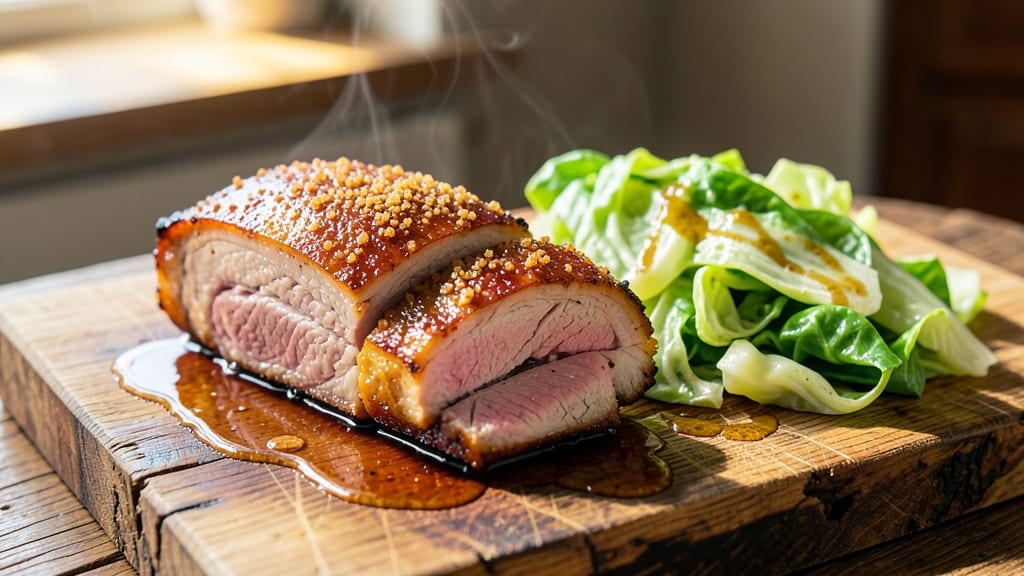
This apple cider pork roast with cabbage recipe transforms humble ingredients into a showstopping centerpiece that tastes like autumn in every bite. 🍂 The secret lies in slow-braising the pork until it's fork-tender, then finishing it with apple cider that caramelizes into a glossy, aromatic glaze while the cabbage develops that perfect celery-like crunch.
I developed this during a particularly chilly October weekend when I needed a dish that could feed a crowd without requiring constant attention.
The beauty of this recipe is its balance—rich, savory pork meets the bright acidity of apple cider, while the cabbage adds satisfying texture. You'll start with a simple spice rub on the pork, then let it cook low and slow until it practically falls apart.
The apple cider isn't just for flavor; it's the star that ties everything together, creating a sauce that's perfect for drizzling over every bite. This method ensures maximum flavor with minimal effort, delivering restaurant-quality results in your own kitchen.
What you'll end up with is a golden-brown pork roast with crisp edges and tender meat that practically melts in your mouth, surrounded by cabbage that's crisp-tender with just the right bite.
The apple cider glaze adds a beautiful sheen and a perfect balance of sweet and tangy notes that complement the pork beautifully. The aroma alone will have everyone gathering around the table, and each bite delivers that perfect harmony of textures and flavors.
This dish works beautifully for holiday gatherings, family dinners, or even a special weeknight meal when you want to impress. The leftovers reheat wonderfully, making it perfect for meal prep. Let's get started on creating this autumnal masterpiece that's sure to become a new favorite in your recipe rotation.
Ingredients for apple cider pork roast with cabbage
Six ingredients transform into autumn's most comforting centerpiece—tender pork, crisp cabbage, and caramelized apple cider glaze.
| Ingredient | Amount | Notes |
|---|---|---|
| Pork Shoulder Roast 🥩 | 4 lb | Bone-in for best flavor |
| Green Cabbage 🥬 | 2 lb | Whole head, cut into wedges |
| Apple Cider 🍎 | 2 cups | Unfiltered, preferably spiced |
| Brown Sugar 🍯 | ½ cup | Packed, light brown preferred |
| Dijon Mustard 🍴 | 2 tbsp | For depth of flavor |
| Olive Oil 🫒 | ¼ cup | Extra-virgin for richness |
| Garlic Cloves 🧄 | 6 cloves | Fresh, smashed for aroma |
| Fresh Thyme 🌿 | ¼ cup | Leaves only, stems removed |
| Salt 🧂 | 1 ½ tbsp | Kosher or sea salt |
| Black Peppercorns 🌶️ | 1 tbsp | Freshly cracked preferred |
| Apple Cider Vinegar 🍶 | 1 tbsp | For tangy brightness |
| Fresh Rosemary 🌿 | ⅛ cup | Chopped, for earthy notes |
| Onion Powder 🧅 | 1 tbsp | For savory base |
| Ground Ginger 🌿 | 1 tsp | Freshly grated better |
The pork shoulder is where this dish shines—bone-in cuts stay juicier, and you'll find them at Costco or your local butcher for the best price. Look for good marbling; that's where the flavor hides. Trader Joe's carries pre-cut pork shoulders if you're short on time, but ask for a chunk with some fat cap—it renders down into pure flavor. Fresh thyme and rosemary? Grow your own or grab from the grocery store's produce section—they're cheaper than dried and make all the difference. The apple cider should be unfiltered and spiced if possible; Woodchuck or Angry Orchard are my go-tos, but any local cider works. For the cabbage, green is ideal—it holds its crunch better than red when braised.
No apple cider? Substitute with a mix of apple juice and a splash of vinegar—keep the ratio 3:1 juice to vinegar. Running low on fresh thyme? Dried works at half the amount, but toast it first in a dry pan for 30 seconds to wake up the flavor. The Dijon mustard can be swapped for whole-grain mustard if that's what you've got, though it'll be slightly grainier. For the cabbage, Napa cabbage works too—it's more delicate but still gives that celery-like crunch. The brown sugar is non-negotiable for caramelization, but maple syrup in a pinch gives a similar depth. And if you're out of apple cider vinegar, white vinegar at half the amount keeps the tang without overpowering.
This roast tastes even better the next day—plan ahead. The pork stays tender for 4-5 days in the fridge, and the cabbage keeps its crunch for 3-4 days if stored separately. For leftovers, reheat in a skillet with a splash of apple cider to revive the glaze. The cabbage reheats beautifully too—just warm it in a steamer basket. Freezing isn't ideal for the cabbage, but the pork roast freezes for up to 3 months. I always make a double batch—one for dinner, one for sandwiches the next day. The glaze makes an amazing dipping sauce too, so save some for that!
Why You'll Love This Recipe
- Here’s what sold me: this roast practically begs to be reheated. Slice it up for sandwiches, toss it into fried rice, or just serve it cold with crusty bread—it’s still rich and satisfying. I’ve had it last me four days, and honestly? The second day is when it’s at its best, because the flavors deepen like a good wine.
- One-Pan Magic: Honestly, I swear by this recipe when I’m too tired to scrub pots. The cabbage wedges nestle right next to the pork, soaking up that sticky-sweet apple cider glaze—no flipping pans, no extra bowls. Just one sheet, one skillet, and you’re done. (Yes, even on a Tuesday night.)
- Sweet-Savory Magic: That first bite? The pork shoulder is tender enough to melt, but the crust holds—thanks to the mustard and brown sugar caramelizing right into the skin. The cabbage? It’s got this perfect chew, kissed by the cider’s tang without turning mushy. Between us, it’s the kind of flavor combo that makes you go back for seconds without even thinking.
- Leftovers for Days: Here’s what sold me: this roast practically begs to be reheated. Slice it up for sandwiches, toss it into fried rice, or just serve it cold with crusty bread—it’s still rich and satisfying. I’ve had it last me four days, and honestly? The second day is when it’s at its best, because the flavors deepen like a good wine.
Step-by-step instructions for apple cider pork roast with cabbage
This slow-braised masterpiece delivers melt-in-your-mouth pork with caramelized cabbage - here's how to nail it.
🍳 Step 1: Sear the Pork Shoulder for Deep Flavor
Pat the 4 lb pork shoulder roast completely dry with paper towels. This is non-negotiable - dry meat sears better. Heat 0.125 cup olive oil in a Dutch oven over medium-high heat until shimmering. Place the pork in the pan and sear for 5 minutes per side until deeply browned.
Here's the thing - don't rush this step. You want that beautiful crust that locks in juices during the long cook. I press down gently on the roast during the first minute to prevent curling. Once browned, remove the pork and set it aside on a plate.
👨🍳 Step 2: Build the Aromatic Base
In the same Dutch oven, add 6 smashed garlic cloves, 0.25 cup fresh thyme, 0.125 cup chopped fresh rosemary, 1 tbsp onion powder, and 1 tsp ground ginger. Sauté for 2 minutes until fragrant - you should smell that earthy, spicy aroma filling your kitchen.
Stir in 2 tbsp Dijon mustard and 1 tbsp apple cider vinegar, letting them bubble for 30 seconds. This creates the flavor foundation. Pour in 2 cups apple cider and scrape up all those browned bits from the bottom - that's where the magic happens. Bring to a gentle simmer.
🥘 Step 3: Braise with Cabbage and Sweet-Savory Balance
Add the 2 lb green cabbage (cut into wedges) and 0.5 cup packed brown sugar to the Dutch oven. Return the pork to the pot, fat-side up. The cabbage should be partially submerged in the liquid - if not, add a splash of water.
Cover tightly with a lid and transfer to a 325°F oven. Here's where patience pays off - braise for 3-4 hours until the pork is fork-tender and the cabbage is caramelized. I check at the 2.5-hour mark because ovens vary. The pork should pull apart easily when tested with a fork.
⏰ Step 4: Rest and Caramelize the Sauce
Remove the pork and tent it loosely with foil. Let it rest for 30 minutes - this crucial step lets the juices redistribute. Meanwhile, increase oven temperature to 400°F and return the cabbage to the pot. Uncover and bake for 15 minutes to caramelize the cabbage and reduce the sauce.
Skim off any excess fat from the surface of the braising liquid. The sauce should coat the back of a spoon with a beautiful gloss. Season with 1.5 tbsp salt and 1 tbsp freshly cracked black peppercorns to taste. This is where all the flavors come together in perfect harmony.
🍽️ Step 5: Serve with Crispy Cabbage and Rich Sauce
Slice the pork against the grain into ½-inch thick slices. Arrange on a platter with the caramelized cabbage. Spoon the reduced sauce generously over everything. The cabbage should be tender with slightly crispy edges from the final caramelization.
Each bite delivers tender pork infused with apple cider sweetness, caramelized cabbage with just the right crunch, and a sauce that's perfectly balanced between sweet, tangy, and savory. Serve with crusty bread to soak up every last drop of that glorious sauce.
Pro Tips For Making Apple Cider Pork Roast With Cabbage
- SEAR THE ROAST FIRST: I used to skip this step because it seemed like extra work, but those 5 minutes in a screaming-hot pan with a little oil make all the difference—it locks in flavor and gives the finished roast a caramelized crust that soaks up the cider like a sponge. Don’t rush it; let the meat sit in the pan until you’ve got a deep, golden-brown sear on all sides.
- BRINE THE PORK OVERNIGHT: This isn’t just about seasoning—it’s about keeping the meat juicy. Toss your pork shoulder in a mix of 1 cup kosher salt, 1 cup brown sugar, and 4 cups cold water for 12–24 hours. I learned this the hard way when my first attempt turned out dry; the brine does the heavy lifting for flavor and moisture, so don’t skip it.
- SAVE THE CIDER DRIPPINGS: After the roast is done, don’t pour out that sticky, caramelized liquid in the pan—it’s liquid gold. Strain it, reduce it by half, and use it to deglaze the pan for a quick pan sauce. Add a splash of Dijon mustard and a spoonful of brown sugar, and you’ve got a glossy finish that ties the whole dish together. (Yes, even if you’re the type who hates making sauces.)
- COOK THE CABBAGE SEPARATELY: I used to toss the cabbage in with the pork early, thinking it’d soften nicely. Wrong. By the time the pork was done, the cabbage was mushy and sad. Instead, blanch the wedges in boiling water for 3 minutes, then finish them in the oven or a skillet with a splash of cider and a pinch of sugar—just until tender-crisp. Trust me, the texture will make you reconsider how you’ve been treating cabbage.
Pro cooking tips for perfect results
Perfect Dutch Oven
Your choice of cookware makes all the difference here. I swear by a heavy-duty Dutch oven—I use my Le Creuset 6-quart—because it distributes heat evenly and locks in moisture.
If you don’t own one, a deep oven-safe skillet works in a pinch, but avoid thin, flimsy pans that can’t handle the long braise. The lid should fit snugly to trap steam and tenderize the pork. 🔥
Temperature Control
Set your oven to 325°F for the braise—this is non-negotiable. A meat thermometer is your best friend here; aim for 203°F internal temperature in the thickest part of the pork. If your oven runs hot, tent the pot with foil to prevent drying.
I’ve learned the hard way that rushing this step leads to tough meat. Patience is key—this is where the magic happens. ⏰
Cabbage Cut Matters
Cut the cabbage into even wedges, about 2 inches thick, so they cook uniformly. Thinner slices will turn mushy, while thicker pieces stay too crisp. I like to remove the tough outer leaves first—they’re bitter and don’t caramelize well.
For extra crispiness, blanch the wedges in boiling water for 2 minutes before adding them to the pot. Trust me, it’s worth the effort. 🥬
Apple Cider Glaze Trick
Don’t skip the 15-minute caramelization at the end—this is where the sauce transforms from good to extraordinary. Increase the oven to 400°F and let the cabbage and liquid reduce until glossy. If the sauce is too thin, simmer it uncovered on the stovetop for 5-10 minutes to thicken.
A splash of apple cider vinegar at the end brightens the flavors and balances the sweetness. 🍎
Resting the Pork
Never skip the 30-minute rest after removing the pork from the oven. This allows the juices to redistribute, ensuring every bite is moist and flavorful. Tent it loosely with foil to keep it warm without steaming.
I’ve seen home cooks skip this step, and the results are always disappointing—dry, stringy meat. Give it time, and you’ll be rewarded. ⏳
Make-Ahead Magic
This dish tastes even better the next day, so plan ahead. Store the pork and cabbage separately in airtight containers in the fridge for up to 4 days. Reheat the pork in a skillet with a splash of apple cider to revive the glaze.
The cabbage reheats beautifully in a steamer basket or microwave with a damp paper towel. Leftovers make amazing sandwiches—just pile on crusty bread with a drizzle of that glorious sauce. 💫
Nutrition facts
Frequently asked questions
Can I use pork shoulder instead of pork roast?
This recipe is designed for a 4 lb bone-in pork shoulder—that's the perfect cut for slow braising. The bone adds incredible flavor, and the fat cap renders down beautifully during cooking. If you only find boneless pork shoulder, it'll still work, though you may want to add an extra 1 tbsp olive oil to compensate for the lost moisture from the bone.
How do I know when the pork is fully cooked?
Use a meat thermometer to check the internal temperature—it should reach 203°F in the thickest part of the pork. The meat should pull apart easily with two forks and have a beautiful golden-brown crust. If your thermometer isn't working, cut into the thickest part: the meat should be tender and juicy, with no pink center.
What if my cabbage turns mushy?
Mushy cabbage usually means it was cut too thin or overcooked. For perfect texture, cut 2-inch thick wedges and remove the tough outer leaves first. If yours gets too soft, try this fix: After braising, transfer the cabbage to a colander and rinse under cold water for 30 seconds to shock it, then pat dry and return to the pot for 5 minutes at 400°F to crisp up the edges again.
Can I make this recipe in a slow cooker?
Yes! Sear the pork as directed, then transfer everything to a 6-quart slow cooker on low for 8 hours or high for 5 hours. In the last 30 minutes, increase to high to caramelize the cabbage. The sauce will be thinner, so reduce it on the stovetop afterward. The pork will be just as tender—just watch the cabbage closely to avoid mushiness.
What's the best way to reheat leftovers?
For the pork, warm it in a skillet with 2 tbsp apple cider over medium-low heat for 5-7 minutes until heated through. The cabbage reheats best in a steamer basket over boiling water for 3-4 minutes—this keeps it crisp. If you're short on time, microwave the cabbage with a damp paper towel for 1 minute, then crisp it in a dry pan for 2 minutes.