
Sauces & Condiments
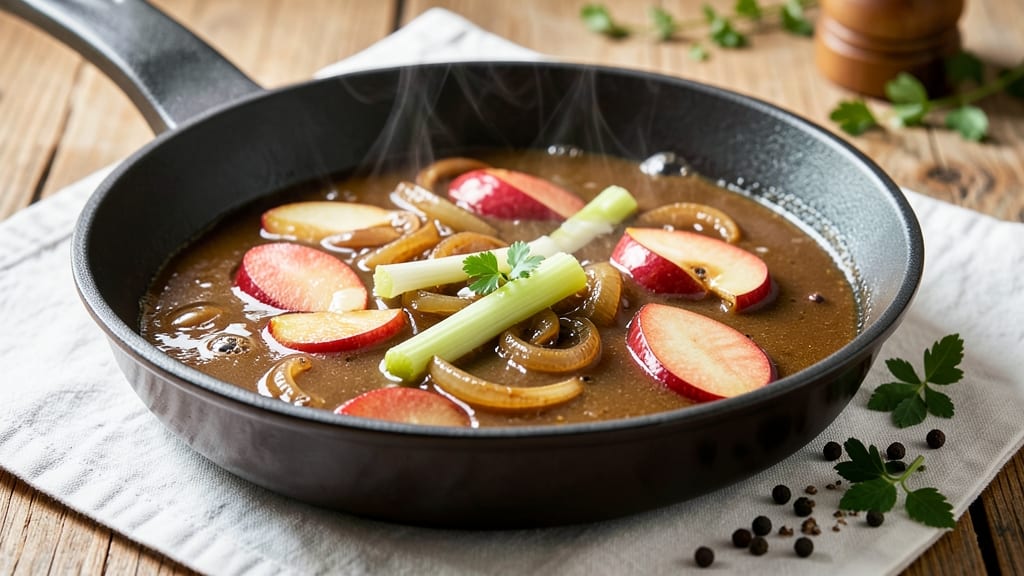
This apple and onion gravy transforms humble ingredients into a rich, slow-simmered sauce that balances sweet apple caramel with deep onion savoriness. The secret lies in reducing the mixture until it thickens into a velvety consistency—perfect for drizzling over roasted meats or mashed potatoes.
I developed this recipe after craving a gravy that felt both comforting and unexpected, and the celery-pepper crunch adds just the right texture contrast.
The process is straightforward but requires patience: onions and apples cook down into a fragrant base before blending with broth and herbs. A touch of vinegar brightens the flavors while the simmering time (about 30 minutes) ensures the sauce develops layers of complexity.
This isn’t your typical gravy—it’s a sophisticated condiment that elevates simple dishes into something memorable.
What makes this gravy special is how the sweetness of the apples mellows as they cook, creating a subtle caramel note that pairs beautifully with savory dishes. The onions provide depth, while the celery and pepper add a crisp, aromatic finish.
It’s the kind of sauce that lingers on the palate, making every bite feel like a small indulgence.
Use it to glaze roasted chicken, drizzle over creamy mashed potatoes, or serve alongside pork chops for a restaurant-worthy touch. The versatility of this gravy means it’s perfect for weeknight dinners or special occasions—just one sauce can transform an entire meal.
Ingredients for apple and onion gravy
Nine ingredients transform into a sophisticated sauce that elevates everyday dishes with sweet-savory depth.
| Ingredient | Amount | Notes |
|---|---|---|
| Yellow Onions 🧅 | 2 large | Thinly sliced for even cooking |
| Apples 🍎 | 2 medium | Sweet variety like Gala or Fuji |
| Celery Stalks 🥬 | 2 whole | Diced finely for texture |
| Black Peppercorns 🌶️ | 1 tsp | Crushed for aroma infusion |
| White Wine Vinegar 🍷 | 1 tbsp | Brightens flavor profile |
| Chicken or Vegetable Broth 💧 | 2 cups | Low-sodium preferred |
| Unsalted Butter 🧈 | 2 tbsp | Cold for thickening |
| Fresh Thyme Leaves 🌿 | ¼ cup | Or 1 tsp dried thyme |
| Granulated Sugar 🍚 | 1 tbsp | Balances acidity |
| Diamond Crystal Kosher Salt 🧂 | ½ tsp | Adjust to taste |
The onions and apples form the gravy's foundation—yellow onions for sweetness and Gala or Fuji apples for subtle caramel notes. Trader Joe's and Whole Foods carry excellent apple varieties, but any firm, sweet apple works. Thinly slice the onions and dice the celery finely for even cooking and maximum flavor infusion. The celery adds a pleasant crunch that contrasts beautifully with the velvety sauce. For the broth, low-sodium versions prevent over-salting, though you can always adjust later. Fresh thyme is ideal, but dried thyme works at one-third the amount if you're in a pinch.
No apples on hand? Pear slices provide a similar texture, though the flavor will differ slightly. Substituting white wine for the vinegar adds depth but requires adjusting the sugar to taste. The butter should be cold when added to create a silky emulsion—don't melt it first. For a vegetarian version, use vegetable broth and ensure your butter is dairy-free if needed. The sugar balances the vinegar's acidity, but if you prefer less sweetness, reduce it to ½ tablespoon. The gravy thickens as it cools, so don't over-reduce it while simmering—it should coat the back of a spoon but remain pourable.
This gravy thickens further when chilled, making it perfect for prepping ahead. Store in an airtight container in the fridge for up to 5 days or freeze for 3 months. For serving, gently reheat over low heat, stirring occasionally. The flavor actually improves after the first day as the sweetness mellows and the aromatics meld. Portion into ice cube trays for easy single-use servings—just thaw and reheat. Leftovers can be thinned with a splash of broth if they become too thick.
Why You'll Love This Recipe
- Pantry Magic: I swear by this gravy because it uses what’s already lurking in my fridge—no fancy shopping needed. That sharp white wine vinegar? It cuts through the sweetness of the apples and onions like a secret weapon, turning simple ingredients into something rich and complex.
- Sweet-Savory Balance: The moment those caramelized onions meet the tender apples, something magical happens. The peppercorns add a tiny kick, while the vinegar brightens everything up—like a hug for your taste buds. It’s the kind of flavor that makes you pause mid-bite and think, “Wait, why don’t I make this more often?”
- Leftovers Reinvented: This gravy doesn’t just disappear after one meal—it’s my go-to for turning bland roasted chicken or mashed potatoes into a showstopper. Slather it on toast, drizzle it over eggs, or use it as a dip. Honestly, I’ve even microwaved a cup for a lazy lunch, and it still tasted like a home-cooked masterpiece.
- Weeknight Workhorse: Between us, I’ve made this gravy at 7 PM after a long day, and it still came together without stress. Dice the onions and apples while the pan heats—no chopping marathon, no waiting for herbs to wilt. The celery adds depth without extra effort, and by the time the vinegar simmers down, dinner’s ready. That’s reliability.
Step-by-step instructions for apple and onion gravy
This gravy builds depth through slow simmering and layered aromatics—here's how to achieve perfect balance.
Sauté the Aromatic Base
Heat a medium saucepan over medium heat and melt the 2 tablespoons unsalted butter until it foams but doesn't brown. Add the 2 large yellow onions and 2 whole celery stalks, both thinly sliced, stirring occasionally for 8-10 minutes until the onions become translucent and the celery softens.
Here's the thing—don't rush this step. You want the vegetables to break down completely, releasing their natural sweetness and forming a flavorful foundation. If the butter starts to brown too quickly, reduce the heat slightly to maintain gentle cooking. The goal is to develop a rich, caramelized base without burning.
Add Apples and Spices
Peel, core, and dice the 2 medium apples into ¼-inch pieces (I use a Gala or Fuji for their natural sweetness). Add them to the pan along with the 1 teaspoon crushed black peppercorns and 1 tablespoon granulated sugar. Stir to combine and cook for an additional 5 minutes until the apples soften slightly and begin to release their juices.
The sugar here serves a dual purpose—it caramelizes slightly with the apples, adding depth, while also balancing the natural acidity that will come from the vinegar later. The crushed peppercorns infuse their aroma into the base, creating a subtle crunch that carries through the finished gravy. Stir frequently to prevent the apples from sticking to the bottom of the pan.
Deglaze and Simmer
Pour in the 1 tablespoon white wine vinegar and scrape up any browned bits from the bottom of the pan with a wooden spoon. This deglazing step captures all the concentrated flavors you've built so far. Add the 2 cups chicken or vegetable broth and bring the mixture to a gentle simmer over medium-low heat.
Simmer uncovered for 15-20 minutes until the mixture reduces by about one-third and the flavors meld together. You'll notice the color deepening to a rich amber and the aroma becoming more complex. This reduction step is critical—it intensifies the flavors and creates that signature gravy texture. Stir occasionally to prevent sticking, especially as the liquid reduces.
Finish with Thyme and Salt
Remove the pan from heat and stir in the ¼ cup fresh thyme leaves and ½ teaspoon diamond crystal kosher salt. Let the mixture steep for 5 minutes off the heat, allowing the thyme to release its essential oils and infuse the gravy with its earthy aroma.
For the final texture, return the pan to low heat and whisk in the remaining 1 tablespoon unsalted butter, one piece at a time, until fully incorporated and the gravy becomes silky smooth. This butter addition not only enriches the flavor but also creates that perfect mouthfeel. Taste and adjust the seasoning if needed—you might want to add a pinch more salt or a touch more sugar to balance the acidity.
Strain and Serve
Line a fine-mesh strainer with cheesecloth or a coffee filter and carefully strain the gravy into a clean saucepan, pressing gently on the solids to extract all the flavorful liquid. This step ensures a smooth, velvety texture without any fibrous bits. Return the strained gravy to low heat and keep it warm until serving.
The gravy should coat the back of a spoon with a glossy sheen and have a perfect balance of sweetness from the apples, depth from the onions and celery, and a subtle crunch from the peppercorns. Serve immediately over mashed potatoes, roasted meats, or buttered noodles for the ultimate comfort food experience. The flavor will continue to develop as it sits, so don't wait too long to serve.
Pro Tips For Making Apple And Onion Gravy
- Sweat the Onions Slow: I learned this the hard way—rushing the onions over medium heat just makes them waterlog and turn mushy. Get them golden-brown in a dry pan first (about 8-10 minutes), then add the celery and apples. The deeper caramelization balances the sharpness later.
- Slice Apples Thin: Thick apple chunks? They’ll stay tough and undercooked. Cut them into ¼-inch slices—almost like apple chips—so they soften fast and blend smoothly into the gravy. (Yes, even if you’re impatient like me, this isn’t the step to skip.)
- Deglaze with Vinegar Early: That white wine vinegar isn’t just for acidity—add it after the onions caramelize but before liquid. It cuts through the bitterness and loosens stuck-on bits, so your gravy starts silky instead of scraping the pan for 10 minutes later.
- Strain for Smoothness: Celery strings and apple skin make gravy look unprofessional and ruin texture. After blending, strain through a fine-mesh sieve into a clean pot—it’s 30 seconds of work that guarantees a velvety finish. (Your future self will thank you.)
Serving suggestions for this recipe
Mashed Potato Perfection
This gravy was designed to elevate creamy mashed potatoes—its sweet-savory balance cuts through the richness beautifully. I like to fold in 1-2 tablespoons of the gravy directly into the potatoes for a marbled effect, then drizzle the rest on top.
For extra decadence, add ½ teaspoon of fresh thyme to the mashed potatoes before serving. The contrast between the smooth potatoes and velvety gravy makes every bite feel luxurious. 🥔
Roasted Meat Glaze
Use this gravy as a finishing glaze for roasted chicken, pork chops, or even lamb shanks. After roasting, brush the gravy onto the meat during the last 5-7 minutes of cooking. The apples caramelize slightly, creating a sticky, flavorful crust.
I recommend serving with roasted Brussels sprouts or caramelized parsnips to complement the dish's sweet and savory notes. The gravy's texture clings beautifully to meat, making it feel restaurant-quality. 🍗
Noodle Sauce Upgrade
Transform buttered noodles into something special by tossing them with 2-3 tablespoons of warm gravy and a sprinkle of crispy fried shallots. The gravy's depth pairs perfectly with the noodles' texture, while the shallots add a delightful crunch.
For extra richness, stir in 1 tablespoon of heavy cream at the end. This dish is especially comforting on chilly evenings and feels like a cozy hug in a bowl. 🍝
Stuffing Companion
This gravy makes an excellent addition to holiday stuffing or savory bread pudding. Fold ½ cup of gravy into your stuffing mixture before baking, or drizzle it over the top of bread pudding just before serving.
The apples add a subtle sweetness that balances the savory herbs and bread. For a modern twist, try mixing it into sausage and herb stuffing for a unique flavor profile that will impress your guests. 🍞
Cheese Board Drizzle
For a unique appetizer, serve this gravy warm in small ramekins alongside a cheese board. The sweet and savory flavors pair beautifully with aged cheddar, brie, or goat cheese. I like to add toasted walnuts and dried apricots for a sweet-savory crunch.
The gravy's texture makes it perfect for dipping or drizzling over cheese slices. This unexpected presentation always gets compliments at gatherings. 🧀
Breakfast Twist
Don’t limit this gravy to dinner! Use it to glaze sausage patties or drizzle over scrambled eggs for a sweet-savory breakfast. The apples add a pleasant surprise to morning meals, while the onions provide depth.
For a heartier option, serve it with biscuits or pancakes and a side of crispy bacon. The contrast of textures and flavors makes it a memorable way to start the day. 🍳
Nutrition facts
Frequently asked questions
Can I use this gravy as a sauce for pasta?
This gravy works beautifully with pasta, especially fettuccine or pappardelle. Toss 2-3 tablespoons of warm gravy with cooked pasta and stir in 1 tablespoon of heavy cream for extra richness. The sweetness of the apples pairs wonderfully with the starchiness of pasta, creating a balanced sauce. For extra texture, top with crispy fried shallots or toasted walnuts.
How do I adjust the sweetness if I prefer less sugar?
Start by reducing the sugar to ½ tablespoon and taste as you go. If it's still too sweet, add ½ teaspoon of white wine vinegar to balance it. The apples naturally mellow as they cook, so the sweetness will lessen over time. For a completely sugar-free version, omit it entirely and rely on the natural sweetness of the apples and onions.
Can I make this gravy in a slow cooker?
Yes! Sauté the onions, celery, apples, and spices in a skillet first, then transfer everything to a 3-4 quart slow cooker. Add the broth, vinegar, and thyme, then cook on low for 4-5 hours or high for 2-3 hours. Stir occasionally and strain before serving. The slow cooker method enhances the flavors even more, making it perfect for hands-off cooking.
Why does my gravy taste too sharp or acidic?
This usually happens if the vinegar overpowers the sweetness. Balance it by adding ½ teaspoon of sugar or a pinch of salt. If the flavor is still too sharp, stir in 1 tablespoon of honey or maple syrup to mellow the acidity. The key is to taste as you go—adjust gradually until the sweet, savory, and tangy notes harmonize.
Can I substitute pears for apples?
Yes, but the flavor will differ slightly. Pears are less acidic and more delicate, so they’ll add a milder sweetness. Use ripe but firm pears like Bosc or Anjou, and reduce the sugar to ½ tablespoon since pears are naturally sweeter. The texture will be slightly softer, but the gravy will still be delicious—just more subtly sweet.