
Salads
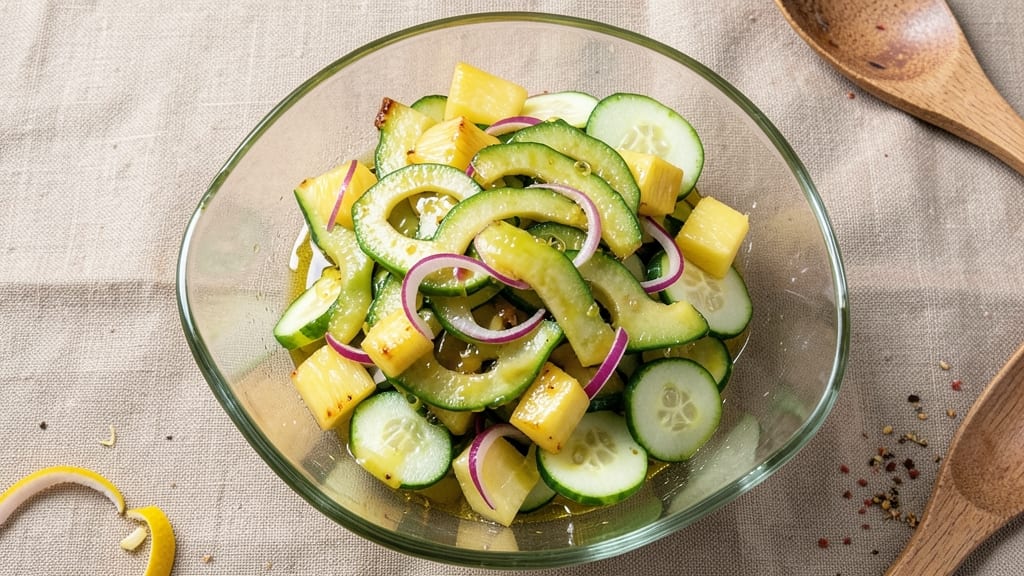
This ampalaya salad with pineapple brings a refreshing twist to Filipino flavors, blending tender bitter melon with sweet tropical fruit. The key? A spiced vinaigrette that balances the salad’s natural bitterness while highlighting its crisp texture.
I developed this recipe after discovering how boiling ampalaya first removes its signature sharpness, leaving behind a delicate, almost nutty flavor that pairs beautifully with pineapple’s sweetness.
Traditional Filipino techniques meet modern simplicity here—no complicated steps, just prepped ingredients that come together in minutes. The salad features thinly sliced ampalaya (bitterness neutralized through boiling), juicy pineapple chunks, and a zesty dressing infused with garlic, vinegar, and a touch of chili.
For extra crunch, I recommend adding toasted peanuts or candied pecans, though the classic version keeps it light with just cucumber and red onion.
What you’ll end up with is a vibrant, texturally exciting dish where each bite delivers a mix of creamy ampalaya, juicy pineapple, and a tangy dressing that ties everything together.
The salad holds up well for lunch or dinner, and the flavors only deepen as it sits—perfect for meal prep or serving at gatherings. Serve chilled or at room temperature for the best experience.
This recipe works equally well as a vegetarian main or a side dish, especially when paired with grilled meats or steamed fish. The dressing can be adjusted to your spice preference, and you can swap in other tropical fruits like mango or papaya if pineapple isn’t available. Let’s get started!
Ingredients for ampalaya salad with pineapple
Freshly boiled ampalaya meets sweet pineapple in this vibrant Filipino-inspired salad.
| Ingredient | Amount | Notes |
|---|---|---|
| Ampalaya (Bitter Melon) 🍆 | 1 ½ lb | Boiled for 5 minutes, peeled and sliced |
| Fresh Pineapple 🍍 | 2 cups | Diced, juicy variety preferred |
| Red Onion 🧅 | 1 whole | Thinly sliced, white part only |
| English Cucumber 🥒 | 1 whole | Thinly sliced, seeds removed |
| Extra-Virgin Olive Oil 🫒 | ½ cup | For vinaigrette base |
| Rice Vinegar 🍶 | ⅓ cup | For tangy dressing |
| Garlic Cloves 🧄 | 4 cloves | Minced for vinaigrette |
| Fresh Chili Pepper 🌶️ | 1 whole | Thinly sliced, adjust to taste |
| Soy Sauce 🍜 | 1 tbsp | For umami depth |
| Brown Sugar 🍯 | 1 tbsp | For subtle sweetness |
| Toasted Peanuts 🥜 | ½ cup | Optional crunchy topping |
| Fresh Cilantro 🌿 | ¼ cup | Chopped, for garnish |
| Lime Juice 🍋 | 2 tbsp | Freshly squeezed |
| Salt 🧂 | 1 tsp | Kosher or sea salt |
| Black Pepper 🌶️ | ½ tsp | Freshly ground |
The ampalaya is the star—look for firm, dark green ones at Asian markets or specialty produce sections. Trader Joe's often carries them, but if you can't find them, substitute with zucchini (though the texture won't be identical). Boiling removes the bitterness, so don't skip this step. For the pineapple, fresh is non-negotiable—canned won't give you that juicy crunch. If you're prepping ahead, store the boiled ampalaya in water with a bit of vinegar to keep it crisp. The red onion and cucumber should be freshly sliced right before serving to maintain their crunch.
No rice vinegar? Apple cider vinegar works in a pinch, though it's slightly sweeter. Want extra heat? Add a dash of sriracha or chili flakes to the dressing. The soy sauce can be swapped for coconut aminos if you're avoiding soy. For the peanuts, toasted cashews are a great alternative, but they'll have a different texture. The cilantro is optional but adds a bright finish—skip it if you're sensitive to its flavor. If you're making this ahead, hold off on adding the dressing until serving to keep everything crisp.
This salad keeps beautifully for 2-3 days in the fridge, though the ampalaya will soften over time. Store the dressing separately and toss it in just before eating. For meal prep, portion the salad into containers with the dressing on the side. The flavors actually improve as it sits, so it's perfect for making ahead. If you're serving at room temperature, let it sit for 10-15 minutes to bring out the best texture contrast.
Why You'll Love This Recipe
- No-Fuss Assembly: I swear by this one—just slice the ampalaya thin (no fancy spiralizer needed), dice the pineapple, and toss with cucumber and onion. Five minutes of chopping, and you’ve got a salad that feels like a full meal.
- Sweet-Savory Magic: That pineapple’s tang cuts through the bitter melon’s edge, while the olive oil dressings turns it into something ridiculously addictive. Honestly, the first time I tried it, I ate it straight from the bowl.
- Lunchbox Hero: Pack this for work or school—it holds up for hours, and the pineapple keeps it from getting soggy. My kids actually finish their veggies now, and I’ll take that win any day.
- Budget Brightener: Ampalaya and pineapple stretch a long way, and you’re using whole ingredients, not pre-cut mixes. Between us, this is my go-to when I’m broke but still want something that tastes like I cared.
Step-by-step instructions for ampalaya salad with pineapple
Here's how to balance bitter melon's unique flavor with tropical sweetness for a refreshing dish.
Prepare the Ampalaya and Vegetable Base
First, boil the 1.5 lb ampalaya (bitter melon) for 5 minutes until tender but still holding its shape. Drain immediately and cool under cold running water to stop cooking. The skin should peel off easily now—use a vegetable peeler to remove it completely, then slice the bitter melon into ¼-inch thick half-moons. Set aside in a large mixing bowl.
Next, dice the 2 cups fresh pineapple into ½-inch cubes, reserving any juices that collect. Thinly slice the white part only of 1 whole red onion and remove seeds from the 1 whole English cucumber, then slice it into ¼-inch thick half-moons. Add these to the bowl with the bitter melon. The combination of textures and flavors will start developing right away—you'll notice the pineapple's sweetness begins to mellow the bitterness of the ampalaya.
Create the Spiced Vinaigrette
In a small bowl, whisk together the 0.5 cup extra-virgin olive oil, 0.33 cup rice vinegar, 1 tbsp soy sauce, and 1 tbsp brown sugar until fully combined. The sugar will dissolve completely, creating a smooth base. Then add the 4 minced garlic cloves, 1 thinly sliced fresh chili pepper, 1 tsp salt, and 0.5 tsp black pepper, whisking until everything is evenly distributed.
Finally, stir in the 2 tbsp freshly squeezed lime juice. The acidity will brighten the flavors and cut through any remaining bitterness. Taste the dressing before adding it to the salad—you'll want it to balance sweet, tangy, and slightly spicy notes. If you prefer more heat, add an extra slice of chili pepper or a pinch of salt. Pour this dressing over the vegetable mixture and gently toss everything together.
Assemble and Garnish the Salad
Let the salad marinate for 10 minutes at room temperature. This allows the flavors to meld together perfectly—you'll notice the bitter melon softens slightly and absorbs the dressing's sweet and tangy elements. The pineapple's juices will also begin to release, adding natural sweetness to the mix.
Before serving, sprinkle the 0.5 cup toasted peanuts evenly over the top for a satisfying crunch. Then scatter the 0.25 cup chopped fresh cilantro throughout for a pop of color and freshness. The peanuts add a textural contrast that balances the salad's softness, while the cilantro brightens each bite with its citrusy aroma.
Serve Immediately for Best Results
This salad tastes best when served fresh, so assemble it just before eating. The flavors develop over time, but the peanuts lose their crispness if left too long. Divide the salad among 4 plates, ensuring each serving has a good distribution of bitter melon, pineapple, and cucumber.
For an extra touch, drizzle any reserved pineapple juices from earlier over the top just before serving. This adds a glossy finish and intensifies the tropical flavors. Pair with grilled meats or shrimp for a complete meal, or enjoy it as a refreshing side dish on its own. The contrast of textures and flavors makes this salad uniquely satisfying—each bite offers a balance of sweet, tangy, and slightly spicy notes that keep your palate engaged.
Pro Tips For Making Ampalaya Salad With Pineapple
- Peel Ampalaya Thin: That thick, rubbery skin on ampalaya? Use a sharp knife to slice it lengthwise first—then peel in strips like an apple. I used to hack at it crosswise and end up with bruised flesh and wasted time. Thin peels mean less bitterness bleeding into your salad and cleaner slices that hold up better with pineapple.
- Shock Pineapple First: Dump pineapple chunks into ice water for 10 minutes before dicing. This stops enzymes that turn your fruit mushy in minutes—especially crucial when mixing with cucumber’s water content. (Yes, it sounds odd, but your salad will stay crisp for hours, not soggy by lunch.)
- Salt Onion Twice: Toss red onion slices in ½ teaspoon salt before adding to the salad, then again right before serving. First salt draws out moisture and mellows the bite; second salt makes the flavors pop when you eat it. Skip either step, and you’ll taste raw onion instead of sweet, caramelized layers.
- Dress Just Before Eating: Whisk olive oil, vinegar (or lime), and salt right before tossing—no earlier. Ampalaya’s flesh oxidizes fast, turning slimy if marinated too long. Add pineapple and cucumber last, give it one gentle fold, and serve immediately. (Your future self will curse you if you prep this ahead.)
Pro cooking tips for this dish
Boil Ampalaya Right
Boiling ampalaya for exactly 5 minutes is critical—any longer and it turns mushy, any shorter and bitterness remains. Use a pot of boiling water with a pinch of salt, then immediately shock the melon in ice water to stop cooking.
This preserves its crisp texture and neutralizes bitterness. I like to test one slice first—if it peels easily, it's ready. 🍆
Peel Like a Pro
Never peel ampalaya with a knife—it’s slippery and dangerous! Use a vegetable peeler instead, starting at the stem end and working downward. The skin should slide off in long strips once boiled.
For even slices, cut the melon in half lengthwise, then slice into ¼-inch half-moons with a sharp chef’s knife. A mandoline works too, but be careful with the slippery skin. 🔪
Toast Peanuts Perfectly
For maximum crunch, toast peanuts in a dry skillet over medium heat for 3-4 minutes, stirring constantly until golden and fragrant. Watch closely—they burn fast! Let them cool completely before adding to the salad.
If you’re short on time, microwave them for 1-2 minutes in a single layer, shaking halfway. Unsalted peanuts work best here to avoid overpowering the dressing. 🥜
Balance the Dressing
Taste your vinaigrette before tossing it with the salad—it should hit all four flavors: sweet (brown sugar), tangy (vinegar), savory (soy sauce), and spicy (chili). If it’s too sharp, add a pinch more sugar; if too mild, a splash of lime juice brightens it up.
I like to whisk in 1 tsp fish sauce for extra umami depth (optional but recommended). 🍶
Marinate Just Enough
Let the salad sit for 10 minutes before serving—this lets flavors meld without sogginess. The pineapple’s natural juices will soften the ampalaya slightly, creating a perfect texture contrast. If prepping ahead, store the dressing separately and toss it in right before eating to keep everything crisp. 🕒
Serve with Confidence
Garnish with cilantro last—its bright flavor can mute other ingredients if added too early. For extra flair, drizzle reserved pineapple juice over the top just before serving.
This adds a glossy finish and intensifies tropical notes. Serve immediately for peak texture, or chill for 30 minutes** if you prefer a cooler salad. 🌟
Nutrition facts
Frequently asked questions
Why does ampalaya need to be boiled first?
Boiling removes the natural bitterness that makes raw ampalaya unpleasant to eat. A 5-minute boil tenderizes it while preserving texture—overcooking turns it mushy. The cold water shock after boiling stops cooking and makes peeling effortless. This step is essential for the salad's balanced flavor profile.
Can I substitute pineapple with another fruit?
Yes! Mango or papaya work beautifully as tropical alternatives. Use the same amount (2 cups diced) and adjust sweetness in the dressing accordingly. Mango adds creaminess while papaya brings a milder, floral note. Just ensure the fruit is ripe and juicy for the best texture contrast.
How do I make this salad less bitter?
Start with properly boiled ampalaya (exactly 5 minutes) and taste-test before adding dressing. For extra sweetness, increase brown sugar to 2 tbsp or add 1 tbsp honey to the vinaigrette. The pineapple's natural sugars also help balance bitterness—don't skip this key ingredient!
Can I make this ahead of time?
Prepare components separately: boil and slice ampalaya, chop vegetables, and make dressing. Store in airtight containers in the fridge for 2 days. Toss everything together just before serving to maintain crispness. The peanuts should be added fresh for maximum crunch.
What if I can't find ampalaya?
Use zucchini as a milder substitute, but note the flavor will differ. For authenticity, try bitter melon from Asian markets or order online. If using zucchini, reduce boiling time to 2 minutes and increase dressing sweetness to compensate for the lack of bitterness.